Introduction
Fresh corn on the cob is one of those simple foods that can be enjoyed in countless ways. It can be boiled, steamed, grilled, roasted, or cooked as part of a larger meal. While eating corn directly from the cob is convenient, many recipes call for kernels to be removed first. Salads, soups, casseroles, salsas, fritters, pasta dishes, and grain bowls are just a few examples where loose corn kernels can be more practical than whole corn cobs.
Removing kernels with a kitchen knife is possible, but it can sometimes be awkward. The cob is rounded, kernels can scatter across the cutting board, and working too quickly can make the process unnecessarily messy. A corn cob stripper tool offers another approach: instead of cutting individual rows away with a knife, the tool is designed specifically to help separate kernels from the cob.
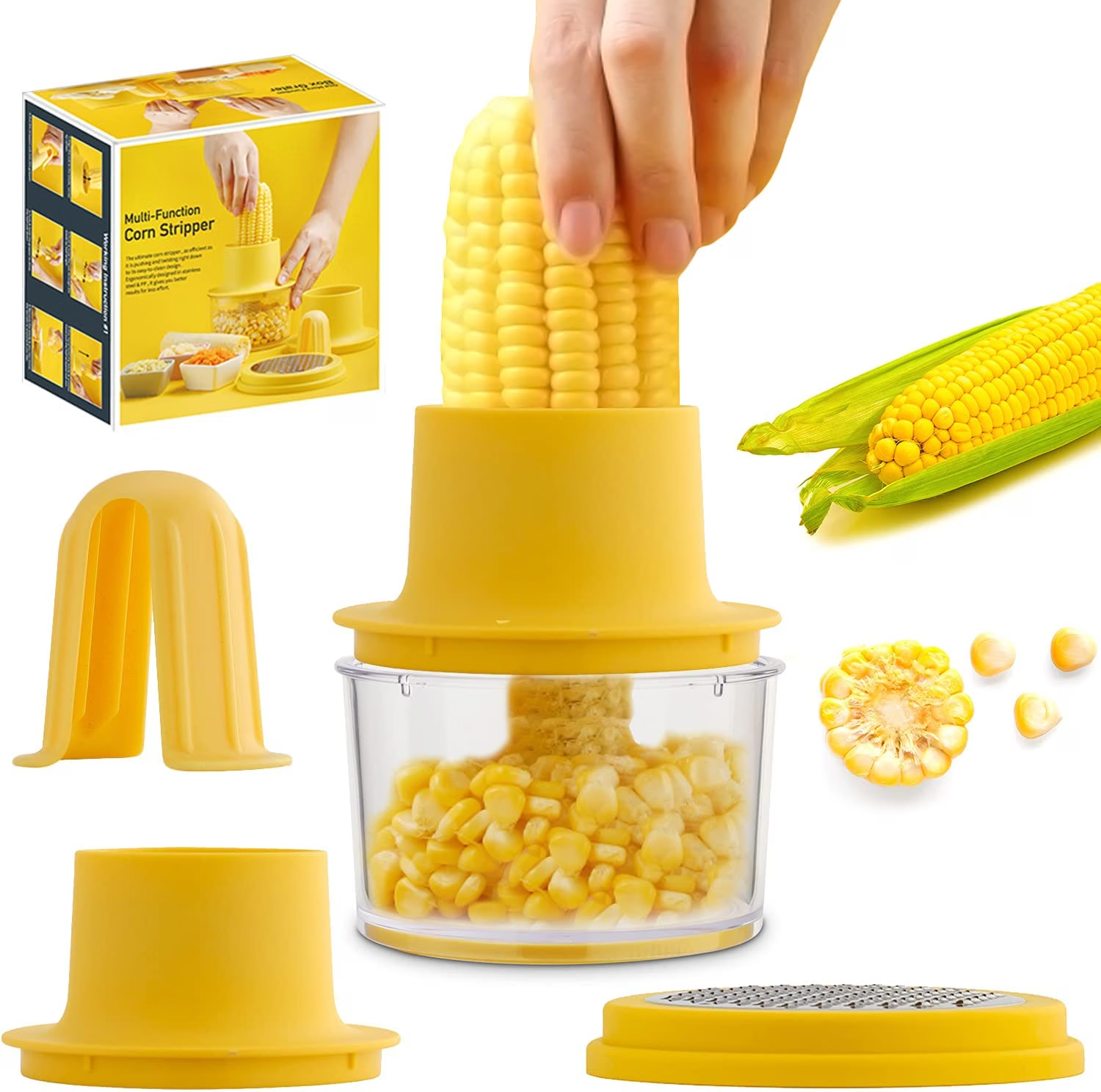
The Corn Cob Stripper Tool, Corn Peeler for Corn on the Cob in yellow is a compact kitchen utensil intended for this particular preparation task. Its straightforward purpose makes it relevant for people who regularly cook with fresh corn and want an alternative to using a standard knife.
This type of kitchen tool is not intended to replace every utensil in the kitchen. Rather, it serves a focused function. Understanding how a corn stripper works, where it can be useful, how to handle it safely, and what limitations to expect can help determine whether this style of utensil fits a particular cooking routine.
This guide explores the product category in practical terms, including its design, potential uses, handling considerations, cleaning, storage, and how a dedicated corn stripper compares with other common methods of removing corn kernels.
What Is a Corn Cob Stripper Tool?
A corn cob stripper is a kitchen utensil designed to separate corn kernels from the cob. Instead of relying on the cutting edge of a conventional kitchen knife, a stripper typically uses a shaped opening or cutting mechanism that interacts with the rows of kernels as the tool is moved along the cob.
The basic idea is simple. A corn cob is positioned so that the tool can make contact with the kernels, and the utensil is moved along the cob. Depending on the design, kernels are separated and fall away from the cob as the tool passes over them.
The yellow Corn Cob Stripper Tool is intended for use with corn on the cob and is compact enough to fit naturally into a kitchen utensil collection. Its specialized design distinguishes it from multipurpose tools such as chef’s knives, vegetable peelers, and kitchen scissors.
A dedicated tool can be particularly interesting for cooks who prepare fresh corn regularly. It can also be useful when a recipe requires a larger quantity of kernels and the goal is to simplify the preparation process.
As with any kitchen utensil, results depend on the size and condition of the corn, the user’s technique, and how the particular tool is handled.
Key Features
Dedicated Corn-Kernel Removal Design
The primary feature of a corn stripper is its specialized purpose. Rather than being a general kitchen utensil, it is designed around one specific preparation task: separating kernels from a corn cob.
This focused design can make the utensil useful for cooks who frequently purchase fresh corn and prefer to remove the kernels before cooking or freezing them.
Specialized utensils can sometimes make repetitive preparation tasks more straightforward because their shape is built around the food being processed.
Compact Kitchen Utensil
Corn strippers are generally much smaller than many conventional kitchen tools. Their compact format makes them relatively easy to store in a kitchen drawer, utensil organizer, or cabinet.
This can be helpful in smaller kitchens where countertop and drawer space are limited.
Because the tool performs a specific function, it does not need to occupy significant storage space when it is not being used.
Yellow Finish
The product is presented in a yellow color, which gives it a bright and recognizable appearance.
Color is primarily a matter of personal preference, but brightly colored utensils can also be easier to spot among other kitchen tools, particularly when several utensils are stored together.
Designed Around Corn on the Cob
One advantage of a purpose-built corn utensil is that its shape is intended to work with the cylindrical form of a corn cob.
A conventional knife requires the cook to control the blade manually and guide it down the cob. A dedicated corn stripper instead provides a tool shape specifically intended to interact with the kernels.
This can make the preparation process feel different from traditional knife-based methods.
Simple Manual Operation
A corn stripper does not require electricity, batteries, or a motor. It is a manually operated kitchen tool.
That means it can be used directly at a cutting board or kitchen counter without setting up an appliance.
For occasional corn preparation, a simple manual utensil can be more convenient than bringing out a larger kitchen appliance.
How a Corn Cob Stripper Can Be Used
Using a corn stripper is generally a straightforward preparation process, but proper handling is important. Corn is firm, and the utensil needs to be controlled carefully while it is moved along the cob.
Step 1: Prepare the Corn
Start by removing the husk and silk from the corn.
The cob can be rinsed under cool running water to remove loose silk or debris. If the corn has already been cooked, allow it to cool enough to handle comfortably before attempting to remove the kernels.
Working with a clean and stable surface is important.
Step 2: Position the Cob Securely
Place the corn on a stable cutting board or another suitable food-preparation surface.
Avoid holding the cob in midair while applying force with the tool. A stable working position provides better control and reduces the likelihood of the cob slipping.
For additional stability, some cooks prefer placing the cob horizontally on a cutting board rather than holding it vertically.
Step 3: Position the Stripper
The tool should be positioned according to its intended design so that the working portion makes contact with the kernels.
The goal is to allow the utensil to move along the cob while separating kernels without unnecessary pressure.
The exact technique can vary depending on the shape of the utensil and the size of the corn.
Step 4: Move Along the Cob
Apply controlled pressure while moving the stripper along the length of the cob.
There is generally no reason to rush. A slower, controlled motion can provide better handling and may help reduce scattered kernels.
If the cob is particularly firm or the tool is not moving smoothly, excessive force should be avoided.
Step 5: Collect the Kernels
A bowl or shallow container can be placed nearby to collect the kernels as they are removed.
This is particularly helpful when preparing multiple ears of corn. It keeps loose kernels together and makes it easier to transfer them into a recipe.
Step 6: Inspect the Cob
After removing the kernels, inspect the cob to see whether any remaining kernels need to be removed.
Some kernels may remain attached depending on the technique used and the structure of the corn. A second pass may be useful, but it should be performed carefully.
Cooking Ideas for Fresh Corn Kernels
One of the main reasons to remove corn from the cob is versatility. Once the kernels are separated, they can be incorporated into many different recipes.
Corn Salads
Fresh corn kernels can add sweetness, texture, and color to salads.
They can be combined with ingredients such as tomatoes, cucumbers, peppers, herbs, beans, avocado, or leafy greens.
For a simple side dish, corn can also be mixed with a light dressing and served chilled or at room temperature.
Soups
Corn kernels work well in many soup recipes.
They can be added to vegetable soups, chicken soups, chowders, and creamy corn-based dishes. Removing the kernels from the cob beforehand makes them easier to measure and distribute throughout the recipe.
Salsas
Corn can also be used in fresh salsa.
Combined with tomatoes, onions, peppers, herbs, and a suitable dressing or seasoning, corn kernels can provide a slightly sweet contrast to more acidic or spicy ingredients.
Casseroles
Loose kernels are convenient for casseroles because they can be mixed evenly with other ingredients.
Corn can complement potatoes, pasta, rice, beans, vegetables, cheese, and various proteins depending on the recipe.
Pasta Dishes
Corn can be incorporated into pasta salads or warm pasta dishes.
Its natural sweetness can provide contrast to savory sauces and ingredients.
Grain Bowls
Cooked grains such as rice, quinoa, barley, or couscous can be combined with corn and other vegetables to create a simple meal.
Because the kernels are already separated, they can be distributed evenly throughout the bowl.
Tacos and Wraps
Corn kernels can be used as a filling ingredient or topping for tacos, burritos, wraps, and similar dishes.
They can be combined with beans, grilled vegetables, chicken, fish, or other ingredients.
Corn Fritters
Removing kernels from fresh corn is also useful when making fritters.
The loose kernels can be combined with batter and seasonings before being cooked according to a recipe.
Freezing Fresh Corn
Some people remove kernels from fresh seasonal corn before freezing them for later use.
The appropriate preparation method depends on the intended storage period and food-safety practices. If freezing fresh corn, it is important to follow a reliable food-preservation method rather than assuming that removing the kernels alone is sufficient.
Who May Find a Corn Stripper Useful?
A dedicated corn tool can make sense for certain cooking routines, particularly when fresh corn appears regularly on the menu.
People Who Cook With Fresh Corn Frequently
If corn is a regular ingredient in your meals, a specialized utensil may be useful because it is designed for a task that otherwise requires another tool.
For occasional corn preparation, however, a standard knife may already be perfectly adequate.
Home Cooks Preparing Large Meals
When several ears of corn need to be processed for a recipe, removing kernels manually can become repetitive.
A dedicated tool provides another method that may be worth considering for larger preparation sessions.
People Who Make Corn-Based Recipes
Cooks who frequently prepare corn salads, soups, casseroles, salsas, fritters, or similar recipes may appreciate having a dedicated utensil available.
The usefulness largely depends on how often these recipes are prepared.
Small-Kitchen Users
Because a corn stripper is compact, it may be practical for kitchens where storage space is limited.
Unlike a larger appliance, a small manual utensil generally requires very little storage space.
Meal-Prep Enthusiasts
People who prepare ingredients ahead of time may find a corn stripper useful when several ears of corn need to be converted into loose kernels before being divided into recipes or storage containers.
Important Things to Consider
A dedicated kitchen tool can be useful, but there are several factors worth considering before adding one to a utensil collection.
Corn Size and Shape
Fresh corn varies in diameter, kernel size, and firmness.
A tool designed for corn may work differently depending on the particular ear being processed. Very small or unusually large cobs may require adjustments in technique.
It is useful to work gradually rather than assuming that every cob will behave exactly the same way.
Firmness of the Kernels
Fresh corn can vary considerably in firmness.
Tender kernels may separate differently from mature or firmer kernels. Cooked corn can also have a different texture from raw corn.
The condition of the corn can therefore affect how easily the utensil moves along the cob.
Control Matters
Even though a corn stripper is designed specifically for this task, it still involves contact with a cutting or separating mechanism.
Users should keep fingers away from the working edge and maintain a stable grip.
The tool should never be treated as completely risk-free simply because it is smaller than a kitchen knife.
Work on a Stable Surface
A stable cutting board is preferable to holding the cob loosely while working.
A slipping cob can make the process more difficult and may increase the chance of accidental contact with the tool.
Taking a few extra seconds to establish a stable position can make food preparation more controlled.
Cleaning Requirements
Any utensil that comes into direct contact with food should be cleaned appropriately after use.
Corn residue can become lodged in small openings or around the working area of specialized tools.
After use, inspect the utensil carefully and clean away visible food particles.
If the manufacturer provides specific cleaning instructions, those instructions should take priority.
Storage
The tool should be stored somewhere dry and clean.
Because corn strippers are relatively small, it can be easy for them to become buried underneath larger utensils. Keeping specialized tools in a designated drawer or container can make them easier to find.
Corn Stripper vs. Kitchen Knife
A kitchen knife is the traditional method for removing corn kernels.
To use a knife, the cook typically stands the cob upright or lays it horizontally and carefully slices downward along the rows of kernels.
Advantages of a Knife
A kitchen knife is already present in most kitchens and can be used for many other tasks.
It also provides flexibility. The cook can control the depth of the cut and remove kernels according to the recipe.
Considerations
Knife-based corn removal requires careful control of the blade.
Kernels can also scatter across the cutting board, particularly when the cob is positioned upright.
For people who already have good knife skills and only prepare corn occasionally, a knife may remain the simplest option.
A dedicated stripper provides an alternative specifically designed around the shape of the corn cob.
Corn Stripper vs. Vegetable Peeler
A conventional vegetable peeler is designed primarily for removing thin layers of skin from vegetables and fruits.
Although both tools involve a peeling or scraping action, they serve different purposes.
A vegetable peeler is generally not designed to efficiently remove rows of corn kernels from a cob.
A corn stripper is more specialized because its working mechanism is intended to separate kernels rather than remove a thin outer skin.
Corn Stripper vs. Kitchen Tongs
Kitchen tongs are useful for gripping, turning, and transferring food.
They are not designed for removing corn kernels.
Tongs can help hold a cob in certain cooking situations, but they do not provide the same function as a dedicated corn-removal utensil.
These tools therefore serve very different roles in food preparation.
Corn Stripper vs. Manual Corn Kerneler
A manual corn kerneler and a corn stripper are closely related categories.
Both are designed to separate kernels from the cob, but their specific designs can differ considerably.
Some models are shaped like handles with cutting openings, while others may have different gripping or scraping mechanisms.
When comparing different manual corn tools, it can be helpful to consider the shape, grip, storage requirements, cleaning process, and compatibility with the types of corn normally used.
Tips for Cleaner Corn-Kernel Removal
Use a Wide Cutting Board
A larger cutting board gives the cob more room and provides space for collecting kernels.
This can be particularly helpful when processing several ears.
Use a Bowl
Placing a bowl near the cutting area can help contain loose kernels.
For some cooking tasks, placing the cob over a large bowl can also reduce the amount of food that lands directly on the work surface.
Work Slowly
Speed is not necessarily the goal.
A steady movement can help maintain control and may make it easier to follow the shape of the cob.
Rotate the Cob
Rather than repeatedly working on the same area, rotate the cob as necessary to access another section.
This can help provide more consistent coverage.
Clean the Tool Immediately
Corn residue can become more difficult to remove if it dries.
Cleaning the utensil soon after use can simplify the process and help keep it ready for the next use.
Food Safety Considerations
Fresh produce should be handled using good food-safety practices.
Wash hands and food-preparation surfaces before handling corn and other ingredients. Clean utensils after use and avoid cross-contamination between raw foods and ready-to-eat ingredients.
If cooked corn is being processed, allow it to cool enough to handle safely.
When preparing corn for storage, particularly freezing, follow established food-preservation guidance for the intended storage method.
A kitchen utensil can make food preparation more convenient, but it does not replace basic food-safety practices.
Cleaning and Maintenance
Proper maintenance can help keep a kitchen utensil usable over time.
After removing corn kernels, inspect the tool for pieces of corn, silk, or other residue.
Rinse away loose particles and clean the utensil according to the manufacturer’s recommendations. Pay particular attention to openings or edges where food particles could collect.
If the utensil is not specifically confirmed as dishwasher-safe, it is better not to assume that it should automatically be placed in the dishwasher.
Once clean, allow the tool to dry thoroughly before storage.
A dry storage environment can help prevent unwanted moisture from remaining around food-contact surfaces.
Making Corn Preparation More Efficient
The value of a specialized utensil often becomes clearer when it is incorporated into a larger cooking workflow.
For example, someone preparing a corn salad for several people can remove the kernels from all the cobs in one preparation session. The kernels can then be measured and added to the recipe as needed.
The same approach works for meal preparation.
Instead of removing kernels separately for every meal, a cook can prepare a quantity of corn in advance and store it appropriately according to the recipe and food-storage requirements.
Organization also matters. Having a bowl, cutting board, corn stripper, storage container, and other ingredients ready before beginning can reduce unnecessary movement around the kitchen.
The utensil itself performs only one task, but that task can fit naturally into a more organized preparation routine.
Is a Dedicated Corn Tool Necessary?
Not necessarily.
Whether a dedicated corn stripper is worthwhile depends largely on individual cooking habits.
Someone who prepares one ear of corn occasionally may find that a kitchen knife already meets their needs.
On the other hand, a person who regularly prepares several ears of corn, makes corn-heavy recipes, or prefers specialized kitchen utensils may appreciate having a tool designed specifically for this purpose.
The decision is therefore less about whether a corn stripper is universally necessary and more about whether its particular function solves a recurring kitchen task.
A specialized utensil earns its place in a kitchen when it provides a convenient solution to something the cook does often enough to justify keeping an additional tool.
Frequently Asked Questions
What is a corn cob stripper used for?
A corn cob stripper is designed to remove kernels from an ear of corn. It provides an alternative to manually slicing the kernels away with a kitchen knife.
Can it be used on raw corn?
Corn strippers are intended for corn on the cob, but the texture and firmness of raw corn can affect how the tool behaves. Follow the product’s intended-use instructions and use controlled pressure.
Can it be used on cooked corn?
A corn stripper can potentially be used with cooked corn, but the texture may be softer than raw corn. Allow freshly cooked corn to cool sufficiently before handling and work carefully to avoid crushing the kernels.
Does a corn stripper replace a kitchen knife?
No. It is a specialized utensil for removing corn kernels, while a kitchen knife is a multipurpose tool that can perform many different preparation tasks.
Is removing corn kernels with a knife difficult?
It can be straightforward with proper technique, but it requires careful control of the blade. Some people prefer a dedicated corn tool because it is specifically designed for the task.
What recipes can use kernels removed from the cob?
Loose corn kernels can be used in salads, soups, salsas, casseroles, pasta dishes, grain bowls, tacos, wraps, fritters, and many other recipes.
How should a corn stripper be cleaned?
Clean it after each use and remove visible food residue from the working area. Follow any manufacturer-provided cleaning instructions, particularly regarding dishwasher use.
Does the size of the corn cob matter?
It can. Corn varies in diameter and kernel size, and different cob sizes may require slightly different handling techniques.
Can a corn stripper be used for meal preparation?
Yes. It can be useful when preparing several ears of corn in advance for recipes that require loose kernels.
Where should a corn stripper be stored?
Because it is a small utensil, it can generally be stored in a clean, dry kitchen drawer or utensil organizer. The exact storage method should account for the working edge and keep it safely away from casual contact.
Are corn strippers safe to use?
Like other kitchen utensils with cutting or separating mechanisms, they require careful handling. A stable work surface, controlled movements, and keeping fingers away from the working area are important.
Why remove corn from the cob instead of eating it directly?
Many recipes require loose kernels rather than whole corn. Removing the kernels makes it easier to mix corn with other ingredients and measure portions for cooking.
Conclusion
A corn cob stripper is a specialized kitchen utensil built around a simple food-preparation task: separating kernels from corn on the cob.
The Corn Cob Stripper Tool in yellow offers a compact manual approach for people who want an alternative to removing kernels with a conventional knife. Its usefulness is most apparent in cooking routines where fresh corn is prepared regularly or where recipes require loose kernels rather than whole cobs.
The tool can fit into a variety of cooking situations, from preparing corn salads and salsas to making soups, casseroles, pasta dishes, grain bowls, and fritters. It may also be useful during larger meal-preparation sessions where several ears of corn need to be processed.
At the same time, a dedicated corn stripper is not essential for every kitchen. A sharp kitchen knife can already handle the same basic task, particularly for people who prepare corn only occasionally. The main distinction is specialization: a knife is versatile, while a corn stripper is designed specifically around kernel removal.
Safe handling, a stable work surface, proper cleaning, and appropriate food-safety practices remain important regardless of which method is used.
For cooks who regularly work with fresh corn, a small dedicated tool can be a practical addition to the kitchen utensil collection. For others, the decision may come down to personal preference, available storage space, and how frequently corn kernels need to be removed from the cob.
Leave a Reply