Author: hocineghazouan@gmail.com

  • 5-in-1 Rotary Cheese Grater and Vegetable Slicer with Suction Base: A Practical Kitchen Guide

    5-in-1 Rotary Cheese Grater and Vegetable Slicer with Suction Base: A Practical Kitchen Guide

    Introduction

    Preparing fresh ingredients is an important part of everyday cooking, but repetitive tasks such as shredding cheese, grating vegetables, and creating thin slices can take more time than expected. A conventional box grater or handheld grater can handle many of these jobs, but they usually require the cook to move food back and forth against a stationary cutting surface.

    A rotary cheese grater offers a different approach. Instead of repeatedly moving the ingredient across a fixed blade, the user turns a hand crank that rotates a cutting drum. As the drum turns, the food is guided through the grating or slicing surface.

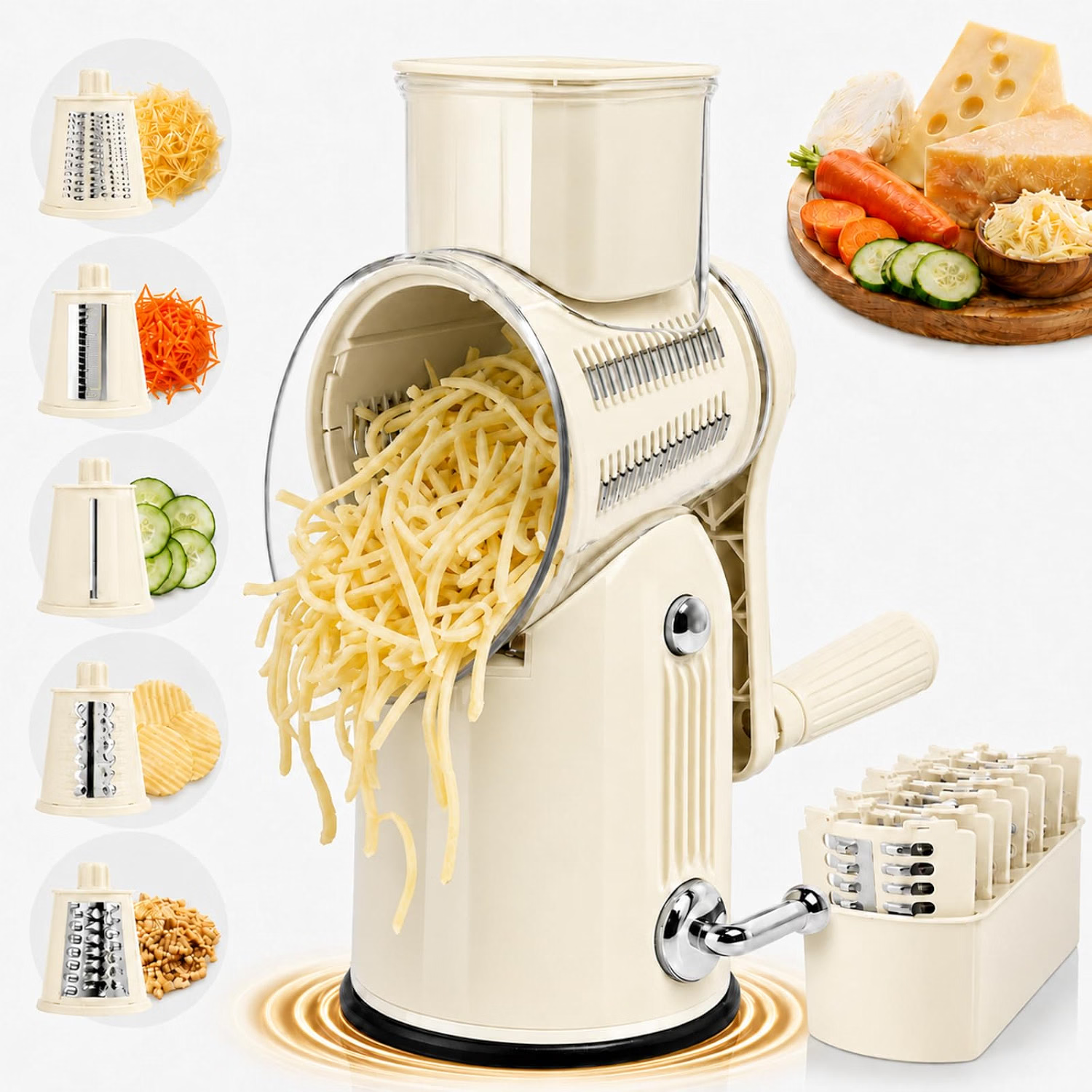
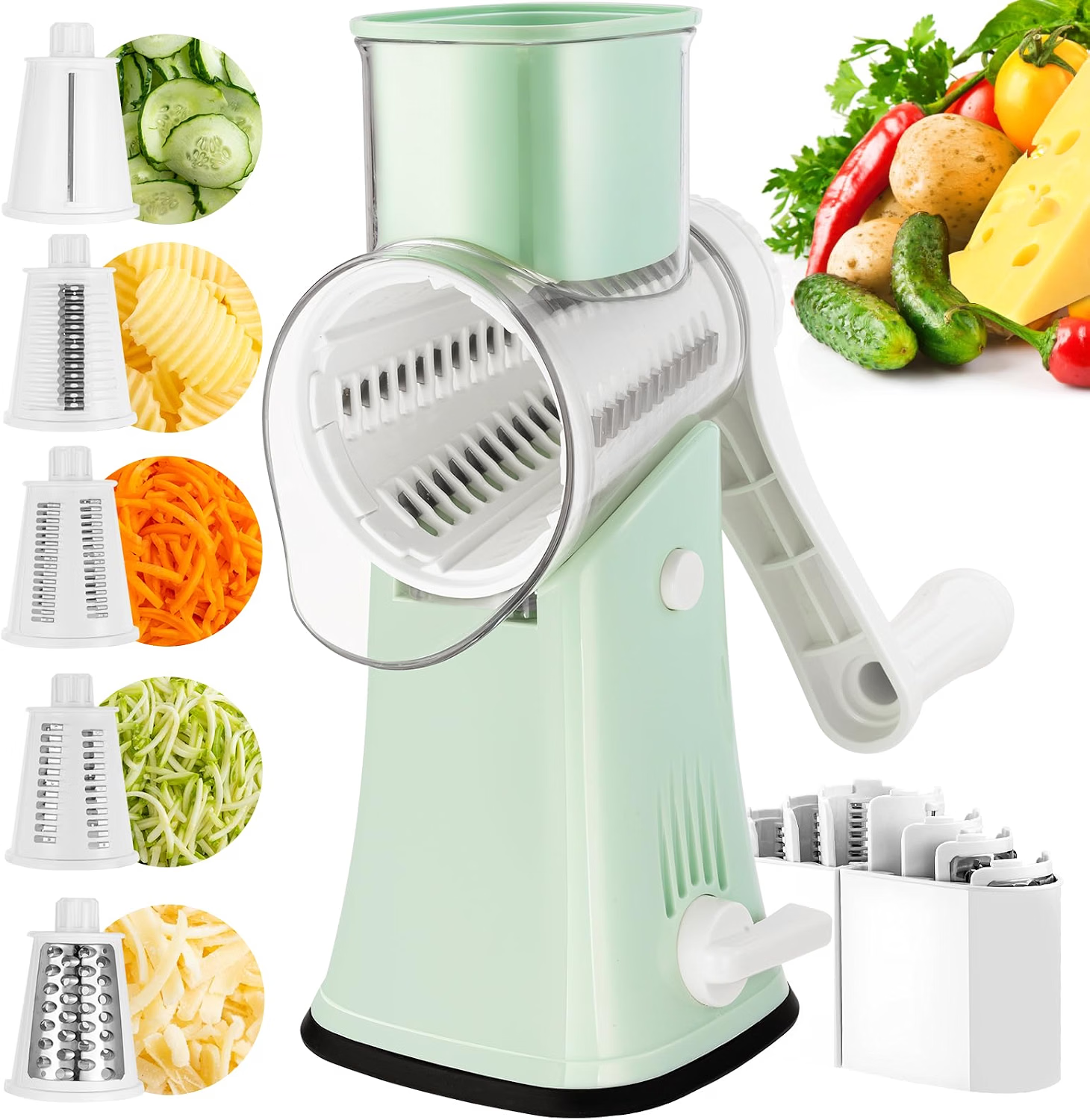
    The 5-in-1 Rotary Cheese Grater and Vegetable Slicer with Suction Base, White is designed around this manual rotary concept. The multiple cutting options allow the same general appliance to be used for different preparation tasks, while the suction base is intended to help keep the unit stable during operation.

    This type of kitchen tool can be useful for people who regularly prepare grated cheese, shredded vegetables, sliced ingredients, or similar foods. It can also be an interesting alternative for cooks who prefer manual equipment over electric food processors.

    However, a multi-function rotary grater is not necessarily the right tool for every kitchen. The usefulness of its different drums depends on the types of foods being prepared, the quantity involved, available storage space, and individual cooking habits.

    This guide explains how a five-function rotary grater works, what its main components are intended to do, how it can be incorporated into different recipes, and what to consider when comparing it with conventional graters, mandolines, and food processors.


    What Is a Rotary Cheese Grater and Vegetable Slicer?

    A rotary cheese grater is a manual food-preparation device that uses a rotating drum to grate, shred, or slice ingredients.

    The basic mechanism involves a hand crank connected to a cylindrical cutting drum. When the crank is turned, the drum rotates. Food is pressed toward the drum through a feeding chamber, allowing the cutting surface to process the ingredient.

    A multi-function model typically includes several interchangeable drums. Each drum can have a different cutting pattern, allowing the user to change the texture or style of the finished ingredient.

    The addition of a suction base is intended to address one of the practical challenges of hand-crank food preparation: keeping the tool in position.

    Instead of holding the grater with one hand while turning the crank with the other, a properly secured base can help keep the main body stable on a suitable countertop.

    The exact performance of the suction mechanism depends on the surface and the condition of the suction components. A clean, smooth, nonporous countertop generally provides a more suitable environment for suction-based stabilization than a rough or textured surface.


    Key Features

    Five Cutting Functions

    The main attraction of a 5-in-1 rotary grater is its multiple cutting options.

    Rather than having only one fixed grating surface, the system uses interchangeable drums that can provide different types of cuts.

    Depending on the drum design, these may include fine grating, coarse shredding, or slicing.

    Having several options in one tool can be useful when recipes call for different textures.

    For example, finely grated cheese may be appropriate for pasta, while larger shreds may be useful for pizza or casseroles. A different cutting surface can be used when preparing certain vegetables.

    The exact result depends on the drum being used and the ingredient being processed.

    Rotary Hand-Crank Mechanism

    The hand crank allows the cutting drum to rotate without electricity.

    This gives the tool a relatively simple operating principle. The user turns the handle while applying controlled pressure with the food pusher.

    A manual system can be useful when preparing smaller quantities because it does not require plugging in an appliance or setting up an electric food processor.

    Suction Base

    The suction base is intended to help stabilize the grater during use.

    A stable tool can make food preparation more controlled because the user’s hands can focus on turning the crank and guiding the ingredient.

    Suction bases work most effectively when properly attached to an appropriate surface.

    Countertop condition matters. Dust, crumbs, moisture, texture, or an uneven surface can reduce the effectiveness of suction.

    The base should be secured according to the manufacturer’s instructions before use.

    White Finish

    The product is presented with a white exterior.

    A neutral color can fit easily with many kitchen environments and makes the tool visually distinct from the stainless-steel cutting drums.

    Color is primarily a matter of personal preference, but lighter surfaces can make food residue easier to notice during cleaning.

    Food Pusher

    A food pusher is an important part of a rotary grater.

    Its purpose is to help guide food toward the rotating drum while keeping fingers away from the cutting surface.

    Users should use the pusher as intended instead of attempting to push food toward the drum with their hands.

    Removable Cutting Components

    Interchangeable drums need to be removed when switching between different preparation styles and when cleaning.

    This modular approach makes the tool more versatile but also means that users need to keep track of the individual components.

    Proper assembly is important before operation.


    How It Can Be Used

    A rotary grater can become useful across several stages of food preparation.

    Grating Cheese

    Cheese is one of the most obvious applications for this type of utensil.

    Depending on the drum, the tool can produce different sizes of grated or shredded cheese.

    Pasta

    Finely grated cheese can be used as a topping for pasta dishes.

    A fine cutting surface can create smaller pieces that distribute easily across the dish.

    Pizza

    Larger shredded cheese can be useful when preparing homemade pizza.

    The shreds can be spread across the dough before baking.

    Casseroles

    Grated cheese is frequently incorporated into casseroles and baked dishes.

    The ability to prepare a quantity of shredded cheese can be helpful when cooking for multiple people.

    Salads

    Shredded cheese can add flavor and texture to salads.

    Different cheese varieties can be grated according to the desired texture.


    Preparing Vegetables

    A multi-function rotary slicer can also be used for various vegetables that are compatible with the cutting drums.

    Carrots

    Carrots can be shredded for salads, slaws, vegetable mixtures, and garnishes.

    The appropriate drum should be selected according to the desired texture.

    Zucchini

    Grated zucchini can be used in fritters, baked recipes, vegetable dishes, and certain breads.

    Because zucchini contains a substantial amount of water, excess moisture may need to be removed depending on the recipe.

    Potatoes

    Potatoes can be shredded for hash browns, potato cakes, and other recipes.

    Firm pieces that fit properly into the feeding chamber can generally be easier to process than oversized pieces.

    Cucumbers

    Cucumbers can be shredded or prepared for salads, sauces, and cold dishes.

    Their high water content means the resulting pieces may need to be drained before certain recipes.

    Radishes

    Radishes can be grated or sliced for salads and vegetable toppings when an appropriate cutting drum is available.

    Other Suitable Vegetables

    Other firm vegetables may also be compatible with a rotary grater, depending on the manufacturer’s intended uses and the specific drum.

    Users should avoid assuming that every vegetable can be processed simply because the tool includes multiple cutting functions.

    Very hard, unusually shaped, or excessively large foods may not be appropriate.


    Preparing Ingredients for Recipes

    One of the practical advantages of a multi-function grater is that it can help prepare ingredients before the main cooking process begins.

    For example, a cook making homemade pizza can prepare cheese first, followed by vegetables for toppings.

    Someone preparing a salad can shred carrots, slice suitable vegetables, and grate cheese using different drums.

    During meal preparation, ingredients can be processed in batches and placed into separate bowls before cooking begins.

    This can make the overall workflow more organized.

    The tool does not eliminate preparation, but it can provide a dedicated method for repetitive grating and slicing tasks.


    How to Use the Suction Base

    The suction base is an important part of the product’s operation.

    Choose an Appropriate Surface

    Start with a clean, smooth, stable countertop.

    Suction mechanisms generally work better on smooth, nonporous surfaces than on rough, porous, or heavily textured materials.

    Remove crumbs, grease, or moisture that could interfere with contact.

    Position the Grater

    Place the grater in the desired working position.

    Make sure there is enough space underneath and around the tool for comfortable operation.

    Engage the Suction

    Activate the suction mechanism according to the manufacturer’s instructions.

    The tool should feel securely attached before food preparation begins.

    Test Stability

    Before inserting food, gently check that the unit is stable.

    If it moves easily, stop and reposition it rather than beginning to grate.

    Monitor During Use

    Even when suction is engaged, periodically remain aware of the tool’s position.

    If the base begins to loosen, stop operating the crank and re-secure it.


    Step-by-Step Guide to Using the Rotary Grater

    Step 1: Select a Drum

    Choose the cutting drum that matches the texture required by the recipe.

    Step 2: Install the Drum

    Insert and secure the selected drum according to the manufacturer’s instructions.

    Step 3: Secure the Base

    Place the tool on an appropriate countertop and activate the suction mechanism.

    Step 4: Prepare the Food

    Cut large ingredients into manageable pieces that fit comfortably into the feeding chamber.

    Step 5: Insert the Ingredient

    Place the food inside the feeding area.

    Step 6: Use the Pusher

    Apply gentle, controlled pressure with the food pusher.

    Avoid pressing excessively.

    Step 7: Turn the Crank

    Rotate the handle at a steady pace.

    The drum should process the food as it rotates.

    Step 8: Collect the Food

    Place a bowl or plate below the output opening to collect the grated or sliced ingredient.

    Step 9: Stop Before the Food Gets Too Small

    Do not attempt to push tiny remaining pieces into the drum with your fingers.

    Use the food pusher and follow the manufacturer’s intended procedure.


    Who May Find This Tool Suitable?

    Home Cooks

    People who frequently prepare meals from scratch may appreciate having several grating and slicing functions in one compact tool.

    Cheese Lovers and Pasta Cooks

    Those who regularly prepare grated cheese for pasta, pizza, casseroles, salads, and other recipes may find a dedicated cheese grating system useful.

    Meal-Prep Enthusiasts

    Preparing multiple ingredients in advance can involve a considerable amount of shredding and slicing.

    A rotary system can be incorporated into a batch-preparation routine.

    Families

    Cooking for several people can increase the amount of food preparation required.

    A multi-function tool may be useful when several ingredients need to be grated or shredded.

    People With Limited Counter Space

    A manual rotary grater generally takes up less countertop space than many electric food processors.

    It can be stored when not needed.

    People Who Prefer Manual Tools

    Some cooks prefer kitchen equipment that does not depend on electricity.

    A hand-crank grater provides a straightforward alternative to an electric processor for appropriate quantities.


    Important Things to Consider

    The Suction Base Depends on the Countertop

    A suction base cannot guarantee the same level of stability on every surface.

    Smooth, clean, nonporous surfaces are generally more appropriate.

    Textured stone, unfinished wood, heavily patterned countertops, or surfaces with crumbs and grease may interfere with suction.

    This is an important consideration when deciding where to use the tool.

    Ingredient Size Matters

    Food needs to fit into the feeding chamber.

    Large blocks of cheese and oversized vegetables should be divided into smaller pieces rather than forced into the opening.

    Ingredient Texture Matters

    Different foods behave differently under pressure.

    Hard ingredients may require more effort, while soft foods can become compressed.

    Extremely soft ingredients may not produce the desired result.

    Manual Operation Requires Effort

    A hand crank does not remove physical effort completely.

    The user still needs to turn the handle while applying controlled pressure.

    The amount of effort depends on the ingredient, quantity, and selected drum.

    Drum Selection Affects Results

    Using the wrong cutting surface can produce an unsuitable texture.

    Before starting, consider whether the recipe calls for fine shreds, coarse shreds, slices, or another preparation style.

    Cleaning Can Take Time

    A multi-component kitchen tool usually requires more cleaning attention than a simple flat grater.

    Food can become lodged inside the drums or around the feeding mechanism.

    Cleaning after use is therefore important.

    Moving Parts Need Care

    The crank and interchangeable drum system contain moving components.

    Do not force the mechanism if it becomes difficult to turn.

    Stop and check whether the food is too large, the drum is incorrectly installed, or residue is interfering with movement.


    Rotary Grater vs. Traditional Box Grater

    A box grater is one of the most familiar tools for shredding cheese and vegetables.

    It normally includes several grating surfaces and can provide different textures.

    Box Grater Advantages

    A box grater is straightforward and does not require assembly.

    It can be used immediately and is capable of handling many common kitchen tasks.

    Rotary Grater Advantages

    A rotary grater changes the motion involved in food preparation.

    Instead of moving food repeatedly against a stationary surface, the user turns a crank to rotate the cutting drum.

    The suction base can also provide additional stability on suitable countertops.

    The choice between the two depends on personal preference, quantity, storage space, and desired workflow.


    Rotary Grater vs. Handheld Grater

    A handheld grater is compact and useful for smaller quantities.

    It requires the user to move the food manually against the grating surface.

    A rotary grater offers a crank-based mechanism and several interchangeable drums.

    For a small amount of cheese, a handheld grater may be sufficient.

    For repeated shredding or for cooks who prefer a rotary motion, the multi-drum approach offers another option.


    Rotary Grater vs. Mandoline

    Mandolines are primarily associated with slicing.

    They can create thin, consistent slices and may include additional blade configurations.

    A rotary grater can also offer slicing through certain drums, but its main purpose remains grating and shredding.

    If precision slicing is the main priority, a dedicated mandoline may provide a different experience.

    If a combination of grating, shredding, and some slicing is more useful, a multi-function rotary system may be more relevant.


    Rotary Grater vs. Food Processor

    An electric food processor can grate, shred, slice, chop, and perform numerous other functions depending on its attachments.

    It can also process larger quantities quickly.

    However, it requires electricity, additional countertop or storage space, and typically involves more components to clean.

    A manual rotary grater does not require electricity and can be suitable for smaller preparation tasks.

    The appropriate option depends on cooking volume and how many different functions are required.


    Rotary Grater vs. Electric Grater

    Electric graters provide motorized operation.

    This can reduce the amount of manual effort required, particularly when preparing large quantities.

    The tradeoff is the need for power and a motorized appliance.

    A hand-crank model provides greater simplicity and can be used without an outlet.

    For people who prepare relatively small quantities and prefer manual tools, this may be a useful distinction.


    Cheese Preparation Tips

    Keep Cheese Firm

    Firm or semi-firm cheese can often be easier to process than very soft cheese.

    Keeping cheese appropriately chilled can help it retain its structure during preparation.

    Cut Large Blocks Into Smaller Pieces

    A smaller block can be easier to place into the feeding chamber.

    Avoid forcing large pieces through the opening.

    Match the Drum to the Recipe

    Fine grating may be appropriate for Parmesan-style toppings, while larger shreds can be useful for pizza and casseroles.

    Collect Cheese in a Bowl

    Positioning a bowl underneath the output opening helps keep shredded cheese contained.

    If cheese is being prepared in a large quantity, this can make transferring it to a recipe easier.


    Vegetable Preparation Tips

    Wash Vegetables Before Processing

    Fresh vegetables should be cleaned appropriately before being placed into the grater.

    Trim Ends

    Remove unsuitable ends, stems, or damaged sections before processing.

    Choose Appropriate Pieces

    Cut vegetables into pieces that fit safely into the feeding chamber.

    Consider Moisture

    Some vegetables release significant moisture when shredded.

    Ingredients such as zucchini and cucumber may require draining depending on the recipe.

    Process Similar Ingredients Together

    When preparing multiple ingredients, organizing them by recipe or preparation type can make the workflow more efficient.


    Cleaning and Maintenance

    Cleaning is an important part of using any kitchen tool that comes into direct contact with food.

    After use, remove food particles from the drum and feeding area.

    Interchangeable cutting drums should be handled carefully during removal because their cutting surfaces can be sharp.

    Wash components according to the manufacturer’s instructions.

    Do not assume that every part is dishwasher-safe unless that information is specifically provided.

    The main housing, suction base, crank, and drums may have different care requirements.

    Pay Attention to the Suction Base

    The suction surface should be cleaned regularly.

    Food residue, grease, or debris can affect how well the base attaches to the countertop.

    After cleaning, allow the components to dry appropriately before storage.

    Keep the Drums Dry

    Moisture should not be left sitting around cutting surfaces or inside areas where components connect.

    Proper drying can help maintain the tool in good condition.


    Storage Considerations

    A five-function kitchen tool includes more components than a single grater.

    The interchangeable drums should be stored together where possible.

    A dedicated container or drawer section can help prevent the components from becoming separated.

    The cutting drums should be protected from unnecessary impact against other utensils.

    Because the tool is manually operated and compact compared with an electric processor, it can be practical for kitchens where appliance storage is limited.


    Safety Considerations

    A rotary grater contains cutting surfaces and moving components, so normal kitchen safety practices should be followed.

    Keep fingers away from the rotating drum.

    Always use the food pusher.

    Do not attempt to retrieve food while the drum is moving.

    If a piece becomes stuck, stop operating the crank before attempting to clear the obstruction.

    Be particularly careful when changing drums. Hold them by appropriate non-cutting areas rather than touching the grating surface unnecessarily.

    Children should use kitchen tools of this type only with appropriate adult supervision.

    The suction base should also be checked before use to ensure the tool is properly positioned.


    Making the Tool Part of a Meal-Prep Routine

    A multi-function grater can become more useful when incorporated into an organized preparation process.

    For example, before making a family dinner, a cook could prepare all the grated cheese first.

    Next, vegetables can be processed using the appropriate drum.

    The prepared ingredients can then be divided into bowls according to the recipes being prepared.

    This approach can help reduce repeated setup and cleanup.

    For weekly meal preparation, the tool can also be used to prepare certain ingredients in batches, provided the food is stored using appropriate food-safety practices.

    The important point is that the grater is most useful when its functions correspond to foods that appear regularly in the user’s cooking routine.


    Common Mistakes to Avoid

    Forcing Large Ingredients

    Oversized ingredients should not be forced into the feeding chamber.

    Cut them into manageable pieces instead.

    Applying Too Much Pressure

    The food pusher should guide the ingredient toward the drum rather than forcing it aggressively.

    Excessive pressure can make the crank more difficult to turn.

    Using an Unstable Surface

    A suction mechanism cannot compensate for every countertop condition.

    Choose an appropriate surface and confirm stability before operating the tool.

    Touching the Cutting Drum

    Cutting components should be handled carefully.

    Avoid touching the cutting surface unnecessarily, especially during cleaning or replacement.

    Ignoring Food Residue

    Small pieces of cheese or vegetables can remain around the drum and feeding chamber.

    Cleaning immediately after use can help prevent residue from drying.

    Assuming Every Food Is Suitable

    A five-function tool is versatile, but that does not mean every ingredient should be processed through it.

    Consider food firmness, size, shape, and the manufacturer’s intended uses.


    Frequently Asked Questions

    What is a 5-in-1 rotary cheese grater?

    A 5-in-1 rotary cheese grater is a manual kitchen tool that uses multiple interchangeable cutting drums to grate, shred, or slice suitable ingredients.

    Does the rotary grater require electricity?

    No. The hand-crank design operates manually and does not require an electrical connection.

    What is the suction base for?

    The suction base is designed to help keep the grater stable on an appropriate countertop during use.

    Does the suction work on every countertop?

    Not necessarily. Suction generally works more effectively on clean, smooth, nonporous surfaces. Rough, porous, wet, or heavily textured surfaces may reduce stability.

    Can the grater be used for vegetables?

    Yes, the product category is intended for both cheese and suitable vegetables. The specific vegetable should be compatible with the selected drum and the manufacturer’s intended uses.

    Can it slice vegetables?

    The five-function design includes different cutting options, which may include slicing depending on the specific drum configuration. The appropriate component should be selected for the desired result.

    Can it be used for potatoes?

    Suitable potatoes can potentially be processed using an appropriate shredding drum, particularly for recipes that require grated potatoes. Pieces should be prepared to fit the feeding chamber.

    Can it grate carrots?

    Carrots are commonly prepared in shredded form for salads and other recipes. Use an appropriate drum and manageable pieces.

    Can it grate cheese for pizza?

    A suitable shredding drum can be used to prepare cheese for pizza and similar recipes.

    Is a rotary grater better than a box grater?

    Neither style is universally better. A box grater is simple and versatile, while a rotary grater offers hand-crank operation, interchangeable drums, and a suction-based stabilization system.

    Is a rotary grater suitable for large quantities?

    It can handle appropriate quantities, but manual operation requires physical effort. For very large batches, an electric food processor may be more practical.

    How should the cutting drums be cleaned?

    Remove them carefully and clean them according to the manufacturer’s instructions. Pay attention to food residue around the cutting openings.

    Are the drums dishwasher-safe?

    Dishwasher compatibility should not be assumed unless it is specifically stated by the manufacturer.

    What should I do if the crank becomes difficult to turn?

    Stop turning the crank and inspect the tool. The ingredient may be too large or unsuitable, the drum may not be installed correctly, or food residue may be interfering with the mechanism.

    Can soft cheese be grated?

    Very soft cheese can be more difficult to process because it may compress or stick. Firmer cheese is generally more appropriate for rotary shredding, but suitability depends on the particular ingredient and tool.

    Can children use a rotary grater?

    Because the tool contains cutting surfaces and moving components, children should only use it with appropriate adult supervision.

    How should the grater be stored?

    Store the clean and dry tool with its interchangeable drums in a safe location. Keeping the components together can make future use more convenient.

    Does the white color affect performance?

    The white finish is primarily an aesthetic feature. Performance depends on the construction, cutting components, ingredient, and how the tool is used.


    Conclusion

    The 5-in-1 Rotary Cheese Grater and Vegetable Slicer with Suction Base provides a manual approach to several common food-preparation tasks.

    Its main concept is straightforward: interchangeable cutting drums rotate through the use of a hand crank, while a food pusher guides ingredients toward the cutting surface. The suction base is intended to help stabilize the tool on an appropriate countertop.

    The multiple cutting options can make the utensil useful for preparing cheese and various vegetables. Grated cheese can be incorporated into pasta, pizza, casseroles, salads, and other dishes, while shredded or sliced vegetables can be used across salads, side dishes, fritters, and meal-preparation recipes.

    The tool also provides an alternative to several common kitchen methods. Compared with a box grater, it uses a rotary motion rather than repeatedly moving food over a stationary surface. Compared with an electric food processor, it does not require electricity and can occupy less countertop space. Compared with a mandoline, it focuses more heavily on grating and shredding while potentially providing some slicing functions through its different drums.

    There are also practical limitations to keep in mind. The suction base depends on the countertop surface, manual operation still requires effort, and different ingredients may behave differently depending on their size and texture. The interchangeable drums also require careful cleaning and storage.

    Safe handling is especially important because the cutting components are sharp and the mechanism contains moving parts. Using the food pusher, keeping fingers away from the drums, securing the base, and stopping the mechanism before clearing an obstruction are sensible practices.

    For cooks who frequently prepare grated cheese or shredded vegetables and prefer manual kitchen equipment, a five-function rotary grater can be a practical addition to a food-preparation setup. For occasional small tasks, a simple handheld or box grater may be enough. The most appropriate choice ultimately depends on cooking habits, preferred preparation methods, available space, and the types of ingredients commonly used.
    You can check more details on Amazon here.

  • 4-Piece Extendable Fork and Spoon Set: A Practical Guide to Expandable Dining Utensils

    4-Piece Extendable Fork and Spoon Set: A Practical Guide to Expandable Dining Utensils

    Introduction

    Kitchen and dining utensils are usually designed around convenience, portability, and everyday practicality. A fork or spoon normally has a fixed length because most meals are eaten at a comfortable distance from the plate or bowl. An extendable utensil takes a very different approach. By incorporating a telescoping or expandable handle, it can be adjusted from a compact size to a significantly longer length.

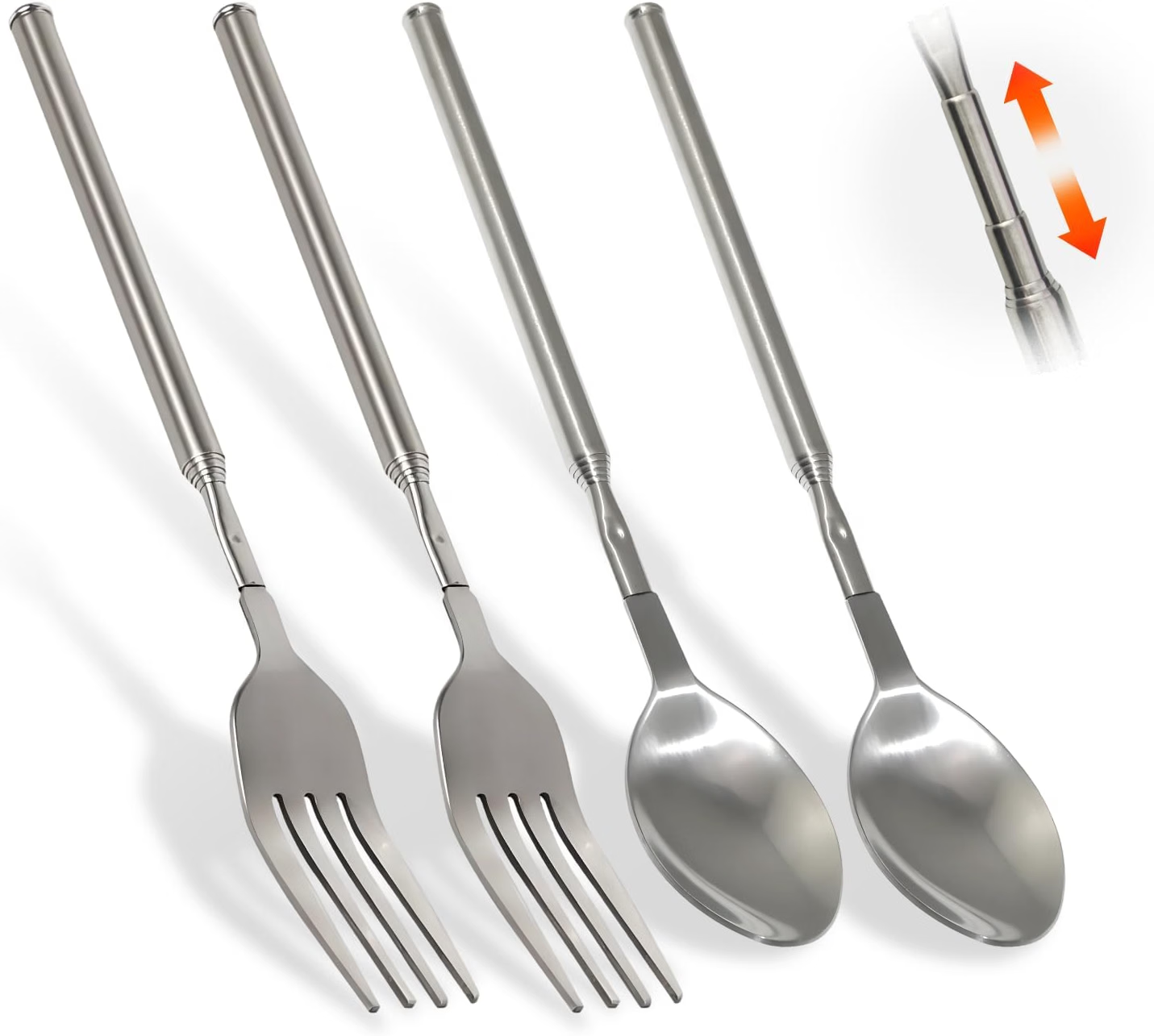
    The 4-piece Extendable Fork and Spoon Set is designed around this concept. The set includes expandable stainless-steel dining utensils intended for situations such as meals, barbecues, camping trips, gatherings, and recreational use. With a stated adjustable range of approximately 8.7 to 25.4 inches, the utensils can be kept relatively compact when not extended and lengthened when the situation calls for it.

    One of the more unusual aspects of this type of utensil is its playful character. Expandable forks and spoons are sometimes used as novelty items or practical joke accessories because the unusually long handle can create an unexpected moment at the dining table. At the same time, the basic idea has practical applications beyond jokes. A longer handle can be useful when reaching into certain containers, handling food at a barbecue, or creating additional distance in specific outdoor cooking situations.

    This does not mean that an extendable dining utensil should automatically replace standard cutlery or dedicated cooking tools. Its value depends heavily on the situation and on how the telescoping design is used.

    This guide explores the 4-piece extendable fork and spoon set in detail, including its design, possible uses, outdoor applications, cleaning considerations, storage, safety, and differences between expandable utensils and conventional cutlery.


    What Is an Extendable Fork and Spoon Set?

    An extendable fork and spoon set is a collection of dining utensils with adjustable handles.

    Instead of having one fixed length, the handle can be shortened for storage or extended when additional reach is useful. The concept is similar to other telescoping household tools, but applied to everyday eating utensils.

    The set described here contains four pieces and combines forks and spoons with stainless-steel construction. The expandable design allows the utensils to occupy less space when retracted while offering considerably more reach when extended.

    The stated range of approximately 8.7 to 25.4 inches gives the utensils a substantial difference between their compact and extended configurations.

    This unusual length is what makes the utensils particularly noticeable. A conventional fork is intended to be held close to the plate, while an extended fork can create a much larger distance between the user’s hand and the food.

    The product therefore sits somewhere between ordinary dining equipment and novelty kitchen accessories.

    Its usefulness depends on the user’s intended purpose.


    Key Features

    Four-Piece Set

    The set includes four expandable utensils, providing multiple pieces for use by more than one person or for different situations.

    Having several utensils together can be convenient for gatherings, camping trips, barbecue events, or novelty activities where multiple people want to participate.

    It also means the pieces can potentially be distributed between different locations rather than requiring a single utensil to be shared.

    Extendable Handles

    The central feature is the expandable handle.

    The utensils can be stored in a shorter configuration and extended when additional length is desired.

    The ability to change the length gives the set a level of flexibility that fixed-length cutlery does not provide.

    The extended configuration is particularly useful for novelty purposes, although there are also situations where additional reach may be convenient.

    Long Extended Length

    The stated maximum length is approximately 25.4 inches.

    That is considerably longer than ordinary table cutlery.

    The extended size is part of the product’s novelty appeal and also provides additional distance when reaching toward food.

    However, the longer the utensil becomes, the more important it is to maintain control.

    A long handle can behave differently from a conventional fork or spoon, especially when food is placed on the end.

    Compact Retracted Length

    At approximately 8.7 inches when retracted, the utensils are substantially shorter than their maximum extended length.

    This makes them easier to store and transport than if the utensils were permanently 25.4 inches long.

    The compact configuration can be useful for packing the set into camping equipment, picnic supplies, or a kitchen drawer.

    Stainless-Steel Construction

    The product uses stainless steel for the utensil components.

    Stainless steel is widely used for kitchen and dining equipment because it is durable, easy to clean, and suitable for regular contact with many types of food.

    The telescoping construction adds moving or adjustable components that require somewhat different handling from a conventional solid utensil.

    Fork and Spoon Combination

    The set is intended to provide both forks and spoons.

    This gives users two common eating formats rather than limiting the set to a single type of utensil.

    Forks are naturally suited to foods that can be pierced or picked up, while spoons are useful for liquids, sauces, soft foods, and ingredients that are difficult to balance on a fork.


    How the Extendable Design Works

    The exact internal mechanism depends on the product’s construction, but the general concept of an expandable handle involves nested sections that slide or telescope into one another.

    When retracted, the sections occupy a smaller space.

    When extended, the sections are pulled outward to increase the overall length.

    This design allows one utensil to have two very different physical configurations.

    Because the handle contains multiple sections rather than being one solid piece, users should avoid treating it exactly like a standard fixed-length fork or spoon.

    Controlled movements are particularly important when the utensil is fully extended.

    If food is placed at the end of a long handle, the distance between the hand and the food increases leverage. Sudden movements can therefore be less predictable than with conventional cutlery.


    How It Can Be Used

    Everyday Dining

    The utensils can technically be used for ordinary eating when kept in their compact configuration.

    A conventional fork or spoon may be more natural for everyday meals, but the retractable design can add a playful element to the dining experience.

    For casual meals, parties, or gatherings, the novelty itself can be part of the appeal.

    Prank and Novelty Use

    Expandable forks are commonly associated with playful dining tricks.

    A fork that suddenly extends several times its normal length can create an amusing surprise in a casual setting.

    For example, someone could use an extendable fork during a lighthearted dinner or gathering where novelty utensils are appropriate.

    However, practical jokes should always take the setting and other people’s comfort into consideration.

    The utensil should not be used in a way that could cause someone to be struck, startled while handling hot food, or otherwise placed at risk.

    Barbecues

    Outdoor cooking situations can provide another possible use.

    A longer utensil may allow someone to reach toward food on a grill or serving area, although a dedicated barbecue tool should generally be used when handling food directly over high heat.

    The extendable fork is better viewed as a novelty dining accessory rather than a replacement for long-handled grilling tongs or professional barbecue forks.

    Once food has been safely served, the extended utensil can provide an entertaining way to eat.

    Camping

    Camping is another environment where compact, multipurpose equipment can be useful.

    The retracted length makes the utensils easier to pack than permanently long novelty utensils.

    They can be carried with other camping cookware and extended when needed.

    The stainless-steel construction can also fit naturally into a reusable camping utensil setup.

    Picnics

    At a picnic, unusual utensils can provide a simple form of entertainment.

    The compact configuration is relatively easy to transport, while the extended form can be used for playful eating or group activities.

    Because picnics often involve multiple foods and shared serving containers, the utensils should be kept clean and separated from surfaces that may be contaminated.

    Parties and Gatherings

    An expandable fork and spoon can serve as conversation pieces at casual events.

    They can be incorporated into themed parties, game nights, family gatherings, or other informal occasions.

    The four-piece format also means several people can use the novelty utensils simultaneously.

    Outdoor Dining

    The set can be useful as an unconventional addition to outdoor dining equipment.

    Whether used at a campsite, backyard gathering, picnic, or barbecue, the expandable design provides a different experience from standard flatware.

    Gift and Novelty Applications

    Because of their unusual form, expandable utensils can also be considered novelty gifts.

    They may appeal to people who enjoy unusual kitchen gadgets, humorous dining accessories, camping equipment, or conversation-starting household items.

    The usefulness as a gift depends on the recipient’s personality and how often they would actually use such an item.


    Creative Food and Dining Ideas

    The unusual design opens up several playful possibilities.

    Long-Distance Food Challenges

    At a casual gathering, people could create simple games involving extended utensils.

    For example, participants could see who can transfer a small piece of suitable food from one plate to another while using the utensil at full extension.

    Such activities should use food that is safe to handle and should take place away from hot cookware, sharp objects, and crowded spaces.

    Themed Parties

    Expandable utensils can fit into humorous or unusual party themes.

    A novelty dining table can incorporate unconventional plates, cups, utensils, and serving accessories.

    The long handles naturally attract attention and can become part of the entertainment.

    Outdoor Games

    When used carefully, the utensils can become props for simple outdoor activities.

    The key is to treat them as dining accessories rather than toys that should be swung or used aggressively.


    Who May Find This Set Suitable?

    Novelty Gadget Enthusiasts

    People who enjoy unusual kitchen accessories may appreciate the concept of a utensil that changes length dramatically.

    The expandable mechanism gives an ordinary dining object an unexpected feature.

    Campers

    The compact configuration can make the utensils convenient to pack.

    For campers who enjoy unusual gear and don’t mind carrying specialized novelty equipment, the set can add an entertaining element to outdoor meals.

    Families

    Families looking for playful dining accessories may find the concept interesting.

    Children in particular may find the expanding mechanism entertaining, although adult supervision is appropriate when children are using utensils with metal components and moving telescoping sections.

    Party Hosts

    People who regularly organize casual gatherings can use unusual utensils as conversation pieces.

    The four-piece format makes it possible for several guests to participate.

    Gift Shoppers

    The distinctive design makes expandable utensils different from ordinary cutlery, which can make them suitable for novelty-oriented gifts.

    Outdoor Entertainers

    For backyard barbecues, picnics, and casual outdoor gatherings, the set can serve as a playful addition to standard dining equipment.


    Important Things to Consider

    Long Handles Require Control

    An extended utensil is considerably longer than conventional cutlery.

    That additional length changes how the utensil feels and moves.

    Food placed at the far end can create more leverage, so sudden movements should be avoided.

    This is particularly important when eating around other people.

    Not a Replacement for Grill Tools

    Although the product may be suitable for barbecue-related dining, an extendable dining fork should not automatically be treated as a substitute for dedicated grill utensils.

    Grilling tools are specifically designed for handling food around high temperatures and cooking surfaces.

    If food needs to be moved on a hot grill, use an appropriate cooking utensil intended for that purpose.

    The expandable fork is more appropriate for eating or serving in situations where its construction is suitable.

    Avoid Hot Food Containers

    Long reach does not mean the utensil should be used to reach into boiling pots, hot pans, or other dangerous cooking environments.

    The user should follow normal kitchen-safety practices and use utensils specifically designed for high-temperature cooking when appropriate.

    Telescoping Sections Need Care

    A fixed stainless-steel fork has very few moving components.

    An expandable utensil has multiple sections that slide relative to one another.

    These sections should not be forced, twisted aggressively, or subjected to unnecessary impact.

    If the mechanism becomes difficult to extend or retract, stop and inspect it rather than applying excessive force.

    Cleaning the Handle

    Food-contact surfaces need to be cleaned thoroughly.

    Because the handle contains multiple sections, users should pay attention to areas where food or moisture might collect.

    The manufacturer’s cleaning instructions should be followed, particularly regarding whether the entire utensil can safely be submerged or placed in a dishwasher.

    Storage

    When not in use, retracting the utensils can make storage easier.

    The four pieces can be kept together in a drawer, camping container, picnic basket, or other clean storage location.

    If the utensils are stored while damp, moisture can remain around the telescoping sections.

    Allow them to dry properly before long-term storage.


    Extendable Utensils vs. Conventional Cutlery

    Conventional forks and spoons are designed primarily for everyday eating.

    Their fixed length makes them predictable and easy to handle.

    Conventional Cutlery Advantages

    Standard utensils are familiar, simple, and usually easy to clean.

    They are also available in many shapes and sizes for different dining requirements.

    Extendable Utensil Advantages

    Expandable utensils provide adjustable length and a novelty element.

    They can be compact for transportation and extended when additional reach or entertainment is desired.

    The tradeoff is that the telescoping mechanism introduces additional components and may require more attention during cleaning and handling.

    For ordinary dining, conventional cutlery may be more practical. For novelty, camping, parties, or unusual situations, an expandable design can offer something different.


    Extendable Forks vs. Long-Handled Utensils

    Long-handled utensils are available in many forms, including cooking spoons, barbecue forks, serving utensils, and specialty dining tools.

    A permanently long utensil provides consistent length and does not require an adjustable mechanism.

    An expandable utensil has the advantage of becoming shorter when stored or transported.

    The tradeoff is that a telescoping design contains moving sections.

    The choice depends on whether portability and adjustable length are more important than having a permanently fixed handle.


    Extendable Utensils vs. Camping Cutlery

    Camping cutlery is generally designed around portability and durability.

    Many camping utensils fold, nest, or combine multiple functions into one compact tool.

    An extendable fork and spoon can provide a similar portability advantage while adding a novelty feature.

    However, dedicated camping utensils may be better suited to repeated outdoor use, especially when weight, packability, and rugged construction are the main priorities.

    Expandable novelty utensils are more appropriate when entertainment and unusual design are also part of the goal.


    Extendable Utensils vs. Travel Cutlery

    Travel cutlery is usually designed to provide basic eating functions in a compact package.

    The primary goal is often simple transportation.

    An extendable utensil adds a much greater range of adjustment and a more unusual design.

    For someone looking for minimalist travel equipment, conventional compact travel cutlery may be sufficient.

    For someone who wants both portability and a conversation-starting feature, expandable utensils offer a different approach.


    Tips for Using an Extendable Fork and Spoon

    Start in the Short Position

    When eating normally, beginning with the utensil retracted can make handling more familiar.

    The extended position can then be used when additional length is actually desired.

    Extend Gradually

    When adjusting the handle, avoid sudden or forceful movements.

    Make sure the sections are positioned securely according to the product’s design.

    Keep Fingers Away From Moving Sections

    Telescoping handles can create pinch points.

    Keep fingers clear of areas where sections slide into one another while adjusting the utensil.

    Use Small Pieces of Food

    When experimenting with the extended length, start with small, manageable pieces.

    A long utensil can be more difficult to control when carrying large or heavy portions.

    Maintain Awareness of Surroundings

    A 25.4-inch utensil occupies considerably more space than normal cutlery.

    Be aware of people sitting nearby, tableware, glasses, candles, hot dishes, and other objects.

    This is particularly important at crowded tables.


    Cleaning and Maintenance

    Proper cleaning is essential for any utensil used with food.

    After eating, remove visible food residue from the fork or spoon.

    Wash the food-contact surfaces according to the manufacturer’s recommendations.

    The telescoping handle deserves additional attention because its internal or overlapping sections may retain moisture or food particles.

    Avoid assuming that every expandable utensil is dishwasher-safe simply because its food-contact components are made from stainless steel.

    Different products can use different materials and mechanisms.

    If dishwasher use is not clearly specified, follow the manufacturer’s recommended cleaning method.

    After washing, allow the utensil to dry completely before retracting it for storage.

    This is particularly useful for a telescoping design because moisture can remain in narrow spaces between sections.


    Using the Set Outdoors

    Outdoor environments introduce a few additional considerations.

    Camping

    When camping, keeping utensils clean can be more challenging than in a kitchen.

    Bring an appropriate washing method and a clean container for storing utensils after use.

    Retracting the utensils can make them easier to pack, but they should be clean and dry before being placed with other equipment.

    Barbecue Events

    During a barbecue, keep dining utensils separate from tools used to handle raw meat.

    Cross-contamination can occur when the same utensil contacts raw food and ready-to-eat food without proper cleaning.

    A novelty dining fork should not be used interchangeably with raw-food handling tools unless it is properly cleaned and the use is appropriate.

    Picnics

    At a picnic, the utensils can be packed with reusable plates and containers.

    A protective storage pouch or clean container can help keep them separated from dirty outdoor surfaces.


    Hygiene and Food Safety

    The unusual design of an expandable utensil does not change the basic rules of food hygiene.

    Wash the utensils before first use and clean them after every meal.

    If the utensils come into contact with raw meat, seafood, eggs, or other ingredients that require careful handling, wash them thoroughly before using them with ready-to-eat food.

    Keep clean utensils away from potentially contaminated surfaces.

    At outdoor events, storing clean cutlery in a sealed or covered container can help reduce exposure to dirt and insects.

    Children should also be reminded not to place the extended utensil near their face or use it as a toy.

    The long handle can make accidental contact more likely if the utensil is waved around.


    Making the Most of a Four-Piece Set

    A four-piece configuration provides several possibilities.

    A family can distribute the utensils among multiple people during a novelty dinner.

    A group of campers can bring the set along for shared use.

    At a party, several guests can participate in an activity without needing to share one utensil.

    Alternatively, the pieces can be separated between locations. For example, some could remain with camping supplies while others stay at home.

    Keeping all components together when not in use can make organization easier.


    Practical Limitations

    No kitchen accessory is suitable for every task.

    The most important limitation of an expandable fork or spoon is that its unusual length changes the way it handles.

    A 25.4-inch utensil can be entertaining, but it may not be comfortable for ordinary eating.

    The telescoping mechanism also adds complexity compared with a conventional fixed handle.

    Some foods may be difficult to manage at full extension, particularly heavier or unstable portions.

    The product should therefore be viewed according to its intended role.

    It can be a novelty dining accessory, a portable outdoor utensil, or a playful addition to gatherings. It should not automatically be considered a replacement for standard cutlery or specialized cooking tools.


    Frequently Asked Questions

    What is an extendable fork and spoon?

    An extendable fork and spoon is a dining utensil with a telescoping handle that can be shortened or lengthened. This allows the utensil to occupy less space when stored and provide additional reach when extended.

    How long can these utensils extend?

    The product listing describes an adjustable range of approximately 8.7 to 25.4 inches.

    How many pieces are included?

    The set contains four expandable dining utensils consisting of forks and spoons.

    Are the utensils made from stainless steel?

    The product is described as using stainless-steel construction for its dining utensils and cutting/contact components.

    Can these utensils be used for camping?

    They can be used as portable dining utensils for camping and outdoor meals. Their retractable design can make transportation more convenient.

    Can an extendable fork be used for a barbecue?

    It can be used for dining at a barbecue, but it should not automatically replace dedicated grilling tools. For handling food directly on a hot grill, use utensils designed specifically for high-temperature cooking.

    Are these utensils suitable for everyday meals?

    They can be used for dining, particularly in their shorter configuration, but their unusual design is more oriented toward novelty and specialized situations than conventional everyday cutlery.

    Why are extendable forks sometimes used as prank utensils?

    The handle can suddenly become much longer than expected, creating a humorous surprise during a casual meal. Such use should remain safe and considerate of the people involved.

    Can children use expandable utensils?

    Children may find them entertaining, but supervision is appropriate. The telescoping mechanism and unusually long handle can present pinch or accidental-contact risks.

    How should the utensils be cleaned?

    Clean the food-contact surfaces after every use and follow the manufacturer’s instructions. Pay attention to the telescoping sections because food particles or moisture may collect around moving components.

    Can the utensils go in the dishwasher?

    Do not assume dishwasher compatibility unless it is specifically confirmed by the manufacturer. The telescoping mechanism may have different care requirements from conventional stainless-steel cutlery.

    Are expandable utensils safe?

    They can be used safely when handled appropriately. Users should keep the long handle away from nearby people and hot objects and avoid swinging or treating the utensil as a toy.

    Can the extended fork be used for cooking?

    It is primarily a dining utensil. Dedicated cooking and barbecue tools should be used for tasks involving hot cookware, boiling liquids, or direct exposure to high heat unless the manufacturer specifically states otherwise.

    Are the handles permanently extended?

    No. The telescoping design allows the utensils to be retracted to a shorter configuration when extended length is not needed.

    Why would someone choose an extendable utensil instead of regular cutlery?

    The main reasons are adjustable length, portability, novelty, and entertainment. Someone who only needs conventional dining functionality may not have a particular need for the expandable mechanism.


    Conclusion

    The 4-piece Extendable Fork and Spoon Set takes an ordinary dining concept and adds an unusual telescoping feature. With a stated adjustable range of approximately 8.7 to 25.4 inches, the utensils can transition from a relatively compact form into a much longer configuration.

    That design creates several possible uses. The set can be used as novelty dining equipment at casual gatherings, as an entertaining accessory for parties, or as portable cutlery for camping, picnics, and outdoor meals. The stainless-steel construction and combination of forks and spoons provide familiar dining functions while the expandable handles introduce something distinctly different.

    The long extension is also the main reason for exercising additional care. A fully extended utensil is much longer than ordinary cutlery, which changes its balance and range of movement. It should be handled carefully around other people, hot dishes, glassware, and crowded tables. Dedicated barbecue and cooking tools should remain the choice for tasks involving high heat.

    Cleaning is another important consideration. The telescoping construction contains more components than a traditional fixed-length utensil, so users should pay attention to food residue and moisture around the adjustable sections. Following the manufacturer’s care instructions can help maintain the utensil properly.

    Ultimately, the appeal of an expandable fork and spoon is not limited to ordinary dining. Its main distinction is the combination of familiar cutlery with adjustable length and novelty value. For campers, party hosts, families, gadget enthusiasts, or anyone looking for an unconventional dining accessory, that combination can make the set an interesting addition to a collection of kitchen and outdoor equipment.

    For everyday meals, traditional cutlery may remain more practical. For situations where portability, entertainment, or an unexpected dining experience matters, an extendable design provides a different option.

    You can check more details on Amazon here.

  • 5-in-1 Rotary Cheese Grater Hand Crank: A Practical Guide to Shredding and Slicing Food

    5-in-1 Rotary Cheese Grater Hand Crank: A Practical Guide to Shredding and Slicing Food

    Introduction

    Preparing ingredients is often one of the most time-consuming parts of cooking. Grating cheese, shredding vegetables, or creating thin slices can require repetitive hand movements, especially when several ingredients need to be prepared for a family meal or a larger recipe. A rotary grater provides an alternative to the traditional flat grater by using a hand-crank mechanism and interchangeable cutting drums.

    The 5-in-1 Rotary Cheese Grater Hand Crank, Cheese Shredder with Handle is part of this category of manual kitchen tools. Rather than relying on an electric motor, the utensil uses a hand-operated crank to rotate a cutting drum while food is guided through the appropriate feeding area. Different drum designs can be used for different preparation tasks.

    This type of kitchen tool can be useful for ingredients such as cheese and certain vegetables, depending on the specific drum being used and the manufacturer’s intended applications. The replaceable stainless-steel cutting components are designed around different grating or slicing functions, giving the tool more flexibility than a single-purpose grater.

    A rotary grater does not eliminate the need for preparation or safe food handling. It also does not necessarily replace every grating or slicing tool in a kitchen. Its main purpose is to provide a different way of handling repetitive ingredient preparation.

    Understanding how a 5-in-1 rotary cheese grater works, what its different components are intended to do, how to use it safely, and what limitations to consider can help determine whether this style of utensil makes sense for a particular cooking routine.


    What Is a Rotary Cheese Grater?

    A rotary cheese grater is a manual food-preparation tool that uses a rotating drum to shred, grate, or slice ingredients.

    Instead of moving food back and forth across a stationary grating surface, the user turns a crank. The crank rotates the selected drum while the ingredient is pressed toward it.

    This creates a continuous motion that can be useful for repetitive preparation tasks.

    The concept is relatively simple. The tool generally consists of a body or housing, a hand crank, a feeding area, a food pusher, and interchangeable drums or blades.

    The 5-in-1 design provides several drum options intended for different textures or preparation styles. The exact result depends on the drum selected, the ingredient being processed, and the pressure applied.

    Because the system is manually operated, it does not require electricity or batteries. This makes it suitable for kitchens where a compact hand-operated tool is preferred.


    Key Features

    Five Interchangeable Functions

    One of the main characteristics of a 5-in-1 rotary grater is the use of multiple interchangeable cutting drums.

    Different drums can produce different forms of shredded, grated, or sliced ingredients. This allows the same basic tool to perform several preparation tasks rather than requiring a separate utensil for every texture.

    The practical advantage depends on how frequently the different functions are actually used.

    For someone who primarily grates cheese, only one or two drum styles may be used regularly. For a cook who prepares a wider range of vegetables and ingredients, the additional options may be more useful.

    Hand-Crank Operation

    The manual crank is central to the design.

    Instead of pressing an ingredient repeatedly against a stationary grater, the user turns the handle to rotate the cutting drum.

    This creates a rhythmic motion that some cooks may find convenient for repetitive preparation.

    The crank also means the tool can be used without connecting it to an electrical outlet.

    Replaceable Stainless-Steel Drums

    The cutting drums are designed to be removable and interchangeable.

    Stainless steel is commonly used for kitchen grating components because it is suitable for contact with many foods and can provide a durable cutting surface when properly maintained.

    The replaceable nature of the drums also means that the tool can be configured according to the ingredient and desired result.

    Compact Manual Design

    A rotary grater generally takes up less space than many electric food processors.

    This can make the category appealing to people who prefer manual kitchen tools or have limited countertop space.

    The tool can be stored when not in use and brought out when ingredients need to be grated or shredded.

    Food Pusher

    A food pusher is an important component of this type of grater.

    Its purpose is to help guide food toward the rotating drum while keeping the user’s fingers away from the cutting surface.

    Using the pusher as intended is an important part of safe operation.

    Multiple Preparation Possibilities

    Although cheese is one of the most obvious applications, rotary graters can also be used with various vegetables and other suitable ingredients.

    Depending on the drum and the manufacturer’s intended use, ingredients may include carrots, cucumbers, potatoes, zucchini, chocolate, nuts, and other foods that can be processed through the feeding mechanism.

    The suitability of each ingredient depends on its firmness, size, moisture content, and shape.


    How a 5-in-1 Rotary Cheese Grater Can Be Used

    Using a manual rotary grater is relatively straightforward, but getting consistent results depends on preparation and technique.

    Step 1: Select the Appropriate Drum

    Before assembling the tool, determine what texture the recipe requires.

    A finer grating surface may be appropriate when a recipe calls for finely grated cheese or another ingredient. A larger shredding pattern may be more suitable for toppings or salads.

    For slicing, the appropriate drum should be selected according to the desired thickness.

    Always use the drum intended for the particular preparation task.

    Step 2: Assemble the Grater

    Install the selected drum into the main body according to the manufacturer’s instructions.

    Make sure the component is seated correctly before beginning.

    The crank should turn smoothly once the drum has been installed properly.

    If the drum does not appear to be positioned correctly, it is better to stop and check the assembly rather than forcing the mechanism.

    Step 3: Prepare the Ingredient

    Large ingredients should generally be cut into pieces that fit comfortably into the feeding opening.

    For example, a large block of cheese may be easier to process when divided into smaller sections.

    Vegetables may also need to be trimmed or cut to an appropriate size.

    Preparing ingredients in advance can make the feeding process smoother.

    Step 4: Secure the Tool

    The grater should be placed on a stable surface.

    If the model includes a suction or clamping mechanism, use it according to the manufacturer’s instructions to help keep the tool in position.

    A stable setup is especially important because one hand will normally be operating the crank while the other manages the food pusher.

    Step 5: Insert the Food

    Place the prepared ingredient into the feeding chamber.

    The food pusher should be used to apply controlled pressure toward the rotating drum.

    Avoid using fingers to push food directly against the cutting surface.

    Step 6: Turn the Crank

    Rotate the handle at a steady pace.

    There is generally no need to crank aggressively. A consistent motion can allow the drum to process the ingredient more smoothly.

    If the crank becomes difficult to turn, stop and investigate rather than forcing it.

    A piece of food may be too large, too firm, or incorrectly positioned.

    Step 7: Collect the Prepared Ingredient

    Place a bowl, plate, or suitable container beneath the output area.

    This allows shredded or sliced food to fall directly into the container instead of accumulating on the counter.

    It also makes it easier to transfer the prepared ingredient into a recipe.


    Using a Rotary Grater for Cheese

    Cheese is one of the most common foods associated with rotary graters.

    Harder Cheeses

    Firm cheeses can often be convenient to process because they maintain their structure as they pass through the drum.

    Depending on the selected drum, the result can range from relatively fine grated pieces to larger shreds.

    Examples of cheeses commonly used in grated form include Parmesan, Pecorino, Cheddar, and similar varieties.

    The specific suitability of a cheese depends on its firmness and the tool’s intended use.

    Semi-Firm Cheese

    Semi-firm cheeses may also work well with a suitable grating drum.

    However, softer cheeses can sometimes become more difficult to process because they may compress rather than separate cleanly.

    Allowing cheese to remain appropriately chilled can sometimes help maintain its structure during preparation, although the exact handling method depends on the cheese.

    Pizza Preparation

    Shredded cheese is commonly used for pizza.

    A rotary grater can help produce a quantity of shredded cheese that can then be distributed across pizza dough.

    Different cheese types can also be combined to create a particular texture or flavor profile.

    Pasta Toppings

    Finely grated cheese is frequently used as a topping for pasta.

    A suitable drum can produce smaller pieces that distribute easily over the surface of a dish.

    Salads

    Grated or shredded cheese can add texture to salads.

    Larger shreds may provide a more noticeable texture, while finely grated cheese can distribute more evenly throughout the dish.


    Using the Grater for Vegetables

    A multi-function rotary grater can extend beyond cheese preparation.

    Carrots

    Carrots can be shredded for salads, slaws, vegetable mixtures, and other recipes.

    The texture can be adjusted by selecting an appropriate drum.

    Zucchini

    Zucchini can be grated for fritters, baked dishes, breads, and vegetable preparations.

    Because zucchini contains considerable moisture, excess liquid may need to be managed depending on the recipe.

    Potatoes

    Grated potatoes can be used in dishes such as hash browns, potato cakes, and other preparations.

    Firm, properly sized pieces are generally easier to handle through a manual grating mechanism.

    Cucumbers

    Cucumbers can be shredded for salads, sauces, or cold dishes.

    Because cucumbers contain significant water, the resulting shreds may need to be drained depending on the recipe.

    Other Vegetables

    Depending on the tool’s intended applications, other firm vegetables may also be suitable.

    The key consideration is whether the ingredient can safely and comfortably fit into the feeding chamber and whether the selected drum is appropriate.


    Other Potential Kitchen Uses

    A multi-purpose rotary grater can sometimes be useful for ingredients beyond cheese and vegetables.

    Chocolate

    Chocolate can be grated for dessert toppings or decoration.

    A suitable type of chocolate and drum should be used, and the chocolate should be handled in a way that prevents unnecessary melting.

    Nuts

    Some rotary graters may be capable of processing certain nuts, depending on the manufacturer’s intended applications and the specific cutting drum.

    Nuts vary considerably in hardness and size, so users should avoid assuming that every nut is suitable.

    Shredded Ingredients for Garnishes

    The tool can also be useful when a recipe calls for shredded or grated ingredients as a garnish.

    This can include cheese, vegetables, or other suitable foods.


    Who May Find a Rotary Cheese Grater Useful?

    A 5-in-1 rotary grater is not necessarily appropriate for every kitchen. Its value depends largely on cooking habits.

    Home Cooks Who Grate Frequently

    People who regularly prepare grated cheese or shredded vegetables may find a multi-function manual grater useful.

    The interchangeable drums provide several preparation options without requiring several separate graters.

    Families Preparing Larger Meals

    When several servings are being prepared, repetitive grating can become a noticeable part of the cooking process.

    A rotary mechanism offers an alternative to repeatedly moving food against a flat grater.

    Pizza and Pasta Enthusiasts

    People who frequently prepare pizza, pasta, baked dishes, or other recipes that use grated cheese may appreciate having a dedicated cheese-preparation tool.

    Meal-Prep Cooks

    Meal preparation often involves processing multiple ingredients in advance.

    A rotary grater can be incorporated into this process when recipes require shredded vegetables or grated cheese.

    People Who Prefer Manual Kitchen Tools

    Some cooks prefer manual utensils because they do not require electricity and can be cleaned and stored relatively easily.

    A hand-crank grater fits naturally into this style of kitchen equipment.

    Smaller Kitchens

    The compact nature of a manual rotary grater may appeal to people who do not want to dedicate countertop space to a food processor.

    However, storage requirements still need to account for the interchangeable drums and other components.


    Important Things to Consider

    Ingredient Firmness

    Not every food is equally suitable for a rotary grater.

    Very hard ingredients may require excessive force, while very soft ingredients may compress rather than grate cleanly.

    Choosing ingredients that are appropriate for the selected drum can improve the overall process.

    Ingredient Size

    The feeding opening limits the size of food that can be inserted.

    Large blocks or vegetables may need to be cut into smaller pieces.

    Preparing ingredients before assembly can reduce interruptions during grating.

    The Desired Texture

    Choosing the correct drum matters.

    A fine drum and a coarse drum can produce substantially different results, even when used with the same ingredient.

    Consider the recipe before selecting the cutting component.

    Manual Effort

    A hand-crank grater still requires physical effort.

    Although the rotary motion may provide a different experience from using a flat grater, it does not make ingredient preparation completely effortless.

    The amount of effort required can vary according to the ingredient, quantity, and cutting drum.

    Stability

    A rotary grater should remain stable while being used.

    If the tool shifts across the countertop, controlling the food and crank becomes more difficult.

    Use the tool’s intended stabilization mechanism if one is provided.

    Cleaning

    Food particles can collect inside the drum, feeding chamber, and housing.

    Cleaning soon after use can help prevent residue from drying in difficult-to-reach areas.

    The removable drums should be cleaned according to the manufacturer’s instructions.

    Cutting Surfaces

    The stainless-steel drums contain working edges designed to grate or slice food.

    They should be handled carefully during installation, removal, washing, and storage.

    Avoid touching the cutting surface unnecessarily.

    Storage

    A multi-drum system requires more storage organization than a single flat grater.

    Keeping the drums together can make it easier to locate the correct component when preparing food.

    A dry storage area is generally preferable for clean kitchen utensils.


    Rotary Grater vs. Flat Box Grater

    The traditional box grater remains one of the most common kitchen tools for shredding cheese and vegetables.

    Flat or Box Grater Advantages

    A box grater can offer several grating surfaces and requires no assembly.

    It is also versatile and familiar to most cooks.

    The main limitation is that food must be moved manually across the grating surface.

    Rotary Grater Advantages

    A rotary model uses a hand crank to rotate the cutting drum.

    The user does not need to repeatedly move the ingredient back and forth over a large stationary surface.

    The enclosed drum can also provide a more contained grating process.

    The better option depends on the user’s preferences, kitchen space, ingredient volume, and desired preparation style.


    Rotary Grater vs. Electric Food Processor

    Electric food processors can grate and shred large quantities of ingredients quickly.

    They can also perform many additional functions, depending on the model.

    However, an electric processor generally requires countertop space, electricity, and additional cleaning.

    A manual rotary grater provides a simpler alternative for smaller quantities and does not require an electrical connection.

    For very large batches, an electric appliance may be more appropriate. For smaller everyday tasks, a manual tool may be sufficient.


    Rotary Grater vs. Traditional Hand Grater

    A handheld flat grater is compact and inexpensive in terms of kitchen storage.

    It can be useful for quickly grating small quantities.

    A rotary grater provides a different mechanism and can offer several interchangeable drums.

    The choice depends on whether the user values the hand-crank design and multiple drum options or prefers the simplicity of a single flat surface.


    Rotary Grater vs. Mandoline Slicer

    A mandoline is primarily designed for producing uniform slices.

    Some mandolines include interchangeable blades that can create julienne or other cuts.

    A rotary grater is generally more focused on grating and shredding, although some drum designs can provide slicing functions.

    Neither tool necessarily replaces the other. Their usefulness depends on the preparation style required by a recipe.


    Tips for Better Results

    Keep Ingredients Appropriately Sized

    Cutting ingredients into manageable pieces can help the feeding mechanism operate more smoothly.

    Avoid forcing oversized pieces into the chamber.

    Avoid Excessive Pressure

    The food pusher is designed to guide food toward the drum.

    Applying excessive pressure is generally unnecessary and can make the crank harder to turn.

    Use a Consistent Cranking Motion

    A steady pace can help maintain a consistent flow of food through the drum.

    Rapid or uneven cranking may make the process less controlled.

    Choose the Correct Drum

    The cutting component has a direct impact on the final texture.

    Take a moment to identify which drum is appropriate before beginning.

    Prepare the Collection Container First

    Having a bowl positioned underneath the output area before starting makes the process cleaner and more organized.

    Clean Between Different Ingredients

    If the same drum is used for multiple foods, cleaning between ingredients can help prevent flavors or residues from transferring.

    This is especially important when moving between ingredients that are used in very different recipes.


    Food Safety and Hygiene

    Kitchen tools that come into direct contact with food should be cleaned properly after use.

    Wash hands and preparation surfaces before handling ingredients. Keep raw ingredients separate from ready-to-eat foods where appropriate, and clean utensils between different food types when cross-contamination could be a concern.

    The grater’s cutting drums should receive particular attention because food particles can remain around small openings.

    If the tool includes removable components, disassemble them carefully and clean them according to the manufacturer’s recommendations.

    Never attempt to clean a cutting drum while the tool is assembled and connected to a moving mechanism.

    Allow components to dry properly before storage.


    Maintaining a Rotary Cheese Grater

    Maintenance is mostly about cleaning, careful handling, and proper storage.

    The cutting drums should be inspected after each use for food residue.

    If cheese becomes lodged in the openings, avoid using sharp objects or excessive force to remove it unless the manufacturer’s cleaning instructions specifically recommend a particular method.

    The hand crank and housing should also be checked for food residue.

    If the mechanism becomes unusually difficult to turn, stop using the tool and inspect it.

    A properly assembled tool should operate without requiring excessive force.


    Making the Most of a 5-in-1 Design

    The usefulness of multiple cutting drums depends on actually incorporating them into different cooking tasks.

    For example, one drum might be used for finely grated cheese for pasta, another for coarser shreds for pizza, and another for preparing vegetables for a salad.

    Instead of treating the additional drums as interchangeable without purpose, consider the texture required by each recipe.

    This approach can make the multi-function design more practical.

    It can also help reduce the need to switch between several separate kitchen tools.

    Keeping the drums organized and clearly identifying their different functions can save time during meal preparation.


    When a Different Tool May Make More Sense

    A rotary grater is specialized equipment, and there are situations where another utensil may be more convenient.

    If only a small amount of cheese needs to be grated, a handheld grater may be quicker to set up.

    For very large quantities, an electric food processor may require less manual effort.

    For precision slicing, a mandoline or knife may offer more control depending on the recipe.

    The purpose of a rotary grater is not to become the only preparation tool in a kitchen. Instead, it offers another method for common shredding and grating tasks.


    Frequently Asked Questions

    What is a 5-in-1 rotary cheese grater?

    It is a manual kitchen utensil that uses interchangeable rotating drums to perform several grating, shredding, or slicing functions.

    Does a rotary grater require electricity?

    No. A hand-crank rotary grater is manually operated and does not require an electrical outlet.

    Can it be used for vegetables?

    Many rotary graters are designed for suitable vegetables in addition to cheese. Firm vegetables such as carrots, potatoes, and zucchini may be appropriate depending on the specific drum and manufacturer’s intended use.

    Can it grate cheese for pizza?

    A suitable drum can be used to prepare shredded cheese for pizza, provided the cheese is compatible with the tool and the selected cutting surface.

    Can it grate Parmesan?

    Firm cheeses such as Parmesan are commonly grated for pasta, soups, salads, and other dishes. The appropriate drum should be selected based on the desired texture.

    Can soft cheese be processed?

    Soft cheese may be more difficult to process because it can compress or stick rather than separate cleanly. The suitability depends on the specific cheese and tool.

    Are the cutting drums removable?

    The 5-in-1 design uses interchangeable drums, allowing users to select different cutting surfaces for different preparation tasks.

    How do I change the drums?

    Drum changes should be performed according to the manufacturer’s assembly instructions. Handle cutting surfaces carefully during removal and installation.

    Is a rotary grater easier than a traditional grater?

    The experience is different rather than universally easier. A rotary grater uses a crank and rotating drum, while a traditional grater requires the ingredient to be moved across a stationary surface. The preferred method depends on the user and the quantity being prepared.

    Can the tool replace a food processor?

    Not completely. A food processor can perform many functions and may be more suitable for large quantities. A manual rotary grater is more focused on grating, shredding, and related preparation tasks.

    How should a rotary cheese grater be cleaned?

    Remove food residue from the drums and other food-contact areas and clean the components according to the manufacturer’s instructions. Pay particular attention to the cutting surfaces and small openings.

    Can children use a rotary grater?

    Because the tool contains cutting surfaces, it should be used only by people capable of handling kitchen utensils safely and under appropriate supervision when necessary.

    Why does the crank become difficult to turn?

    Possible reasons include an oversized ingredient, an ingredient that is too hard or soft for the selected drum, incorrect assembly, or food becoming lodged in the mechanism. Stop rather than forcing the crank and check the tool.

    Does the type of drum affect the texture?

    Yes. Different drum designs are intended to create different preparation results, such as finer or coarser shreds or other cuts.

    Can a rotary grater be used for meal preparation?

    Yes. It can be incorporated into meal preparation when recipes require quantities of grated cheese or shredded vegetables.


    Conclusion

    A 5-in-1 rotary cheese grater provides a manual alternative to conventional grating and shredding methods. Its hand-crank mechanism rotates interchangeable cutting drums, allowing the same basic kitchen tool to handle different preparation tasks.

    For cheese, it can be useful for preparing ingredients for pizza, pasta, salads, casseroles, and other dishes. Depending on the selected drum and the manufacturer’s intended applications, it can also be used with suitable vegetables and other ingredients.

    The replaceable stainless-steel drums give the tool flexibility, while the manual design means it can be used without electricity. The food pusher and rotating drum also create a different preparation experience from a traditional box grater or flat handheld grater.

    At the same time, the tool has practical limitations. Ingredient size and texture matter, manual effort is still required, and the cutting components need careful handling. Cleaning is another consideration because food particles can collect around the drums and feeding mechanism.

    The most suitable choice ultimately depends on individual cooking habits. Someone who occasionally needs a small amount of grated cheese may prefer a simple handheld grater. Someone who regularly prepares shredded cheese and vegetables may find the interchangeable-drum concept more relevant to their kitchen routine. For larger quantities, an electric food processor may offer a different level of convenience.

    Used with appropriate ingredients, careful technique, and proper cleaning, a manual rotary grater can become a useful part of a broader kitchen-preparation system.

    You can check more details on Amazon here.

  • Corn Cob Stripper Tool: A Practical Guide to Removing Corn Kernels from the Cob

    Corn Cob Stripper Tool: A Practical Guide to Removing Corn Kernels from the Cob

    Introduction

    Fresh corn on the cob is one of those simple foods that can be enjoyed in countless ways. It can be boiled, steamed, grilled, roasted, or cooked as part of a larger meal. While eating corn directly from the cob is convenient, many recipes call for kernels to be removed first. Salads, soups, casseroles, salsas, fritters, pasta dishes, and grain bowls are just a few examples where loose corn kernels can be more practical than whole corn cobs.

    Removing kernels with a kitchen knife is possible, but it can sometimes be awkward. The cob is rounded, kernels can scatter across the cutting board, and working too quickly can make the process unnecessarily messy. A corn cob stripper tool offers another approach: instead of cutting individual rows away with a knife, the tool is designed specifically to help separate kernels from the cob.

    The Corn Cob Stripper Tool, Corn Peeler for Corn on the Cob in yellow is a compact kitchen utensil intended for this particular preparation task. Its straightforward purpose makes it relevant for people who regularly cook with fresh corn and want an alternative to using a standard knife.

    This type of kitchen tool is not intended to replace every utensil in the kitchen. Rather, it serves a focused function. Understanding how a corn stripper works, where it can be useful, how to handle it safely, and what limitations to expect can help determine whether this style of utensil fits a particular cooking routine.

    This guide explores the product category in practical terms, including its design, potential uses, handling considerations, cleaning, storage, and how a dedicated corn stripper compares with other common methods of removing corn kernels.


    What Is a Corn Cob Stripper Tool?

    A corn cob stripper is a kitchen utensil designed to separate corn kernels from the cob. Instead of relying on the cutting edge of a conventional kitchen knife, a stripper typically uses a shaped opening or cutting mechanism that interacts with the rows of kernels as the tool is moved along the cob.

    The basic idea is simple. A corn cob is positioned so that the tool can make contact with the kernels, and the utensil is moved along the cob. Depending on the design, kernels are separated and fall away from the cob as the tool passes over them.

    The yellow Corn Cob Stripper Tool is intended for use with corn on the cob and is compact enough to fit naturally into a kitchen utensil collection. Its specialized design distinguishes it from multipurpose tools such as chef’s knives, vegetable peelers, and kitchen scissors.

    A dedicated tool can be particularly interesting for cooks who prepare fresh corn regularly. It can also be useful when a recipe requires a larger quantity of kernels and the goal is to simplify the preparation process.

    As with any kitchen utensil, results depend on the size and condition of the corn, the user’s technique, and how the particular tool is handled.


    Key Features

    Dedicated Corn-Kernel Removal Design

    The primary feature of a corn stripper is its specialized purpose. Rather than being a general kitchen utensil, it is designed around one specific preparation task: separating kernels from a corn cob.

    This focused design can make the utensil useful for cooks who frequently purchase fresh corn and prefer to remove the kernels before cooking or freezing them.

    Specialized utensils can sometimes make repetitive preparation tasks more straightforward because their shape is built around the food being processed.

    Compact Kitchen Utensil

    Corn strippers are generally much smaller than many conventional kitchen tools. Their compact format makes them relatively easy to store in a kitchen drawer, utensil organizer, or cabinet.

    This can be helpful in smaller kitchens where countertop and drawer space are limited.

    Because the tool performs a specific function, it does not need to occupy significant storage space when it is not being used.

    Yellow Finish

    The product is presented in a yellow color, which gives it a bright and recognizable appearance.

    Color is primarily a matter of personal preference, but brightly colored utensils can also be easier to spot among other kitchen tools, particularly when several utensils are stored together.

    Designed Around Corn on the Cob

    One advantage of a purpose-built corn utensil is that its shape is intended to work with the cylindrical form of a corn cob.

    A conventional knife requires the cook to control the blade manually and guide it down the cob. A dedicated corn stripper instead provides a tool shape specifically intended to interact with the kernels.

    This can make the preparation process feel different from traditional knife-based methods.

    Simple Manual Operation

    A corn stripper does not require electricity, batteries, or a motor. It is a manually operated kitchen tool.

    That means it can be used directly at a cutting board or kitchen counter without setting up an appliance.

    For occasional corn preparation, a simple manual utensil can be more convenient than bringing out a larger kitchen appliance.


    How a Corn Cob Stripper Can Be Used

    Using a corn stripper is generally a straightforward preparation process, but proper handling is important. Corn is firm, and the utensil needs to be controlled carefully while it is moved along the cob.

    Step 1: Prepare the Corn

    Start by removing the husk and silk from the corn.

    The cob can be rinsed under cool running water to remove loose silk or debris. If the corn has already been cooked, allow it to cool enough to handle comfortably before attempting to remove the kernels.

    Working with a clean and stable surface is important.

    Step 2: Position the Cob Securely

    Place the corn on a stable cutting board or another suitable food-preparation surface.

    Avoid holding the cob in midair while applying force with the tool. A stable working position provides better control and reduces the likelihood of the cob slipping.

    For additional stability, some cooks prefer placing the cob horizontally on a cutting board rather than holding it vertically.

    Step 3: Position the Stripper

    The tool should be positioned according to its intended design so that the working portion makes contact with the kernels.

    The goal is to allow the utensil to move along the cob while separating kernels without unnecessary pressure.

    The exact technique can vary depending on the shape of the utensil and the size of the corn.

    Step 4: Move Along the Cob

    Apply controlled pressure while moving the stripper along the length of the cob.

    There is generally no reason to rush. A slower, controlled motion can provide better handling and may help reduce scattered kernels.

    If the cob is particularly firm or the tool is not moving smoothly, excessive force should be avoided.

    Step 5: Collect the Kernels

    A bowl or shallow container can be placed nearby to collect the kernels as they are removed.

    This is particularly helpful when preparing multiple ears of corn. It keeps loose kernels together and makes it easier to transfer them into a recipe.

    Step 6: Inspect the Cob

    After removing the kernels, inspect the cob to see whether any remaining kernels need to be removed.

    Some kernels may remain attached depending on the technique used and the structure of the corn. A second pass may be useful, but it should be performed carefully.


    Cooking Ideas for Fresh Corn Kernels

    One of the main reasons to remove corn from the cob is versatility. Once the kernels are separated, they can be incorporated into many different recipes.

    Corn Salads

    Fresh corn kernels can add sweetness, texture, and color to salads.

    They can be combined with ingredients such as tomatoes, cucumbers, peppers, herbs, beans, avocado, or leafy greens.

    For a simple side dish, corn can also be mixed with a light dressing and served chilled or at room temperature.

    Soups

    Corn kernels work well in many soup recipes.

    They can be added to vegetable soups, chicken soups, chowders, and creamy corn-based dishes. Removing the kernels from the cob beforehand makes them easier to measure and distribute throughout the recipe.

    Salsas

    Corn can also be used in fresh salsa.

    Combined with tomatoes, onions, peppers, herbs, and a suitable dressing or seasoning, corn kernels can provide a slightly sweet contrast to more acidic or spicy ingredients.

    Casseroles

    Loose kernels are convenient for casseroles because they can be mixed evenly with other ingredients.

    Corn can complement potatoes, pasta, rice, beans, vegetables, cheese, and various proteins depending on the recipe.

    Pasta Dishes

    Corn can be incorporated into pasta salads or warm pasta dishes.

    Its natural sweetness can provide contrast to savory sauces and ingredients.

    Grain Bowls

    Cooked grains such as rice, quinoa, barley, or couscous can be combined with corn and other vegetables to create a simple meal.

    Because the kernels are already separated, they can be distributed evenly throughout the bowl.

    Tacos and Wraps

    Corn kernels can be used as a filling ingredient or topping for tacos, burritos, wraps, and similar dishes.

    They can be combined with beans, grilled vegetables, chicken, fish, or other ingredients.

    Corn Fritters

    Removing kernels from fresh corn is also useful when making fritters.

    The loose kernels can be combined with batter and seasonings before being cooked according to a recipe.

    Freezing Fresh Corn

    Some people remove kernels from fresh seasonal corn before freezing them for later use.

    The appropriate preparation method depends on the intended storage period and food-safety practices. If freezing fresh corn, it is important to follow a reliable food-preservation method rather than assuming that removing the kernels alone is sufficient.


    Who May Find a Corn Stripper Useful?

    A dedicated corn tool can make sense for certain cooking routines, particularly when fresh corn appears regularly on the menu.

    People Who Cook With Fresh Corn Frequently

    If corn is a regular ingredient in your meals, a specialized utensil may be useful because it is designed for a task that otherwise requires another tool.

    For occasional corn preparation, however, a standard knife may already be perfectly adequate.

    Home Cooks Preparing Large Meals

    When several ears of corn need to be processed for a recipe, removing kernels manually can become repetitive.

    A dedicated tool provides another method that may be worth considering for larger preparation sessions.

    People Who Make Corn-Based Recipes

    Cooks who frequently prepare corn salads, soups, casseroles, salsas, fritters, or similar recipes may appreciate having a dedicated utensil available.

    The usefulness largely depends on how often these recipes are prepared.

    Small-Kitchen Users

    Because a corn stripper is compact, it may be practical for kitchens where storage space is limited.

    Unlike a larger appliance, a small manual utensil generally requires very little storage space.

    Meal-Prep Enthusiasts

    People who prepare ingredients ahead of time may find a corn stripper useful when several ears of corn need to be converted into loose kernels before being divided into recipes or storage containers.


    Important Things to Consider

    A dedicated kitchen tool can be useful, but there are several factors worth considering before adding one to a utensil collection.

    Corn Size and Shape

    Fresh corn varies in diameter, kernel size, and firmness.

    A tool designed for corn may work differently depending on the particular ear being processed. Very small or unusually large cobs may require adjustments in technique.

    It is useful to work gradually rather than assuming that every cob will behave exactly the same way.

    Firmness of the Kernels

    Fresh corn can vary considerably in firmness.

    Tender kernels may separate differently from mature or firmer kernels. Cooked corn can also have a different texture from raw corn.

    The condition of the corn can therefore affect how easily the utensil moves along the cob.

    Control Matters

    Even though a corn stripper is designed specifically for this task, it still involves contact with a cutting or separating mechanism.

    Users should keep fingers away from the working edge and maintain a stable grip.

    The tool should never be treated as completely risk-free simply because it is smaller than a kitchen knife.

    Work on a Stable Surface

    A stable cutting board is preferable to holding the cob loosely while working.

    A slipping cob can make the process more difficult and may increase the chance of accidental contact with the tool.

    Taking a few extra seconds to establish a stable position can make food preparation more controlled.

    Cleaning Requirements

    Any utensil that comes into direct contact with food should be cleaned appropriately after use.

    Corn residue can become lodged in small openings or around the working area of specialized tools.

    After use, inspect the utensil carefully and clean away visible food particles.

    If the manufacturer provides specific cleaning instructions, those instructions should take priority.

    Storage

    The tool should be stored somewhere dry and clean.

    Because corn strippers are relatively small, it can be easy for them to become buried underneath larger utensils. Keeping specialized tools in a designated drawer or container can make them easier to find.


    Corn Stripper vs. Kitchen Knife

    A kitchen knife is the traditional method for removing corn kernels.

    To use a knife, the cook typically stands the cob upright or lays it horizontally and carefully slices downward along the rows of kernels.

    Advantages of a Knife

    A kitchen knife is already present in most kitchens and can be used for many other tasks.

    It also provides flexibility. The cook can control the depth of the cut and remove kernels according to the recipe.

    Considerations

    Knife-based corn removal requires careful control of the blade.

    Kernels can also scatter across the cutting board, particularly when the cob is positioned upright.

    For people who already have good knife skills and only prepare corn occasionally, a knife may remain the simplest option.

    A dedicated stripper provides an alternative specifically designed around the shape of the corn cob.


    Corn Stripper vs. Vegetable Peeler

    A conventional vegetable peeler is designed primarily for removing thin layers of skin from vegetables and fruits.

    Although both tools involve a peeling or scraping action, they serve different purposes.

    A vegetable peeler is generally not designed to efficiently remove rows of corn kernels from a cob.

    A corn stripper is more specialized because its working mechanism is intended to separate kernels rather than remove a thin outer skin.


    Corn Stripper vs. Kitchen Tongs

    Kitchen tongs are useful for gripping, turning, and transferring food.

    They are not designed for removing corn kernels.

    Tongs can help hold a cob in certain cooking situations, but they do not provide the same function as a dedicated corn-removal utensil.

    These tools therefore serve very different roles in food preparation.


    Corn Stripper vs. Manual Corn Kerneler

    A manual corn kerneler and a corn stripper are closely related categories.

    Both are designed to separate kernels from the cob, but their specific designs can differ considerably.

    Some models are shaped like handles with cutting openings, while others may have different gripping or scraping mechanisms.

    When comparing different manual corn tools, it can be helpful to consider the shape, grip, storage requirements, cleaning process, and compatibility with the types of corn normally used.


    Tips for Cleaner Corn-Kernel Removal

    Use a Wide Cutting Board

    A larger cutting board gives the cob more room and provides space for collecting kernels.

    This can be particularly helpful when processing several ears.

    Use a Bowl

    Placing a bowl near the cutting area can help contain loose kernels.

    For some cooking tasks, placing the cob over a large bowl can also reduce the amount of food that lands directly on the work surface.

    Work Slowly

    Speed is not necessarily the goal.

    A steady movement can help maintain control and may make it easier to follow the shape of the cob.

    Rotate the Cob

    Rather than repeatedly working on the same area, rotate the cob as necessary to access another section.

    This can help provide more consistent coverage.

    Clean the Tool Immediately

    Corn residue can become more difficult to remove if it dries.

    Cleaning the utensil soon after use can simplify the process and help keep it ready for the next use.


    Food Safety Considerations

    Fresh produce should be handled using good food-safety practices.

    Wash hands and food-preparation surfaces before handling corn and other ingredients. Clean utensils after use and avoid cross-contamination between raw foods and ready-to-eat ingredients.

    If cooked corn is being processed, allow it to cool enough to handle safely.

    When preparing corn for storage, particularly freezing, follow established food-preservation guidance for the intended storage method.

    A kitchen utensil can make food preparation more convenient, but it does not replace basic food-safety practices.


    Cleaning and Maintenance

    Proper maintenance can help keep a kitchen utensil usable over time.

    After removing corn kernels, inspect the tool for pieces of corn, silk, or other residue.

    Rinse away loose particles and clean the utensil according to the manufacturer’s recommendations. Pay particular attention to openings or edges where food particles could collect.

    If the utensil is not specifically confirmed as dishwasher-safe, it is better not to assume that it should automatically be placed in the dishwasher.

    Once clean, allow the tool to dry thoroughly before storage.

    A dry storage environment can help prevent unwanted moisture from remaining around food-contact surfaces.


    Making Corn Preparation More Efficient

    The value of a specialized utensil often becomes clearer when it is incorporated into a larger cooking workflow.

    For example, someone preparing a corn salad for several people can remove the kernels from all the cobs in one preparation session. The kernels can then be measured and added to the recipe as needed.

    The same approach works for meal preparation.

    Instead of removing kernels separately for every meal, a cook can prepare a quantity of corn in advance and store it appropriately according to the recipe and food-storage requirements.

    Organization also matters. Having a bowl, cutting board, corn stripper, storage container, and other ingredients ready before beginning can reduce unnecessary movement around the kitchen.

    The utensil itself performs only one task, but that task can fit naturally into a more organized preparation routine.


    Is a Dedicated Corn Tool Necessary?

    Not necessarily.

    Whether a dedicated corn stripper is worthwhile depends largely on individual cooking habits.

    Someone who prepares one ear of corn occasionally may find that a kitchen knife already meets their needs.

    On the other hand, a person who regularly prepares several ears of corn, makes corn-heavy recipes, or prefers specialized kitchen utensils may appreciate having a tool designed specifically for this purpose.

    The decision is therefore less about whether a corn stripper is universally necessary and more about whether its particular function solves a recurring kitchen task.

    A specialized utensil earns its place in a kitchen when it provides a convenient solution to something the cook does often enough to justify keeping an additional tool.


    Frequently Asked Questions

    What is a corn cob stripper used for?

    A corn cob stripper is designed to remove kernels from an ear of corn. It provides an alternative to manually slicing the kernels away with a kitchen knife.

    Can it be used on raw corn?

    Corn strippers are intended for corn on the cob, but the texture and firmness of raw corn can affect how the tool behaves. Follow the product’s intended-use instructions and use controlled pressure.

    Can it be used on cooked corn?

    A corn stripper can potentially be used with cooked corn, but the texture may be softer than raw corn. Allow freshly cooked corn to cool sufficiently before handling and work carefully to avoid crushing the kernels.

    Does a corn stripper replace a kitchen knife?

    No. It is a specialized utensil for removing corn kernels, while a kitchen knife is a multipurpose tool that can perform many different preparation tasks.

    Is removing corn kernels with a knife difficult?

    It can be straightforward with proper technique, but it requires careful control of the blade. Some people prefer a dedicated corn tool because it is specifically designed for the task.

    What recipes can use kernels removed from the cob?

    Loose corn kernels can be used in salads, soups, salsas, casseroles, pasta dishes, grain bowls, tacos, wraps, fritters, and many other recipes.

    How should a corn stripper be cleaned?

    Clean it after each use and remove visible food residue from the working area. Follow any manufacturer-provided cleaning instructions, particularly regarding dishwasher use.

    Does the size of the corn cob matter?

    It can. Corn varies in diameter and kernel size, and different cob sizes may require slightly different handling techniques.

    Can a corn stripper be used for meal preparation?

    Yes. It can be useful when preparing several ears of corn in advance for recipes that require loose kernels.

    Where should a corn stripper be stored?

    Because it is a small utensil, it can generally be stored in a clean, dry kitchen drawer or utensil organizer. The exact storage method should account for the working edge and keep it safely away from casual contact.

    Are corn strippers safe to use?

    Like other kitchen utensils with cutting or separating mechanisms, they require careful handling. A stable work surface, controlled movements, and keeping fingers away from the working area are important.

    Why remove corn from the cob instead of eating it directly?

    Many recipes require loose kernels rather than whole corn. Removing the kernels makes it easier to mix corn with other ingredients and measure portions for cooking.


    Conclusion

    A corn cob stripper is a specialized kitchen utensil built around a simple food-preparation task: separating kernels from corn on the cob.

    The Corn Cob Stripper Tool in yellow offers a compact manual approach for people who want an alternative to removing kernels with a conventional knife. Its usefulness is most apparent in cooking routines where fresh corn is prepared regularly or where recipes require loose kernels rather than whole cobs.

    The tool can fit into a variety of cooking situations, from preparing corn salads and salsas to making soups, casseroles, pasta dishes, grain bowls, and fritters. It may also be useful during larger meal-preparation sessions where several ears of corn need to be processed.

    At the same time, a dedicated corn stripper is not essential for every kitchen. A sharp kitchen knife can already handle the same basic task, particularly for people who prepare corn only occasionally. The main distinction is specialization: a knife is versatile, while a corn stripper is designed specifically around kernel removal.

    Safe handling, a stable work surface, proper cleaning, and appropriate food-safety practices remain important regardless of which method is used.

    For cooks who regularly work with fresh corn, a small dedicated tool can be a practical addition to the kitchen utensil collection. For others, the decision may come down to personal preference, available storage space, and how frequently corn kernels need to be removed from the cob.

    You can check more details on Amazon here.

  • Chef’n FridgeFork Pro Squeeze n’ Hold Condiment Fork: A Practical Guide to Mess-Free Serving

    Chef’n FridgeFork Pro Squeeze n’ Hold Condiment Fork: A Practical Guide to Mess-Free Serving

    Introduction

    Small kitchen tools can sometimes solve surprisingly specific everyday problems. Pickles, olives, jalapeños, cocktail onions, marinated vegetables, and similar foods are easy to enjoy but can be awkward to remove from jars or containers. A conventional fork can work, but it may drip liquid across the counter or require another place to rest between uses.

    The Chef’n FridgeFork Pro Squeeze n’ Hold Condiment Fork is designed around this particular serving challenge. It combines the functions of a fork and gripping tongs in one utensil and incorporates an integrated storage caddy for keeping the tool organized when it is not being used.

    The concept is especially relevant to foods stored in jars, containers, or refrigerator compartments. Instead of reaching into a jar with fingers or using a standard utensil that may leave liquid behind, a dedicated condiment fork provides a way to lift individual pieces while helping contain the serving process.

    This type of tool can also fit naturally into entertaining situations. Pickles and olives are common additions to charcuterie boards, sandwiches, salads, snacks, burgers, and appetizer plates. Having a utensil specifically designed for retrieving these foods can make serving more organized.

    However, a specialized kitchen utensil is not automatically necessary for every household. A standard fork, slotted spoon, or pair of kitchen tongs may already perform some of the same tasks. The appeal of a dedicated condiment tool comes from combining several functions in one compact design.

    This article explores the Chef’n FridgeFork Pro Squeeze n’ Hold Condiment Fork, its key design features, practical applications, suitable users, cleaning and storage considerations, and how it compares with more traditional serving utensils.


    Key Features of the Chef’n FridgeFork Pro Squeeze n’ Hold Condiment Fork

    Two-in-One Fork and Tongs Design

    The central idea behind the FridgeFork Pro is its combination of fork-like and tong-like functionality.

    A conventional fork is useful for piercing or lifting individual pieces of food. Tongs, on the other hand, can provide a gripping action that is useful for foods that are difficult to pierce securely.

    Combining these functions can make the tool more versatile for serving condiments and small foods.

    The design is particularly relevant to foods that are:

    • Small
    • Firm enough to grip
    • Stored in liquid
    • Difficult to retrieve cleanly
    • Commonly served individually

    Examples include pickles, olives, cocktail onions, peppers, and similar jarred foods.


    Squeeze-and-Hold Operation

    The squeeze-and-hold concept gives the user a way to grip food rather than simply piercing it.

    This can be useful when handling foods that could slip off a conventional fork.

    For example, an olive may roll or slide when lifted with a standard utensil. A gripping mechanism can provide another way to secure it during serving.

    The exact technique depends on the food and the shape of the utensil.


    Integrated Storage Caddy

    The product also includes an integrated storage caddy.

    This is an important part of the concept because serving utensils can become inconvenient when they have nowhere to rest.

    A storage caddy provides a dedicated place for the tool when it is not being used.

    In a refrigerator or kitchen environment, keeping a utensil associated with a particular condiment can also make it easier to locate later.

    For example, a dedicated utensil can remain with a frequently used jar rather than being returned to a general kitchen drawer after every use.


    How the Chef’n FridgeFork Pro Can Be Used

    Serving Pickles

    Pickles are one of the most obvious applications.

    When removing pickles from a jar, excess brine can drip from the food.

    A dedicated serving utensil can make the process easier to control.

    The fork or gripping portion can be used to retrieve an individual pickle, allowing excess liquid to drain back toward the container before the food is transferred to a plate.

    This can be useful when serving:

    • Dill pickles
    • Gherkins
    • Bread-and-butter pickles
    • Pickled vegetables
    • Pickled peppers

    Serving Olives

    Olives are another natural use.

    Because olives are relatively small and often stored in liquid, they can be inconvenient to retrieve with fingers.

    The FridgeFork Pro can provide a dedicated way to pick up individual olives or small portions.

    This makes it particularly relevant to charcuterie boards and appetizer platters.


    Serving Cocktail Onions

    Cocktail onions are commonly stored in brine or another preserving liquid.

    Their small size makes a dedicated utensil useful.

    The tool can potentially be used to remove individual onions without requiring a separate spoon or fork.


    Serving Pickled Vegetables

    Many types of vegetables are stored in jars.

    Examples include:

    • Jalapeños
    • Banana peppers
    • Pickled carrots
    • Pickled onions
    • Pickled green beans
    • Mixed pickled vegetables

    A condiment fork can provide a simple way to retrieve individual pieces while limiting unnecessary contact with the remaining contents.


    Using the FridgeFork Pro for Charcuterie

    Cheese Boards

    Charcuterie boards frequently include foods stored in jars or small containers.

    Olives and pickles can complement cheese, cured meats, crackers, fruit, and spreads.

    A dedicated condiment utensil can help guests serve these ingredients without reaching directly into jars or using their personal utensils.


    Appetizer Boards

    The tool can also be used with appetizer spreads.

    Depending on the foods being served, it may be suitable for:

    • Pickled vegetables
    • Olives
    • Marinated vegetables
    • Cocktail garnishes
    • Small preserved foods

    The goal is to provide a practical serving method for foods that are difficult to handle neatly.


    Using the Tool for Sandwiches and Burgers

    Pickle Toppings

    Pickles are a familiar addition to sandwiches and burgers.

    When several people are preparing food, a dedicated condiment utensil can help distribute pickles without using fingers.

    The tool can be kept near the pickle container so that it is available whenever the jar is opened.


    Jalapeños and Peppers

    Pickled jalapeños can also be difficult to retrieve without bringing excess liquid along.

    A gripping or fork-style utensil can help transfer them to sandwiches, tacos, burgers, nachos, or other dishes.


    Salad and Meal Preparation

    Adding Olives to Salads

    Olives can be added to:

    • Green salads
    • Pasta salads
    • Grain bowls
    • Mediterranean-style dishes
    • Antipasto plates

    A dedicated utensil can simplify the process when olives are stored in brine.


    Pickled Vegetables as Toppings

    Pickled onions, peppers, and other vegetables can add acidity and texture to meals.

    They can be used with:

    • Tacos
    • Wraps
    • Sandwiches
    • Rice bowls
    • Burgers
    • Grilled foods

    The FridgeFork Pro can serve as the retrieval utensil when these ingredients are stored in jars.


    Why a Dedicated Condiment Utensil Can Be Useful

    Reducing Mess

    One of the main practical reasons for using a dedicated condiment utensil is controlling liquid.

    Brine, oil, vinegar, marinades, and other liquids can drip when foods are removed from containers.

    Allowing excess liquid to drain back into the container before transferring the food can help keep the countertop cleaner.


    Reducing Direct Hand Contact

    Using a utensil instead of fingers can also be more hygienic when serving shared foods.

    This is particularly relevant when a jar is being used by several people.

    A dedicated utensil provides a consistent serving method.


    Keeping the Refrigerator Organized

    The integrated storage caddy gives the utensil a designated location.

    This can help avoid a common situation where a condiment jar is opened, a utensil is used, and then the utensil is placed somewhere random.

    Keeping the tool with its intended food container can make the system easier to manage.


    Who May Find the FridgeFork Pro Suitable?

    Frequent Pickle and Olive Users

    People who regularly eat pickles, olives, peppers, or other jarred condiments may find a specialized serving tool useful.

    The more frequently a task is performed, the more valuable convenience features can become.


    Charcuterie Enthusiasts

    People who regularly prepare cheese boards and appetizer platters may appreciate having dedicated serving tools for small jarred ingredients.


    Families

    A dedicated utensil can be useful in households where condiment jars are shared among several people.

    It provides a simple way to serve food without using personal utensils.


    Entertainers

    Hosts preparing snacks for guests may appreciate tools that make serving more organized.

    Small details can matter when several people are serving themselves from a shared spread.


    People With Limited Drawer Space

    The integrated caddy can be useful for people who do not want another loose utensil occupying a kitchen drawer.

    Instead, the tool can be kept with the relevant condiment or in another appropriate storage location.


    Important Things to Consider

    A Specialized Tool Has a Specific Purpose

    The FridgeFork Pro is designed around condiments and small jarred foods.

    It is not intended to replace every kitchen utensil.

    For large foods, heavy ingredients, cooking tasks, or general food preparation, conventional tongs, forks, spoons, or other utensils may remain more appropriate.


    Consider Container Compatibility

    The usefulness of a condiment utensil can depend on the size and shape of the container.

    A very narrow jar opening may limit how easily the utensil can be inserted and operated.

    Before using the tool with a particular container, make sure it can be inserted and removed without forcing it against the sides.


    Food Texture Matters

    The gripping function may work differently depending on the food.

    Firm pickles or olives may be easier to handle than very soft or delicate foods.

    Foods that break apart easily may require a gentler approach.


    Cleaning and Hygiene

    Clean After Appropriate Use

    Any utensil that comes into contact with food should be cleaned appropriately.

    This is particularly important when the tool is repeatedly used with wet or salty foods stored in jars.

    Food residue can accumulate around joints or gripping mechanisms if the utensil is not cleaned thoroughly.


    Check Manufacturer Instructions

    Cleaning instructions should always be followed according to the manufacturer’s recommendations.

    Different kitchen tools can have different dishwasher compatibility, temperature limitations, and care requirements.

    Do not assume that every part of a multifunctional utensil should be cleaned in exactly the same way.


    Keep the Caddy Clean

    Because the storage caddy is designed to hold the utensil, it should also be kept clean.

    If brine, oil, or food residue accumulates around the storage area, the caddy can become less hygienic.

    Regular inspection and cleaning can help maintain the storage system.


    Choosing Between a Condiment Fork and Traditional Utensils

    Standard Fork

    A standard fork is the simplest alternative.

    Advantages include:

    • Already available in most kitchens
    • Easy to clean
    • Useful for many foods
    • No additional specialized equipment

    The limitation is that a conventional fork may not provide the same gripping action or dedicated storage solution.


    Slotted Spoon

    A slotted spoon can be useful for foods stored in liquid.

    The slots allow some liquid to drain before food is transferred.

    This can work particularly well for larger portions.

    However, a slotted spoon may be less convenient for retrieving one or two small pieces from a narrow jar.


    Kitchen Tongs

    Small kitchen tongs can provide strong gripping capability.

    They are useful for many foods beyond condiments.

    Their disadvantage is that they can be too large for small jars or refrigerator containers.


    Condiment Fork

    A dedicated condiment fork is designed around the specific problem of retrieving small jarred foods.

    Its advantage is specialization.

    Its limitation is that it has fewer general-purpose applications than standard kitchen utensils.


    Comparison of General Serving Categories

    Utensil TypeSmall Jarred FoodsLarge FoodsDraining LiquidGeneral Kitchen UseDedicated Storage
    Standard ForkGoodLimitedLimitedHighNo
    Slotted SpoonGoodGoodHighHighNo
    Kitchen TongsModerateHighModerateHighNo
    Condiment ForkHighLimitedModerateModerateMay include
    SpoonModerateModerateLowHighNo

    The comparison illustrates an important point: specialized tools and general-purpose tools serve different roles.

    A condiment fork does not need to replace a complete utensil collection.

    Its purpose is to make a narrow but recurring task more convenient.


    Using the FridgeFork Pro in the Refrigerator

    Keep It Near Frequently Used Condiments

    If the tool is being used primarily for pickles or olives, storing it close to the relevant container can make it easier to access.

    The integrated caddy is designed to support this type of organization.


    Avoid Cross-Contamination

    If the same utensil is used with several different foods, it should be cleaned appropriately between uses.

    A tool used with one jar should not automatically be transferred to another container without considering hygiene.

    For households managing allergies or dietary restrictions, separate serving utensils may also be appropriate.


    Entertaining With Jarred Foods

    Build a Condiment Station

    For a party, several jars can be placed together with appropriate serving utensils.

    A condiment station might include:

    • Pickles
    • Olives
    • Pickled onions
    • Jalapeños
    • Mustard
    • Relish
    • Other toppings

    Dedicated serving utensils can help guests serve themselves while minimizing direct hand contact.


    Charcuterie Presentation

    When building a charcuterie board, small bowls can hold olives or pickles while the FridgeFork Pro retrieves them from their original containers.

    This approach keeps the storage jar and serving board separate.

    It also allows the host to replenish the serving bowl as needed.


    Practical Uses Beyond Condiments

    Although condiments are the primary application, similar small foods may sometimes be suitable.

    Depending on their size, texture, and storage method, the tool may be useful for foods such as:

    • Marinated vegetables
    • Small pickled foods
    • Cocktail garnishes
    • Certain preserved vegetables
    • Small snack ingredients

    The suitability depends on the food and the utensil’s design.

    It should not be treated as a universal replacement for cooking utensils.


    Reducing Kitchen Clutter

    Store Tools Where They Are Used

    One of the simplest organizational principles is storing an item near the place where it is needed.

    A condiment-serving tool that remains with the relevant jar is less likely to become lost among unrelated utensils.

    This is a small example of point-of-use storage.

    The same principle can be applied elsewhere in the kitchen:

    • Measuring cups near baking supplies
    • Coffee tools near coffee equipment
    • Grill tools near outdoor cooking equipment
    • Serving utensils near entertaining supplies

    Choosing Kitchen Gadgets More Thoughtfully

    Specialized gadgets can be useful when they solve a problem that occurs repeatedly.

    Before adding a tool to your kitchen, consider:

    How often will it be used?

    A tool used several times each week has a different value proposition from one used once a year.

    Does it solve a genuine problem?

    If a standard utensil already performs the task effectively, a specialized tool may not be necessary.

    Where will it be stored?

    Storage requirements matter, especially in compact kitchens.

    Is it easy to clean?

    A tool that is difficult to clean may become less useful over time.

    Does it perform more than one function?

    Multifunctional tools can sometimes make better use of limited storage space.


    Frequently Asked Questions

    What is the Chef’n FridgeFork Pro?

    The Chef’n FridgeFork Pro Squeeze n’ Hold Condiment Fork is a specialized kitchen utensil designed for retrieving and serving small jarred foods such as pickles and olives. It combines fork and gripping functionality and includes an integrated storage caddy.

    What foods can it be used for?

    It is primarily suited to small condiment-style foods, including pickles, olives, pickled peppers, cocktail onions, and similar jarred ingredients.

    How is it different from a regular fork?

    A regular fork primarily uses its tines to pierce and lift food. The FridgeFork Pro adds a gripping function intended to hold certain foods more securely.

    Can it be used for olives?

    Yes. Olives are one of the foods for which a dedicated condiment-serving utensil can be useful, particularly when they are stored in brine or another liquid.

    Can it be used for pickles?

    Yes. Pickles are another intended type of food for this category of utensil.

    What is the storage caddy for?

    The integrated storage caddy provides a designated place to keep the utensil when it is not being used.

    Can the tool help reduce dripping?

    Its dedicated design can make it easier to retrieve foods from liquid and allow some excess liquid to drain before transferring the food. However, the amount of liquid that remains depends on the food and how it is handled.

    Is it useful for charcuterie boards?

    It can be. Olives, pickles, peppers, and other jarred foods are common additions to charcuterie and appetizer boards, and a dedicated serving utensil can make them easier to retrieve.

    Can it replace kitchen tongs?

    No. It is designed for a narrower category of tasks. Standard kitchen tongs are generally more suitable for larger foods and cooking applications.

    Can it replace a slotted spoon?

    Not completely. A slotted spoon is generally better for transferring larger portions of food while allowing liquid to drain.

    Is a condiment fork necessary in every kitchen?

    No. A specialized utensil is optional. Its usefulness depends on how often the household serves foods such as pickles, olives, or other jarred condiments.

    How should the FridgeFork Pro be cleaned?

    Follow the manufacturer’s cleaning instructions for the specific product. Pay attention to any joints, gripping areas, and the storage caddy where food residue or liquid may accumulate.

    Can the utensil be shared between different condiment jars?

    It can be physically possible, but hygiene and allergen considerations should be taken into account. Clean the utensil appropriately between different foods when necessary.

    Is it suitable for large pieces of food?

    The tool is designed primarily around small condiment-style foods. Larger or heavier foods are generally better handled with appropriately sized serving utensils.

    Can it be used with narrow jars?

    Suitability depends on the opening and shape of the particular jar. The utensil should be inserted without forcing it against the container.

    Where can I learn more about the Chef’n FridgeFork Pro?

    The Chef’n FridgeFork Pro is designed as a specialized utensil for serving small jarred foods such as pickles, olives, and other condiments, with an integrated storage concept. You can check more details on Amazon here.


    Conclusion

    Kitchen tools do not always need to perform dozens of tasks to be useful. Sometimes a specialized utensil makes sense because it addresses one small inconvenience that happens repeatedly.

    The Chef’n FridgeFork Pro Squeeze n’ Hold Condiment Fork is designed around the simple task of retrieving and serving small foods from jars and containers. Its combination of fork and gripping functionality gives users another way to handle foods such as pickles, olives, cocktail onions, and pickled vegetables.

    The integrated storage caddy adds another practical element by providing a designated place for the utensil when it is not being used. This can be particularly convenient when the tool is associated with a frequently used condiment.

    Its applications can extend beyond the refrigerator. Charcuterie boards, appetizer spreads, sandwiches, burgers, salads, tacos, and snack plates can all include jarred ingredients that benefit from a dedicated serving utensil.

    At the same time, the FridgeFork Pro should be viewed as a specialized kitchen accessory rather than a replacement for traditional utensils. Standard forks, slotted spoons, and kitchen tongs each have broader or different applications.

    The decision ultimately depends on cooking and serving habits.

    For someone who rarely uses jarred condiments, a standard fork may be perfectly adequate. For someone who frequently serves pickles, olives, peppers, or similar foods, having a dedicated tool that combines gripping and fork functionality may offer a more organized way to handle these ingredients.

    Proper cleaning and storage are also important. Food residue and liquid can accumulate around multifunctional components, so the utensil and its storage caddy should be maintained according to the manufacturer’s instructions.

    A well-designed kitchen does not necessarily need a gadget for every possible task. The most useful specialized tools are generally the ones that solve a genuine recurring problem.

    For households that regularly enjoy pickles, olives, charcuterie, sandwiches, appetizers, and other condiment-heavy foods, the Chef’n FridgeFork Pro Squeeze n’ Hold Condiment Fork offers a focused approach to serving these ingredients while keeping the utensil organized between uses.

    You can check more details on Amazon here.

  • SMIRLY Charcuterie Board Set with Serving Accessories: A Practical Guide to Entertaining With Bamboo

    SMIRLY Charcuterie Board Set with Serving Accessories: A Practical Guide to Entertaining With Bamboo

    Introduction

    A well-prepared serving board can turn a simple collection of cheese, fruit, crackers, vegetables, and appetizers into an organized centerpiece for a meal or gathering. Charcuterie boards have become popular not only for traditional cured meats and cheeses but also for casual snacks, desserts, brunch foods, fruit, and small appetizers.

    The appeal of a charcuterie board is partly its flexibility. There is no single combination of foods that must be used. A board can be adapted for a quiet evening at home, a family gathering, a holiday meal, a birthday celebration, or a larger entertaining occasion.

    The SMIRLY Charcuterie Board Set with Serving Accessories, Bamboo is designed around this style of entertaining. The set combines a bamboo serving board with dedicated accessories intended to make arranging and serving food more organized. According to available product information, the set includes a bamboo cheese board with a drawer, a separate fruit tray, two round bowls, four cheese knives with wooden handles, two chalk markers, two slate labels, and a gift box. The listed board dimensions are approximately 13 by 13 by 1.6 inches.

    The integrated storage concept is particularly relevant because serving accessories can easily become scattered when stored separately. A dedicated drawer provides a place for some of the smaller tools, while the additional tray and bowls create separate areas for different types of food.

    At the same time, a charcuterie board is more than a serving accessory. Its usefulness depends on how it is prepared, cleaned, stored, and incorporated into a meal.

    This guide explores the main features of the SMIRLY bamboo charcuterie board set, practical ways to use it, ideas for arranging food, important bamboo-care and food-safety considerations, and how a complete serving set compares with simpler cheese boards and larger entertaining trays.


    Key Features of the SMIRLY Charcuterie Board Set

    Bamboo Serving Board

    The main board is made from bamboo, a material commonly used for kitchen and serving products.

    Bamboo can provide a warm, natural appearance that works with many table settings. It can also provide a suitable surface for presenting cheese, crackers, fruit, vegetables, meats, and other foods when properly maintained.

    The appearance of a bamboo board can make it useful not only as a practical serving surface but also as part of the presentation.

    According to available product specifications, the main board measures approximately 13 inches by 13 inches and is about 1.6 inches high.

    That size makes the board more suited to compact-to-moderate serving arrangements than extremely large buffet displays.


    Built-In Storage Drawer

    One of the more practical design elements is the integrated drawer.

    Small serving accessories can otherwise be difficult to store together. Cheese knives, labels, markers, and similar pieces can end up in different kitchen drawers.

    A dedicated compartment provides a central location for some of these accessories.

    This can be particularly useful when the board is used occasionally. Instead of collecting individual tools every time it is needed, the accessories can remain associated with the serving set.


    Separate Fruit Tray

    The set also includes a separate fruit tray.

    This creates an additional surface for arranging foods that might otherwise take up space on the main board.

    Fruit can be separated from cheese, crackers, or other foods, or the additional tray can simply be used as an extension of the overall presentation.

    Possible uses include:

    • Grapes
    • Berries
    • Apple slices
    • Pear slices
    • Dried fruit
    • Melon
    • Citrus pieces
    • Other prepared fruit

    The tray can also be used creatively for other foods depending on the occasion.


    Serving Bowls

    The set includes two round bowls according to available product information.

    Small bowls are useful on a charcuterie board because not every ingredient belongs directly on the board surface.

    Foods such as olives, dips, nuts, spreads, honey, jams, or sauces can be placed in containers rather than mixed into the arrangement.

    This helps create visual separation while also making certain foods easier to serve.


    Four Cheese Knives

    Four cheese knives are included with the set.

    Different cheese textures can require different cutting and serving approaches, so having several serving knives can be convenient when presenting multiple varieties.

    For example, a soft cheese and a firm cheese may be easier to serve using different knife designs.

    The exact use of each knife should follow its design and intended purpose.


    Chalk Markers and Slate Labels

    The set also includes two chalk markers and two slate labels.

    These components can be used to identify different foods.

    Labels can be particularly useful when several cheeses or unfamiliar ingredients are being served.

    They can also add a decorative element to the presentation without requiring printed cards.

    For gatherings where guests may not immediately recognize every item, labeling can make the board more informative.


    How the Charcuterie Board Can Be Used

    Traditional Cheese and Charcuterie

    The most obvious use is a traditional combination of cheeses, cured meats, crackers, fruit, and complementary foods.

    A balanced board can include several categories:

    Cheese

    Choose a mixture of textures and flavors.

    Examples might include:

    • Soft cheese
    • Semi-soft cheese
    • Firm cheese
    • Aged cheese
    • Blue cheese

    The exact selection depends on personal preference and the occasion.

    Cured Meats

    Common charcuterie choices can include:

    • Salami
    • Prosciutto
    • Soppressata
    • Other cured meats

    When serving meat, appropriate refrigeration and food-safety practices are important.

    Crackers and Bread

    Crackers provide texture and a neutral base for cheese and spreads.

    Small slices of bread or toasted pieces can also work.

    Fruit

    Fresh or dried fruit can provide contrast in texture and flavor.

    Condiments

    Small bowls can hold items such as:

    • Mustard
    • Jam
    • Honey
    • Olives
    • Pickles
    • Nuts
    • Dips

    Creating a Balanced Charcuterie Board

    Start With the Largest Items

    A simple arrangement technique is to begin with the foods that occupy the most space.

    Place larger cheese pieces, bowls, or other substantial components first.

    This gives the board a basic structure.

    Smaller foods can then be arranged around those elements.


    Add Different Textures

    A visually appealing board often benefits from variety.

    Combine foods that are:

    • Soft
    • Firm
    • Crunchy
    • Juicy
    • Creamy
    • Chewy

    The variety makes the board more interesting to eat and can also create a more visually layered presentation.


    Use Color

    Food presentation does not need to be complicated.

    Color can come naturally from:

    • Green grapes
    • Red berries
    • Dried apricots
    • Dark olives
    • Pale cheeses
    • Fresh herbs
    • Crackers
    • Cured meats

    The goal is not perfection. A mixture of colors can simply make the arrangement easier to distinguish visually.


    Using the Board for Casual Gatherings

    Movie Nights

    A charcuterie board does not have to be reserved for formal entertaining.

    For a movie night, the board can hold a mixture of easy-to-eat snacks.

    Consider combining:

    • Cheese cubes
    • Crackers
    • Popcorn
    • Pretzels
    • Grapes
    • Nuts
    • Chocolate
    • Fresh fruit

    The separate bowls can hold smaller snacks or dips.


    Family Gatherings

    For family meals, a serving board can provide a central location for appetizers before the main meal.

    You can arrange several smaller portions rather than preparing one large quantity of a single appetizer.

    This gives guests more choices.


    Brunch

    The board can also be adapted for brunch.

    Possible ingredients include:

    • Fruit
    • Mini pastries
    • Cheese
    • Toasted bread
    • Nuts
    • Yogurt toppings
    • Muffins
    • Spreads

    The additional tray can provide space for fruit or pastries while the main board holds other items.


    Dessert Boards

    A charcuterie board can also move beyond savory foods.

    Dessert boards are increasingly popular because they allow several small treats to be presented together.

    Possible ingredients include:

    • Cookies
    • Brownies
    • Chocolate
    • Strawberries
    • Grapes
    • Marshmallows
    • Dried fruit
    • Mini pastries
    • Candies

    Small bowls can hold chocolate pieces, nuts, sauces, or other small ingredients.

    This makes the board suitable for birthdays, family celebrations, and casual gatherings.


    Breakfast and Snack Boards

    The board can also be used for breakfast or afternoon snacks.

    A breakfast board might include:

    • Fruit
    • Cheese
    • Mini pastries
    • Toast
    • Nuts
    • Yogurt
    • Jam
    • Honey

    For a lighter snack board, combine a few simple foods rather than filling every available space.

    The goal is to make serving convenient without creating unnecessary food waste.


    Who May Find This Charcuterie Board Set Suitable?

    Home Entertainers

    People who frequently host family and friends may appreciate having a dedicated serving setup.

    Instead of assembling separate boards, bowls, and knives for each gathering, the set provides several serving components together.


    Small Households

    A board can be useful even when only a few people are eating.

    For two or three people, a smaller arrangement can be created without filling the entire surface.

    This can turn an ordinary snack into a more organized meal.


    People Interested in Food Presentation

    The set may appeal to people who enjoy arranging food attractively.

    The combination of the bamboo surface, fruit tray, bowls, labels, and serving knives provides several elements that can be used to create different layouts.


    Gift Buyers

    The product is also positioned for occasions such as housewarmings, weddings, birthdays, and other celebrations. Available product information identifies a gift box as part of the included components.

    A serving board can be a practical gift because it can be used for both entertaining and everyday food presentation.


    Important Things to Consider

    Bamboo Requires Proper Care

    Bamboo serving boards should be treated differently from ordinary plates.

    The available care information for this SMIRLY set recommends wiping the board with a damp cloth and hand washing the tools. The product information also indicates that the set is not dishwasher-safe.

    Following those instructions can help protect the material and finish.

    Avoid assuming that a bamboo board can be treated like glass, ceramic, or dishwasher-safe plastic.


    Keep the Board Dry After Cleaning

    After wiping or washing appropriate components, drying is important.

    Leaving wood or bamboo continuously wet can affect its condition over time.

    A practical routine is to clean the board after use, remove excess moisture, and allow it to dry completely before storing it.


    Avoid Excessive Soaking

    A wooden or bamboo serving board should generally not be left submerged in water unless the manufacturer specifically permits it.

    Extended exposure to water can affect the material.

    Hand washing with appropriate methods is generally more suitable for boards of this type.


    Food Safety Considerations

    Separate Raw Foods From Ready-to-Eat Foods

    A charcuterie board is primarily designed for serving ready-to-eat foods.

    If raw meat or other raw ingredients are being handled, food preparation should be separated from the serving board whenever possible.

    Cross-contamination can occur when utensils and surfaces used for raw foods come into contact with ready-to-eat foods.


    Refrigerate Perishable Foods

    Cheese, cured meats, dips, and other foods may require refrigeration.

    Do not leave perishable foods at room temperature longer than recommended by applicable food-safety guidance.

    For longer gatherings, consider serving smaller quantities and replenishing the board from refrigerated storage.

    This can also help preserve the appearance of the food.


    How to Arrange the Board Efficiently

    Use the Bowls First

    Small bowls can establish the basic structure of the board.

    Place them first, then arrange larger foods around them.

    This can prevent the board from becoming overcrowded later.


    Create Groups

    Instead of spreading every ingredient evenly across the surface, group related foods.

    For example:

    • Cheese beside crackers
    • Fruit beside soft cheese
    • Cured meats near mustard
    • Nuts near dried fruit

    This creates natural combinations for guests.


    Leave Some Open Space

    A board does not need to be completely covered.

    Leaving small areas of open space can make individual foods easier to identify and pick up.

    It also makes the arrangement feel less crowded.


    Choosing Cheese for a Charcuterie Board

    Soft Cheese

    Soft cheese can provide a creamy contrast to firmer varieties.

    Examples include brie-style or goat cheese preparations.


    Semi-Firm Cheese

    Semi-firm varieties can be sliced or cubed and are generally easy to arrange.


    Firm Cheese

    Firm cheeses can provide a stronger structural element to the board.

    They can be cut into cubes, slices, wedges, or chunks depending on the type.


    Strong-Flavored Cheese

    A strongly flavored cheese can be used as an accent rather than occupying most of the board.

    This gives guests the option of trying something more distinctive without making it the central ingredient.


    Pairing Food for Variety

    Sweet and Savory

    A combination of sweet and savory foods can create contrast.

    Try pairing:

    • Cheese and grapes
    • Salami and dried fruit
    • Brie and jam
    • Nuts and honey
    • Crackers and fruit preserves

    The goal is to create options rather than prescribe one correct combination.


    Soft and Crunchy

    Texture is another useful consideration.

    Soft cheese can be paired with crisp crackers.

    Fresh fruit can contrast with nuts.

    Creamy dips can be served with crunchy vegetables.

    These combinations make the board more varied.


    SMIRLY Charcuterie Board vs. Basic Serving Board

    A simple cheese board may consist of a single wooden or bamboo surface.

    That can be perfectly adequate for someone who already owns serving utensils and bowls.

    The SMIRLY set takes a more complete approach by combining the main board with additional serving components.

    FeatureBasic Serving BoardSMIRLY Set
    Main serving surfaceUsually includedBamboo board
    Additional trayMay not be includedFruit tray included
    Small bowlsUsually separateTwo included
    Cheese knivesOften separateFour included
    LabelsUsually separateSlate labels included
    Chalk markersUsually separateIncluded
    Accessory storageDepends on designBuilt-in drawer
    Gift presentationDepends on sellerGift box listed

    The difference is primarily one of completeness.

    Someone who already owns serving accessories may prefer a simpler board. Someone starting from scratch may find an integrated set more convenient.


    Bamboo Board vs. Other Serving Materials

    Bamboo

    Bamboo provides a natural appearance and is commonly used for cutting and serving boards.

    It requires appropriate care and should be kept clean and dry.


    Acacia Wood

    Acacia is another popular material for serving boards.

    It can have a distinctive grain and appearance.

    Care requirements vary by manufacturer.


    Slate

    Slate provides a different visual style and can work particularly well for labeling cheeses or appetizers.

    However, it is heavier and has different handling requirements from wood or bamboo.


    Marble

    Marble can provide a cool, polished presentation and may be useful for certain foods.

    It is heavier than bamboo and may require different storage considerations.


    Using the Board for Holidays

    Thanksgiving

    A board can provide appetizers before the main meal.

    Consider seasonal ingredients such as:

    • Apples
    • Pears
    • Cranberries
    • Nuts
    • Cheese
    • Crackers

    Christmas

    Holiday boards can incorporate festive colors and ingredients.

    Red berries, green herbs, cheeses, crackers, and dried fruit can create a seasonal arrangement without requiring specialized decorations.


    New Year’s Gatherings

    Small portions work well for parties because guests can sample different foods.

    A combination of cheese, crackers, fruit, cured meats, and small bowls can create a flexible appetizer station.


    Storage Considerations

    Keep Accessories Together

    The built-in drawer is useful for maintaining organization.

    After cleaning and drying the accessories, returning them to their designated storage area can help ensure they are ready for the next gathering.


    Store the Board in a Dry Location

    The board should be stored away from excessive humidity.

    Avoid placing it somewhere where it can remain wet or exposed to repeated condensation.


    Avoiding Common Charcuterie Mistakes

    Adding Too Much Food

    More food does not automatically create a better board.

    Overfilling can make the arrangement difficult to navigate.

    Start with a reasonable quantity and replenish if necessary.


    Using Only One Texture

    A board made entirely of soft foods can feel monotonous.

    Adding crunchy crackers, nuts, crisp fruit, or vegetables can provide contrast.


    Forgetting Serving Utensils

    Guests should not have to use their hands for foods that require utensils.

    The included cheese knives can help address this for cheese and certain serving tasks.

    Additional utensils may still be appropriate depending on the foods being served.


    Frequently Asked Questions

    What is included with the SMIRLY Charcuterie Board Set?

    Available product information lists a bamboo cheese board with drawer, fruit tray, two round bowls, four wooden-handle cheese knives, two chalk markers, two slate labels, and a gift box.

    What size is the SMIRLY bamboo charcuterie board?

    The listed main-board dimensions are approximately 13 inches by 13 inches by 1.6 inches.

    Is the SMIRLY charcuterie board dishwasher-safe?

    Available product information states that the set is not dishwasher-safe and recommends hand washing or wiping with a damp cloth as appropriate.

    Can the board be used for more than cheese?

    Yes. A charcuterie board can be used for fruit, crackers, cured meats, vegetables, appetizers, desserts, breakfast foods, and snacks.

    What is the drawer used for?

    The built-in drawer is designed to provide storage for some of the included serving accessories, helping keep smaller components together.

    Can the separate fruit tray be used for other foods?

    Yes. While it is presented as a fruit tray, it can potentially be used for other suitable serving foods depending on the occasion and arrangement.

    How many cheese knives are included?

    The available specifications list four wooden-handle cheese knives.

    Are bowls included?

    Yes. The product information lists two round bowls as included components.

    Can the board be used as a cutting board?

    A serving board and a cutting board do not necessarily serve the same purpose. Before using a serving board for cutting, check the manufacturer’s instructions and intended use. For heavy food preparation, a dedicated cutting board may be more appropriate.

    How should the bamboo board be cleaned?

    Available care instructions recommend wiping the board with a damp cloth and hand washing the appropriate accessories. The set should not be treated as dishwasher-safe.

    Can I put hot food directly on the board?

    The board is primarily intended for serving. Unless the manufacturer specifically states that the material is suitable for direct contact with hot cookware, avoid placing extremely hot pots or pans on it.

    How can I keep cheese fresh during a gathering?

    Keep perishable foods appropriately chilled before serving and avoid leaving them at room temperature longer than recommended by food-safety guidance. For longer events, serve smaller portions and replenish them as needed.

    Is this type of board suitable for a small gathering?

    The approximately 13-by-13-inch board provides a compact serving surface that can be arranged for a small gathering. The appropriate quantity of food depends on the number of guests and whether the board is being used as an appetizer, snack, or primary food presentation.

    Is the SMIRLY board suitable as a gift?

    The product is marketed for occasions such as housewarmings, weddings, birthdays, and other celebrations, and available specifications list a gift box among the included components.

    What makes a charcuterie board different from an ordinary serving tray?

    A charcuterie board is generally designed around food presentation, with space and accessories suited to arranging multiple small foods. A standard serving tray may focus more on transporting or serving dishes and may not include specialized cheese knives, bowls, labels, or accessory storage.

    Where can I learn more about the SMIRLY Charcuterie Board Set?

    The SMIRLY Charcuterie Board Set with Serving Accessories is designed around bamboo serving, cheese presentation, fruit, appetizers, and entertaining. You can check more details on Amazon here.


    Conclusion

    A charcuterie board can transform the way food is presented without requiring complicated preparation. Instead of placing every appetizer in separate dishes, a well-arranged board brings multiple flavors, colors, and textures together in one organized presentation.

    The SMIRLY Charcuterie Board Set with Serving Accessories, Bamboo takes that concept a step further by combining a bamboo serving board with additional components, including a fruit tray, two bowls, four cheese knives, slate labels, chalk markers, and integrated accessory storage. Available product information lists the main board at approximately 13 by 13 inches and recommends hand washing rather than dishwasher cleaning.

    The set can be adapted to many occasions.

    A traditional cheese and cured-meat arrangement is an obvious choice, but the same board can also be used for fruit, vegetables, desserts, breakfast foods, movie-night snacks, holiday appetizers, and casual family gatherings.

    The most important consideration is not following a rigid arrangement formula. A good charcuterie board should reflect the occasion, the number of guests, and the foods being served.

    Start with a few main components, add complementary textures, use bowls for smaller or wetter foods, and leave enough space for guests to serve themselves comfortably.

    Bamboo also requires appropriate care. Cleaning instructions should be followed carefully, and the board should be kept reasonably dry between uses. Food-safety practices remain important as well, particularly when serving perishable cheeses, cured meats, dips, and other foods that require temperature control.

    Compared with a simple serving board, a complete set provides more of the accessories needed for presentation in one package. That can be useful for someone establishing a serving setup from scratch. Someone who already owns cheese knives, bowls, and other serving tools may prefer a simpler board instead.

    Ultimately, the value of a charcuterie board comes from how well it fits into the way you entertain and serve food.

    For people interested in creating organized appetizer displays, cheese boards, snack arrangements, dessert boards, or casual entertaining setups, the SMIRLY Charcuterie Board Set with Serving Accessories provides a bamboo-based serving format with several dedicated accessories.

    You can check more details on Amazon here.