Introduction
Preparing ingredients is often one of the most time-consuming parts of cooking. Grating cheese, shredding vegetables, or creating thin slices can require repetitive hand movements, especially when several ingredients need to be prepared for a family meal or a larger recipe. A rotary grater provides an alternative to the traditional flat grater by using a hand-crank mechanism and interchangeable cutting drums.
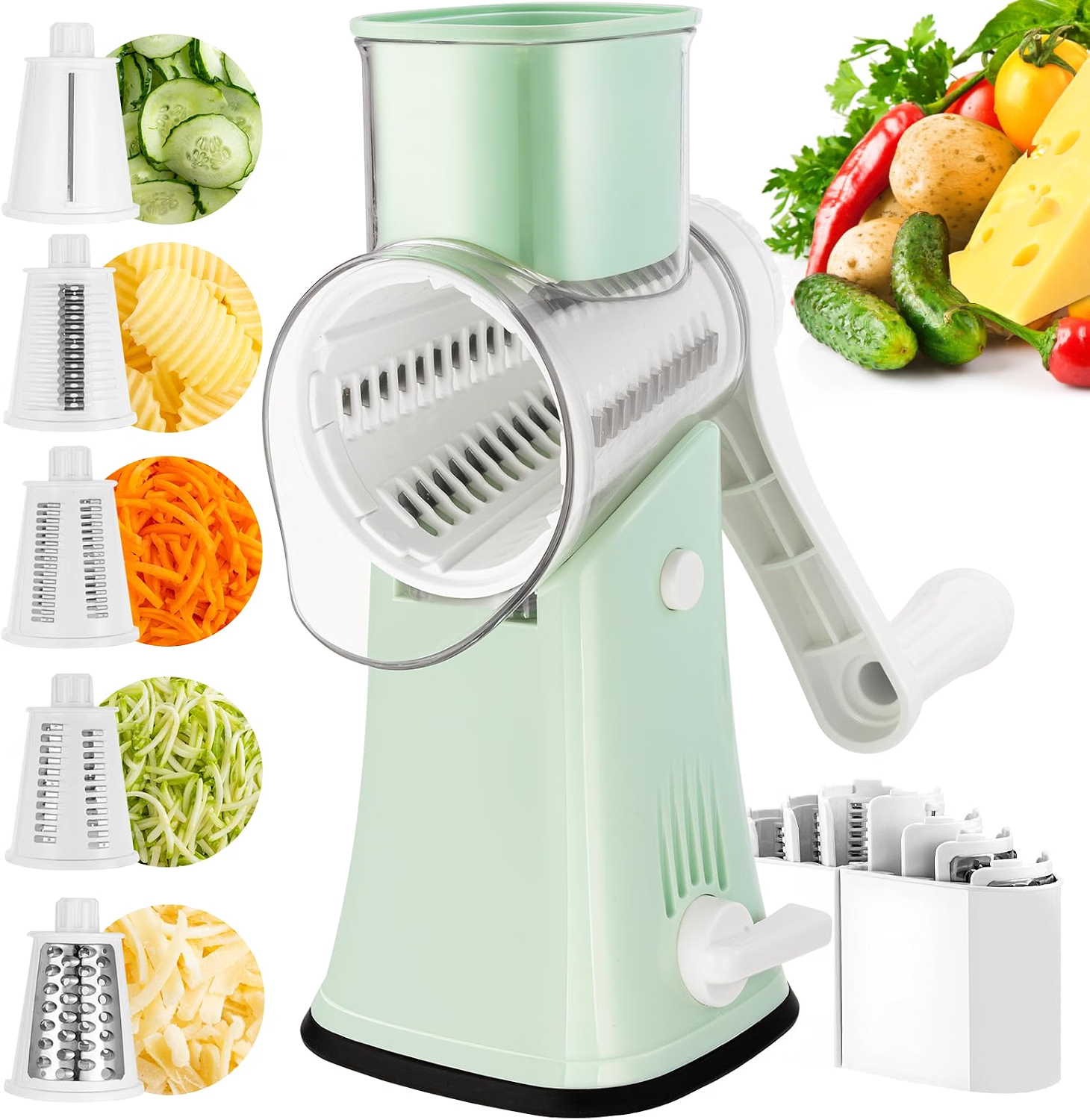
The 5-in-1 Rotary Cheese Grater Hand Crank, Cheese Shredder with Handle is part of this category of manual kitchen tools. Rather than relying on an electric motor, the utensil uses a hand-operated crank to rotate a cutting drum while food is guided through the appropriate feeding area. Different drum designs can be used for different preparation tasks.
This type of kitchen tool can be useful for ingredients such as cheese and certain vegetables, depending on the specific drum being used and the manufacturer’s intended applications. The replaceable stainless-steel cutting components are designed around different grating or slicing functions, giving the tool more flexibility than a single-purpose grater.
A rotary grater does not eliminate the need for preparation or safe food handling. It also does not necessarily replace every grating or slicing tool in a kitchen. Its main purpose is to provide a different way of handling repetitive ingredient preparation.
Understanding how a 5-in-1 rotary cheese grater works, what its different components are intended to do, how to use it safely, and what limitations to consider can help determine whether this style of utensil makes sense for a particular cooking routine.
What Is a Rotary Cheese Grater?
A rotary cheese grater is a manual food-preparation tool that uses a rotating drum to shred, grate, or slice ingredients.
Instead of moving food back and forth across a stationary grating surface, the user turns a crank. The crank rotates the selected drum while the ingredient is pressed toward it.
This creates a continuous motion that can be useful for repetitive preparation tasks.
The concept is relatively simple. The tool generally consists of a body or housing, a hand crank, a feeding area, a food pusher, and interchangeable drums or blades.
The 5-in-1 design provides several drum options intended for different textures or preparation styles. The exact result depends on the drum selected, the ingredient being processed, and the pressure applied.
Because the system is manually operated, it does not require electricity or batteries. This makes it suitable for kitchens where a compact hand-operated tool is preferred.
Key Features
Five Interchangeable Functions
One of the main characteristics of a 5-in-1 rotary grater is the use of multiple interchangeable cutting drums.
Different drums can produce different forms of shredded, grated, or sliced ingredients. This allows the same basic tool to perform several preparation tasks rather than requiring a separate utensil for every texture.
The practical advantage depends on how frequently the different functions are actually used.
For someone who primarily grates cheese, only one or two drum styles may be used regularly. For a cook who prepares a wider range of vegetables and ingredients, the additional options may be more useful.
Hand-Crank Operation
The manual crank is central to the design.
Instead of pressing an ingredient repeatedly against a stationary grater, the user turns the handle to rotate the cutting drum.
This creates a rhythmic motion that some cooks may find convenient for repetitive preparation.
The crank also means the tool can be used without connecting it to an electrical outlet.
Replaceable Stainless-Steel Drums
The cutting drums are designed to be removable and interchangeable.
Stainless steel is commonly used for kitchen grating components because it is suitable for contact with many foods and can provide a durable cutting surface when properly maintained.
The replaceable nature of the drums also means that the tool can be configured according to the ingredient and desired result.
Compact Manual Design
A rotary grater generally takes up less space than many electric food processors.
This can make the category appealing to people who prefer manual kitchen tools or have limited countertop space.
The tool can be stored when not in use and brought out when ingredients need to be grated or shredded.
Food Pusher
A food pusher is an important component of this type of grater.
Its purpose is to help guide food toward the rotating drum while keeping the user’s fingers away from the cutting surface.
Using the pusher as intended is an important part of safe operation.
Multiple Preparation Possibilities
Although cheese is one of the most obvious applications, rotary graters can also be used with various vegetables and other suitable ingredients.
Depending on the drum and the manufacturer’s intended use, ingredients may include carrots, cucumbers, potatoes, zucchini, chocolate, nuts, and other foods that can be processed through the feeding mechanism.
The suitability of each ingredient depends on its firmness, size, moisture content, and shape.
How a 5-in-1 Rotary Cheese Grater Can Be Used
Using a manual rotary grater is relatively straightforward, but getting consistent results depends on preparation and technique.
Step 1: Select the Appropriate Drum
Before assembling the tool, determine what texture the recipe requires.
A finer grating surface may be appropriate when a recipe calls for finely grated cheese or another ingredient. A larger shredding pattern may be more suitable for toppings or salads.
For slicing, the appropriate drum should be selected according to the desired thickness.
Always use the drum intended for the particular preparation task.
Step 2: Assemble the Grater
Install the selected drum into the main body according to the manufacturer’s instructions.
Make sure the component is seated correctly before beginning.
The crank should turn smoothly once the drum has been installed properly.
If the drum does not appear to be positioned correctly, it is better to stop and check the assembly rather than forcing the mechanism.
Step 3: Prepare the Ingredient
Large ingredients should generally be cut into pieces that fit comfortably into the feeding opening.
For example, a large block of cheese may be easier to process when divided into smaller sections.
Vegetables may also need to be trimmed or cut to an appropriate size.
Preparing ingredients in advance can make the feeding process smoother.
Step 4: Secure the Tool
The grater should be placed on a stable surface.
If the model includes a suction or clamping mechanism, use it according to the manufacturer’s instructions to help keep the tool in position.
A stable setup is especially important because one hand will normally be operating the crank while the other manages the food pusher.
Step 5: Insert the Food
Place the prepared ingredient into the feeding chamber.
The food pusher should be used to apply controlled pressure toward the rotating drum.
Avoid using fingers to push food directly against the cutting surface.
Step 6: Turn the Crank
Rotate the handle at a steady pace.
There is generally no need to crank aggressively. A consistent motion can allow the drum to process the ingredient more smoothly.
If the crank becomes difficult to turn, stop and investigate rather than forcing it.
A piece of food may be too large, too firm, or incorrectly positioned.
Step 7: Collect the Prepared Ingredient
Place a bowl, plate, or suitable container beneath the output area.
This allows shredded or sliced food to fall directly into the container instead of accumulating on the counter.
It also makes it easier to transfer the prepared ingredient into a recipe.
Using a Rotary Grater for Cheese
Cheese is one of the most common foods associated with rotary graters.
Harder Cheeses
Firm cheeses can often be convenient to process because they maintain their structure as they pass through the drum.
Depending on the selected drum, the result can range from relatively fine grated pieces to larger shreds.
Examples of cheeses commonly used in grated form include Parmesan, Pecorino, Cheddar, and similar varieties.
The specific suitability of a cheese depends on its firmness and the tool’s intended use.
Semi-Firm Cheese
Semi-firm cheeses may also work well with a suitable grating drum.
However, softer cheeses can sometimes become more difficult to process because they may compress rather than separate cleanly.
Allowing cheese to remain appropriately chilled can sometimes help maintain its structure during preparation, although the exact handling method depends on the cheese.
Pizza Preparation
Shredded cheese is commonly used for pizza.
A rotary grater can help produce a quantity of shredded cheese that can then be distributed across pizza dough.
Different cheese types can also be combined to create a particular texture or flavor profile.
Pasta Toppings
Finely grated cheese is frequently used as a topping for pasta.
A suitable drum can produce smaller pieces that distribute easily over the surface of a dish.
Salads
Grated or shredded cheese can add texture to salads.
Larger shreds may provide a more noticeable texture, while finely grated cheese can distribute more evenly throughout the dish.
Using the Grater for Vegetables
A multi-function rotary grater can extend beyond cheese preparation.
Carrots
Carrots can be shredded for salads, slaws, vegetable mixtures, and other recipes.
The texture can be adjusted by selecting an appropriate drum.
Zucchini
Zucchini can be grated for fritters, baked dishes, breads, and vegetable preparations.
Because zucchini contains considerable moisture, excess liquid may need to be managed depending on the recipe.
Potatoes
Grated potatoes can be used in dishes such as hash browns, potato cakes, and other preparations.
Firm, properly sized pieces are generally easier to handle through a manual grating mechanism.
Cucumbers
Cucumbers can be shredded for salads, sauces, or cold dishes.
Because cucumbers contain significant water, the resulting shreds may need to be drained depending on the recipe.
Other Vegetables
Depending on the tool’s intended applications, other firm vegetables may also be suitable.
The key consideration is whether the ingredient can safely and comfortably fit into the feeding chamber and whether the selected drum is appropriate.
Other Potential Kitchen Uses
A multi-purpose rotary grater can sometimes be useful for ingredients beyond cheese and vegetables.
Chocolate
Chocolate can be grated for dessert toppings or decoration.
A suitable type of chocolate and drum should be used, and the chocolate should be handled in a way that prevents unnecessary melting.
Nuts
Some rotary graters may be capable of processing certain nuts, depending on the manufacturer’s intended applications and the specific cutting drum.
Nuts vary considerably in hardness and size, so users should avoid assuming that every nut is suitable.
Shredded Ingredients for Garnishes
The tool can also be useful when a recipe calls for shredded or grated ingredients as a garnish.
This can include cheese, vegetables, or other suitable foods.
Who May Find a Rotary Cheese Grater Useful?
A 5-in-1 rotary grater is not necessarily appropriate for every kitchen. Its value depends largely on cooking habits.
Home Cooks Who Grate Frequently
People who regularly prepare grated cheese or shredded vegetables may find a multi-function manual grater useful.
The interchangeable drums provide several preparation options without requiring several separate graters.
Families Preparing Larger Meals
When several servings are being prepared, repetitive grating can become a noticeable part of the cooking process.
A rotary mechanism offers an alternative to repeatedly moving food against a flat grater.
Pizza and Pasta Enthusiasts
People who frequently prepare pizza, pasta, baked dishes, or other recipes that use grated cheese may appreciate having a dedicated cheese-preparation tool.
Meal-Prep Cooks
Meal preparation often involves processing multiple ingredients in advance.
A rotary grater can be incorporated into this process when recipes require shredded vegetables or grated cheese.
People Who Prefer Manual Kitchen Tools
Some cooks prefer manual utensils because they do not require electricity and can be cleaned and stored relatively easily.
A hand-crank grater fits naturally into this style of kitchen equipment.
Smaller Kitchens
The compact nature of a manual rotary grater may appeal to people who do not want to dedicate countertop space to a food processor.
However, storage requirements still need to account for the interchangeable drums and other components.
Important Things to Consider
Ingredient Firmness
Not every food is equally suitable for a rotary grater.
Very hard ingredients may require excessive force, while very soft ingredients may compress rather than grate cleanly.
Choosing ingredients that are appropriate for the selected drum can improve the overall process.
Ingredient Size
The feeding opening limits the size of food that can be inserted.
Large blocks or vegetables may need to be cut into smaller pieces.
Preparing ingredients before assembly can reduce interruptions during grating.
The Desired Texture
Choosing the correct drum matters.
A fine drum and a coarse drum can produce substantially different results, even when used with the same ingredient.
Consider the recipe before selecting the cutting component.
Manual Effort
A hand-crank grater still requires physical effort.
Although the rotary motion may provide a different experience from using a flat grater, it does not make ingredient preparation completely effortless.
The amount of effort required can vary according to the ingredient, quantity, and cutting drum.
Stability
A rotary grater should remain stable while being used.
If the tool shifts across the countertop, controlling the food and crank becomes more difficult.
Use the tool’s intended stabilization mechanism if one is provided.
Cleaning
Food particles can collect inside the drum, feeding chamber, and housing.
Cleaning soon after use can help prevent residue from drying in difficult-to-reach areas.
The removable drums should be cleaned according to the manufacturer’s instructions.
Cutting Surfaces
The stainless-steel drums contain working edges designed to grate or slice food.
They should be handled carefully during installation, removal, washing, and storage.
Avoid touching the cutting surface unnecessarily.
Storage
A multi-drum system requires more storage organization than a single flat grater.
Keeping the drums together can make it easier to locate the correct component when preparing food.
A dry storage area is generally preferable for clean kitchen utensils.
Rotary Grater vs. Flat Box Grater
The traditional box grater remains one of the most common kitchen tools for shredding cheese and vegetables.
Flat or Box Grater Advantages
A box grater can offer several grating surfaces and requires no assembly.
It is also versatile and familiar to most cooks.
The main limitation is that food must be moved manually across the grating surface.
Rotary Grater Advantages
A rotary model uses a hand crank to rotate the cutting drum.
The user does not need to repeatedly move the ingredient back and forth over a large stationary surface.
The enclosed drum can also provide a more contained grating process.
The better option depends on the user’s preferences, kitchen space, ingredient volume, and desired preparation style.
Rotary Grater vs. Electric Food Processor
Electric food processors can grate and shred large quantities of ingredients quickly.
They can also perform many additional functions, depending on the model.
However, an electric processor generally requires countertop space, electricity, and additional cleaning.
A manual rotary grater provides a simpler alternative for smaller quantities and does not require an electrical connection.
For very large batches, an electric appliance may be more appropriate. For smaller everyday tasks, a manual tool may be sufficient.
Rotary Grater vs. Traditional Hand Grater
A handheld flat grater is compact and inexpensive in terms of kitchen storage.
It can be useful for quickly grating small quantities.
A rotary grater provides a different mechanism and can offer several interchangeable drums.
The choice depends on whether the user values the hand-crank design and multiple drum options or prefers the simplicity of a single flat surface.
Rotary Grater vs. Mandoline Slicer
A mandoline is primarily designed for producing uniform slices.
Some mandolines include interchangeable blades that can create julienne or other cuts.
A rotary grater is generally more focused on grating and shredding, although some drum designs can provide slicing functions.
Neither tool necessarily replaces the other. Their usefulness depends on the preparation style required by a recipe.
Tips for Better Results
Keep Ingredients Appropriately Sized
Cutting ingredients into manageable pieces can help the feeding mechanism operate more smoothly.
Avoid forcing oversized pieces into the chamber.
Avoid Excessive Pressure
The food pusher is designed to guide food toward the drum.
Applying excessive pressure is generally unnecessary and can make the crank harder to turn.
Use a Consistent Cranking Motion
A steady pace can help maintain a consistent flow of food through the drum.
Rapid or uneven cranking may make the process less controlled.
Choose the Correct Drum
The cutting component has a direct impact on the final texture.
Take a moment to identify which drum is appropriate before beginning.
Prepare the Collection Container First
Having a bowl positioned underneath the output area before starting makes the process cleaner and more organized.
Clean Between Different Ingredients
If the same drum is used for multiple foods, cleaning between ingredients can help prevent flavors or residues from transferring.
This is especially important when moving between ingredients that are used in very different recipes.
Food Safety and Hygiene
Kitchen tools that come into direct contact with food should be cleaned properly after use.
Wash hands and preparation surfaces before handling ingredients. Keep raw ingredients separate from ready-to-eat foods where appropriate, and clean utensils between different food types when cross-contamination could be a concern.
The grater’s cutting drums should receive particular attention because food particles can remain around small openings.
If the tool includes removable components, disassemble them carefully and clean them according to the manufacturer’s recommendations.
Never attempt to clean a cutting drum while the tool is assembled and connected to a moving mechanism.
Allow components to dry properly before storage.
Maintaining a Rotary Cheese Grater
Maintenance is mostly about cleaning, careful handling, and proper storage.
The cutting drums should be inspected after each use for food residue.
If cheese becomes lodged in the openings, avoid using sharp objects or excessive force to remove it unless the manufacturer’s cleaning instructions specifically recommend a particular method.
The hand crank and housing should also be checked for food residue.
If the mechanism becomes unusually difficult to turn, stop using the tool and inspect it.
A properly assembled tool should operate without requiring excessive force.
Making the Most of a 5-in-1 Design
The usefulness of multiple cutting drums depends on actually incorporating them into different cooking tasks.
For example, one drum might be used for finely grated cheese for pasta, another for coarser shreds for pizza, and another for preparing vegetables for a salad.
Instead of treating the additional drums as interchangeable without purpose, consider the texture required by each recipe.
This approach can make the multi-function design more practical.
It can also help reduce the need to switch between several separate kitchen tools.
Keeping the drums organized and clearly identifying their different functions can save time during meal preparation.
When a Different Tool May Make More Sense
A rotary grater is specialized equipment, and there are situations where another utensil may be more convenient.
If only a small amount of cheese needs to be grated, a handheld grater may be quicker to set up.
For very large quantities, an electric food processor may require less manual effort.
For precision slicing, a mandoline or knife may offer more control depending on the recipe.
The purpose of a rotary grater is not to become the only preparation tool in a kitchen. Instead, it offers another method for common shredding and grating tasks.
Frequently Asked Questions
What is a 5-in-1 rotary cheese grater?
It is a manual kitchen utensil that uses interchangeable rotating drums to perform several grating, shredding, or slicing functions.
Does a rotary grater require electricity?
No. A hand-crank rotary grater is manually operated and does not require an electrical outlet.
Can it be used for vegetables?
Many rotary graters are designed for suitable vegetables in addition to cheese. Firm vegetables such as carrots, potatoes, and zucchini may be appropriate depending on the specific drum and manufacturer’s intended use.
Can it grate cheese for pizza?
A suitable drum can be used to prepare shredded cheese for pizza, provided the cheese is compatible with the tool and the selected cutting surface.
Can it grate Parmesan?
Firm cheeses such as Parmesan are commonly grated for pasta, soups, salads, and other dishes. The appropriate drum should be selected based on the desired texture.
Can soft cheese be processed?
Soft cheese may be more difficult to process because it can compress or stick rather than separate cleanly. The suitability depends on the specific cheese and tool.
Are the cutting drums removable?
The 5-in-1 design uses interchangeable drums, allowing users to select different cutting surfaces for different preparation tasks.
How do I change the drums?
Drum changes should be performed according to the manufacturer’s assembly instructions. Handle cutting surfaces carefully during removal and installation.
Is a rotary grater easier than a traditional grater?
The experience is different rather than universally easier. A rotary grater uses a crank and rotating drum, while a traditional grater requires the ingredient to be moved across a stationary surface. The preferred method depends on the user and the quantity being prepared.
Can the tool replace a food processor?
Not completely. A food processor can perform many functions and may be more suitable for large quantities. A manual rotary grater is more focused on grating, shredding, and related preparation tasks.
How should a rotary cheese grater be cleaned?
Remove food residue from the drums and other food-contact areas and clean the components according to the manufacturer’s instructions. Pay particular attention to the cutting surfaces and small openings.
Can children use a rotary grater?
Because the tool contains cutting surfaces, it should be used only by people capable of handling kitchen utensils safely and under appropriate supervision when necessary.
Why does the crank become difficult to turn?
Possible reasons include an oversized ingredient, an ingredient that is too hard or soft for the selected drum, incorrect assembly, or food becoming lodged in the mechanism. Stop rather than forcing the crank and check the tool.
Does the type of drum affect the texture?
Yes. Different drum designs are intended to create different preparation results, such as finer or coarser shreds or other cuts.
Can a rotary grater be used for meal preparation?
Yes. It can be incorporated into meal preparation when recipes require quantities of grated cheese or shredded vegetables.
Conclusion
A 5-in-1 rotary cheese grater provides a manual alternative to conventional grating and shredding methods. Its hand-crank mechanism rotates interchangeable cutting drums, allowing the same basic kitchen tool to handle different preparation tasks.
For cheese, it can be useful for preparing ingredients for pizza, pasta, salads, casseroles, and other dishes. Depending on the selected drum and the manufacturer’s intended applications, it can also be used with suitable vegetables and other ingredients.
The replaceable stainless-steel drums give the tool flexibility, while the manual design means it can be used without electricity. The food pusher and rotating drum also create a different preparation experience from a traditional box grater or flat handheld grater.
At the same time, the tool has practical limitations. Ingredient size and texture matter, manual effort is still required, and the cutting components need careful handling. Cleaning is another consideration because food particles can collect around the drums and feeding mechanism.
The most suitable choice ultimately depends on individual cooking habits. Someone who occasionally needs a small amount of grated cheese may prefer a simple handheld grater. Someone who regularly prepares shredded cheese and vegetables may find the interchangeable-drum concept more relevant to their kitchen routine. For larger quantities, an electric food processor may offer a different level of convenience.
Used with appropriate ingredients, careful technique, and proper cleaning, a manual rotary grater can become a useful part of a broader kitchen-preparation system.
Leave a Reply