Introduction
Preparing fresh ingredients is an important part of everyday cooking, but repetitive tasks such as shredding cheese, grating vegetables, and creating thin slices can take more time than expected. A conventional box grater or handheld grater can handle many of these jobs, but they usually require the cook to move food back and forth against a stationary cutting surface.
A rotary cheese grater offers a different approach. Instead of repeatedly moving the ingredient across a fixed blade, the user turns a hand crank that rotates a cutting drum. As the drum turns, the food is guided through the grating or slicing surface.
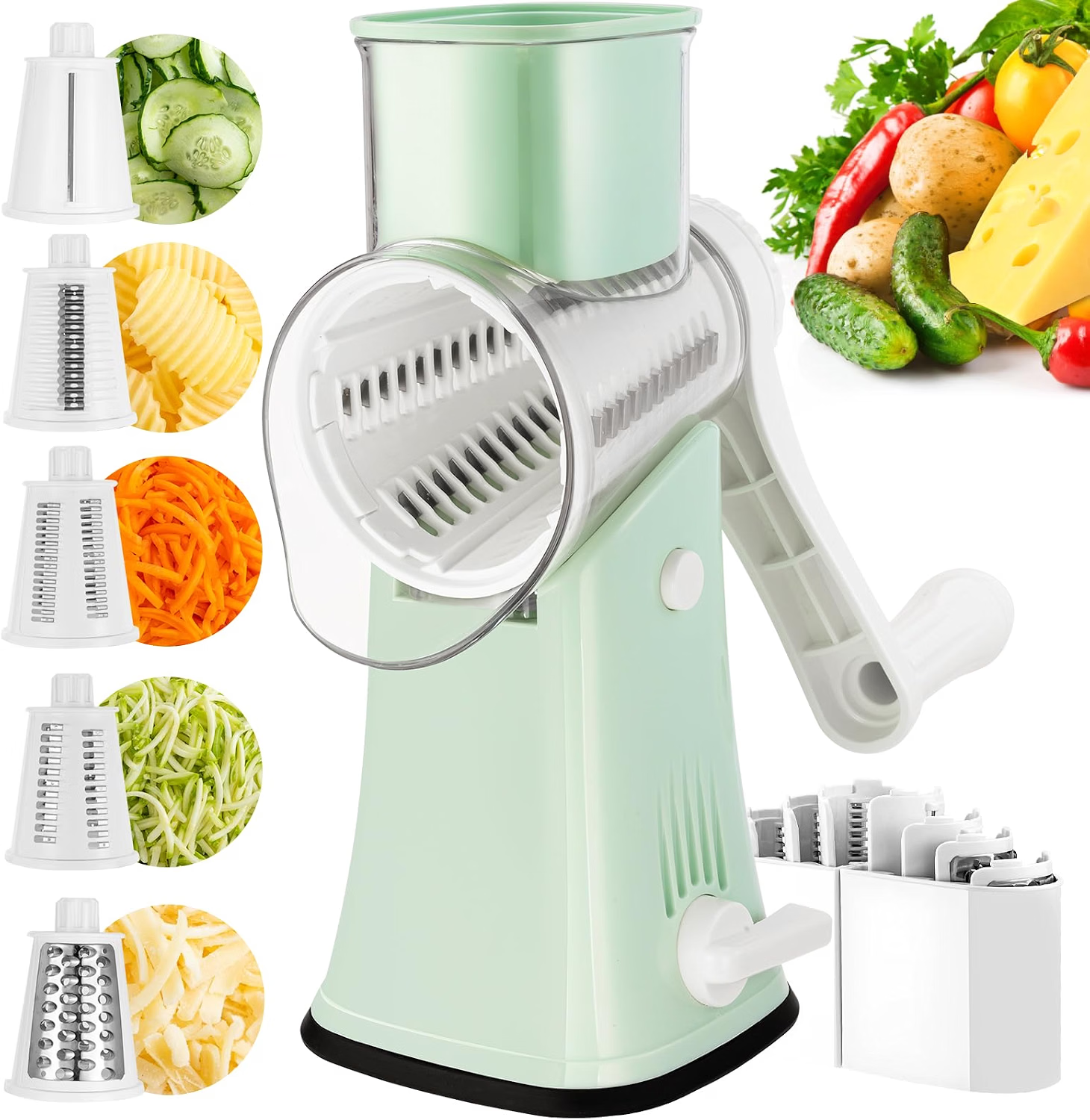
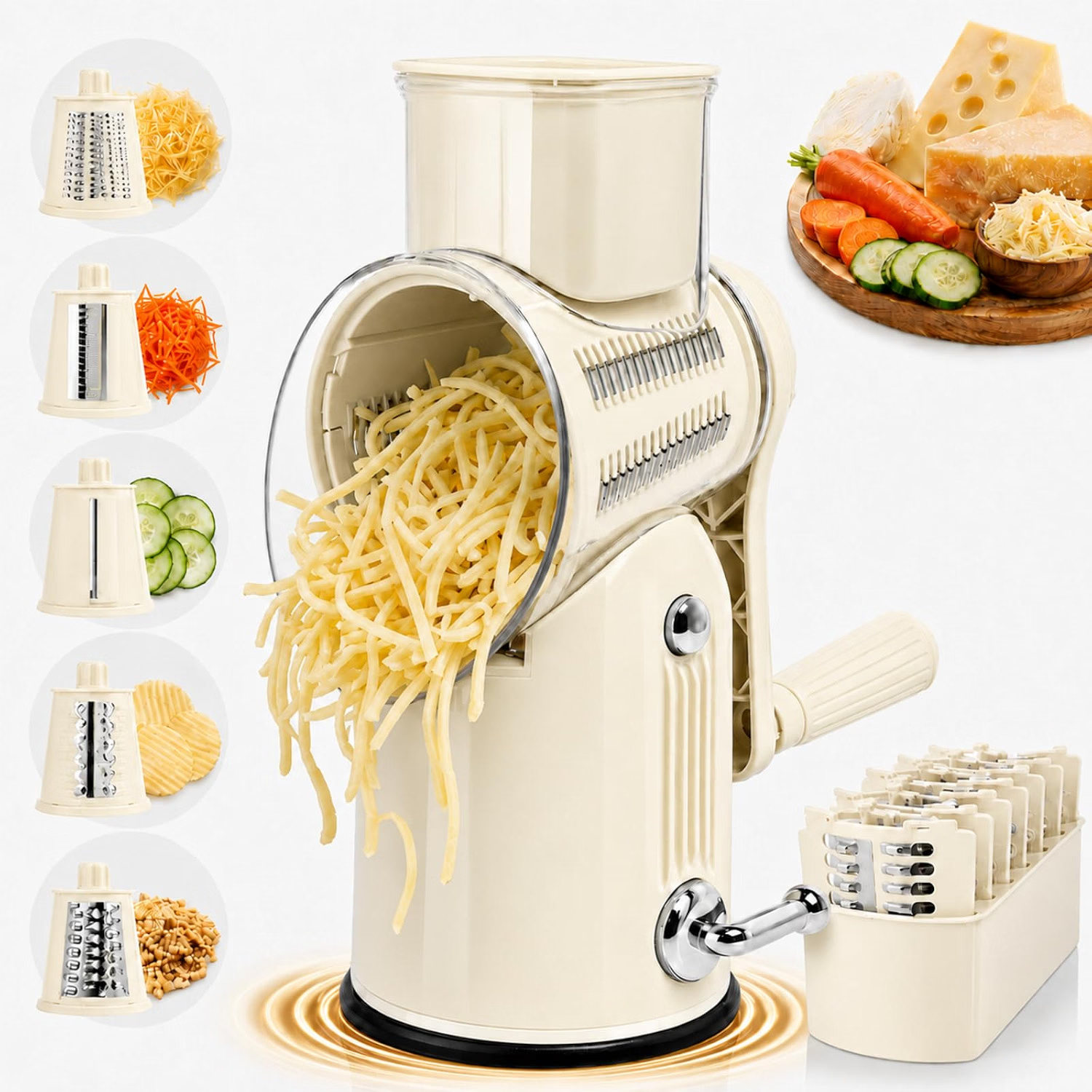
The 5-in-1 Rotary Cheese Grater and Vegetable Slicer with Suction Base, White is designed around this manual rotary concept. The multiple cutting options allow the same general appliance to be used for different preparation tasks, while the suction base is intended to help keep the unit stable during operation.
This type of kitchen tool can be useful for people who regularly prepare grated cheese, shredded vegetables, sliced ingredients, or similar foods. It can also be an interesting alternative for cooks who prefer manual equipment over electric food processors.
However, a multi-function rotary grater is not necessarily the right tool for every kitchen. The usefulness of its different drums depends on the types of foods being prepared, the quantity involved, available storage space, and individual cooking habits.
This guide explains how a five-function rotary grater works, what its main components are intended to do, how it can be incorporated into different recipes, and what to consider when comparing it with conventional graters, mandolines, and food processors.
What Is a Rotary Cheese Grater and Vegetable Slicer?
A rotary cheese grater is a manual food-preparation device that uses a rotating drum to grate, shred, or slice ingredients.
The basic mechanism involves a hand crank connected to a cylindrical cutting drum. When the crank is turned, the drum rotates. Food is pressed toward the drum through a feeding chamber, allowing the cutting surface to process the ingredient.
A multi-function model typically includes several interchangeable drums. Each drum can have a different cutting pattern, allowing the user to change the texture or style of the finished ingredient.
The addition of a suction base is intended to address one of the practical challenges of hand-crank food preparation: keeping the tool in position.
Instead of holding the grater with one hand while turning the crank with the other, a properly secured base can help keep the main body stable on a suitable countertop.
The exact performance of the suction mechanism depends on the surface and the condition of the suction components. A clean, smooth, nonporous countertop generally provides a more suitable environment for suction-based stabilization than a rough or textured surface.
Key Features
Five Cutting Functions
The main attraction of a 5-in-1 rotary grater is its multiple cutting options.
Rather than having only one fixed grating surface, the system uses interchangeable drums that can provide different types of cuts.
Depending on the drum design, these may include fine grating, coarse shredding, or slicing.
Having several options in one tool can be useful when recipes call for different textures.
For example, finely grated cheese may be appropriate for pasta, while larger shreds may be useful for pizza or casseroles. A different cutting surface can be used when preparing certain vegetables.
The exact result depends on the drum being used and the ingredient being processed.
Rotary Hand-Crank Mechanism
The hand crank allows the cutting drum to rotate without electricity.
This gives the tool a relatively simple operating principle. The user turns the handle while applying controlled pressure with the food pusher.
A manual system can be useful when preparing smaller quantities because it does not require plugging in an appliance or setting up an electric food processor.
Suction Base
The suction base is intended to help stabilize the grater during use.
A stable tool can make food preparation more controlled because the user’s hands can focus on turning the crank and guiding the ingredient.
Suction bases work most effectively when properly attached to an appropriate surface.
Countertop condition matters. Dust, crumbs, moisture, texture, or an uneven surface can reduce the effectiveness of suction.
The base should be secured according to the manufacturer’s instructions before use.
White Finish
The product is presented with a white exterior.
A neutral color can fit easily with many kitchen environments and makes the tool visually distinct from the stainless-steel cutting drums.
Color is primarily a matter of personal preference, but lighter surfaces can make food residue easier to notice during cleaning.
Food Pusher
A food pusher is an important part of a rotary grater.
Its purpose is to help guide food toward the rotating drum while keeping fingers away from the cutting surface.
Users should use the pusher as intended instead of attempting to push food toward the drum with their hands.
Removable Cutting Components
Interchangeable drums need to be removed when switching between different preparation styles and when cleaning.
This modular approach makes the tool more versatile but also means that users need to keep track of the individual components.
Proper assembly is important before operation.
How It Can Be Used
A rotary grater can become useful across several stages of food preparation.
Grating Cheese
Cheese is one of the most obvious applications for this type of utensil.
Depending on the drum, the tool can produce different sizes of grated or shredded cheese.
Pasta
Finely grated cheese can be used as a topping for pasta dishes.
A fine cutting surface can create smaller pieces that distribute easily across the dish.
Pizza
Larger shredded cheese can be useful when preparing homemade pizza.
The shreds can be spread across the dough before baking.
Casseroles
Grated cheese is frequently incorporated into casseroles and baked dishes.
The ability to prepare a quantity of shredded cheese can be helpful when cooking for multiple people.
Salads
Shredded cheese can add flavor and texture to salads.
Different cheese varieties can be grated according to the desired texture.
Preparing Vegetables
A multi-function rotary slicer can also be used for various vegetables that are compatible with the cutting drums.
Carrots
Carrots can be shredded for salads, slaws, vegetable mixtures, and garnishes.
The appropriate drum should be selected according to the desired texture.
Zucchini
Grated zucchini can be used in fritters, baked recipes, vegetable dishes, and certain breads.
Because zucchini contains a substantial amount of water, excess moisture may need to be removed depending on the recipe.
Potatoes
Potatoes can be shredded for hash browns, potato cakes, and other recipes.
Firm pieces that fit properly into the feeding chamber can generally be easier to process than oversized pieces.
Cucumbers
Cucumbers can be shredded or prepared for salads, sauces, and cold dishes.
Their high water content means the resulting pieces may need to be drained before certain recipes.
Radishes
Radishes can be grated or sliced for salads and vegetable toppings when an appropriate cutting drum is available.
Other Suitable Vegetables
Other firm vegetables may also be compatible with a rotary grater, depending on the manufacturer’s intended uses and the specific drum.
Users should avoid assuming that every vegetable can be processed simply because the tool includes multiple cutting functions.
Very hard, unusually shaped, or excessively large foods may not be appropriate.
Preparing Ingredients for Recipes
One of the practical advantages of a multi-function grater is that it can help prepare ingredients before the main cooking process begins.
For example, a cook making homemade pizza can prepare cheese first, followed by vegetables for toppings.
Someone preparing a salad can shred carrots, slice suitable vegetables, and grate cheese using different drums.
During meal preparation, ingredients can be processed in batches and placed into separate bowls before cooking begins.
This can make the overall workflow more organized.
The tool does not eliminate preparation, but it can provide a dedicated method for repetitive grating and slicing tasks.
How to Use the Suction Base
The suction base is an important part of the product’s operation.
Choose an Appropriate Surface
Start with a clean, smooth, stable countertop.
Suction mechanisms generally work better on smooth, nonporous surfaces than on rough, porous, or heavily textured materials.
Remove crumbs, grease, or moisture that could interfere with contact.
Position the Grater
Place the grater in the desired working position.
Make sure there is enough space underneath and around the tool for comfortable operation.
Engage the Suction
Activate the suction mechanism according to the manufacturer’s instructions.
The tool should feel securely attached before food preparation begins.
Test Stability
Before inserting food, gently check that the unit is stable.
If it moves easily, stop and reposition it rather than beginning to grate.
Monitor During Use
Even when suction is engaged, periodically remain aware of the tool’s position.
If the base begins to loosen, stop operating the crank and re-secure it.
Step-by-Step Guide to Using the Rotary Grater
Step 1: Select a Drum
Choose the cutting drum that matches the texture required by the recipe.
Step 2: Install the Drum
Insert and secure the selected drum according to the manufacturer’s instructions.
Step 3: Secure the Base
Place the tool on an appropriate countertop and activate the suction mechanism.
Step 4: Prepare the Food
Cut large ingredients into manageable pieces that fit comfortably into the feeding chamber.
Step 5: Insert the Ingredient
Place the food inside the feeding area.
Step 6: Use the Pusher
Apply gentle, controlled pressure with the food pusher.
Avoid pressing excessively.
Step 7: Turn the Crank
Rotate the handle at a steady pace.
The drum should process the food as it rotates.
Step 8: Collect the Food
Place a bowl or plate below the output opening to collect the grated or sliced ingredient.
Step 9: Stop Before the Food Gets Too Small
Do not attempt to push tiny remaining pieces into the drum with your fingers.
Use the food pusher and follow the manufacturer’s intended procedure.
Who May Find This Tool Suitable?
Home Cooks
People who frequently prepare meals from scratch may appreciate having several grating and slicing functions in one compact tool.
Cheese Lovers and Pasta Cooks
Those who regularly prepare grated cheese for pasta, pizza, casseroles, salads, and other recipes may find a dedicated cheese grating system useful.
Meal-Prep Enthusiasts
Preparing multiple ingredients in advance can involve a considerable amount of shredding and slicing.
A rotary system can be incorporated into a batch-preparation routine.
Families
Cooking for several people can increase the amount of food preparation required.
A multi-function tool may be useful when several ingredients need to be grated or shredded.
People With Limited Counter Space
A manual rotary grater generally takes up less countertop space than many electric food processors.
It can be stored when not needed.
People Who Prefer Manual Tools
Some cooks prefer kitchen equipment that does not depend on electricity.
A hand-crank grater provides a straightforward alternative to an electric processor for appropriate quantities.
Important Things to Consider
The Suction Base Depends on the Countertop
A suction base cannot guarantee the same level of stability on every surface.
Smooth, clean, nonporous surfaces are generally more appropriate.
Textured stone, unfinished wood, heavily patterned countertops, or surfaces with crumbs and grease may interfere with suction.
This is an important consideration when deciding where to use the tool.
Ingredient Size Matters
Food needs to fit into the feeding chamber.
Large blocks of cheese and oversized vegetables should be divided into smaller pieces rather than forced into the opening.
Ingredient Texture Matters
Different foods behave differently under pressure.
Hard ingredients may require more effort, while soft foods can become compressed.
Extremely soft ingredients may not produce the desired result.
Manual Operation Requires Effort
A hand crank does not remove physical effort completely.
The user still needs to turn the handle while applying controlled pressure.
The amount of effort depends on the ingredient, quantity, and selected drum.
Drum Selection Affects Results
Using the wrong cutting surface can produce an unsuitable texture.
Before starting, consider whether the recipe calls for fine shreds, coarse shreds, slices, or another preparation style.
Cleaning Can Take Time
A multi-component kitchen tool usually requires more cleaning attention than a simple flat grater.
Food can become lodged inside the drums or around the feeding mechanism.
Cleaning after use is therefore important.
Moving Parts Need Care
The crank and interchangeable drum system contain moving components.
Do not force the mechanism if it becomes difficult to turn.
Stop and check whether the food is too large, the drum is incorrectly installed, or residue is interfering with movement.
Rotary Grater vs. Traditional Box Grater
A box grater is one of the most familiar tools for shredding cheese and vegetables.
It normally includes several grating surfaces and can provide different textures.
Box Grater Advantages
A box grater is straightforward and does not require assembly.
It can be used immediately and is capable of handling many common kitchen tasks.
Rotary Grater Advantages
A rotary grater changes the motion involved in food preparation.
Instead of moving food repeatedly against a stationary surface, the user turns a crank to rotate the cutting drum.
The suction base can also provide additional stability on suitable countertops.
The choice between the two depends on personal preference, quantity, storage space, and desired workflow.
Rotary Grater vs. Handheld Grater
A handheld grater is compact and useful for smaller quantities.
It requires the user to move the food manually against the grating surface.
A rotary grater offers a crank-based mechanism and several interchangeable drums.
For a small amount of cheese, a handheld grater may be sufficient.
For repeated shredding or for cooks who prefer a rotary motion, the multi-drum approach offers another option.
Rotary Grater vs. Mandoline
Mandolines are primarily associated with slicing.
They can create thin, consistent slices and may include additional blade configurations.
A rotary grater can also offer slicing through certain drums, but its main purpose remains grating and shredding.
If precision slicing is the main priority, a dedicated mandoline may provide a different experience.
If a combination of grating, shredding, and some slicing is more useful, a multi-function rotary system may be more relevant.
Rotary Grater vs. Food Processor
An electric food processor can grate, shred, slice, chop, and perform numerous other functions depending on its attachments.
It can also process larger quantities quickly.
However, it requires electricity, additional countertop or storage space, and typically involves more components to clean.
A manual rotary grater does not require electricity and can be suitable for smaller preparation tasks.
The appropriate option depends on cooking volume and how many different functions are required.
Rotary Grater vs. Electric Grater
Electric graters provide motorized operation.
This can reduce the amount of manual effort required, particularly when preparing large quantities.
The tradeoff is the need for power and a motorized appliance.
A hand-crank model provides greater simplicity and can be used without an outlet.
For people who prepare relatively small quantities and prefer manual tools, this may be a useful distinction.
Cheese Preparation Tips
Keep Cheese Firm
Firm or semi-firm cheese can often be easier to process than very soft cheese.
Keeping cheese appropriately chilled can help it retain its structure during preparation.
Cut Large Blocks Into Smaller Pieces
A smaller block can be easier to place into the feeding chamber.
Avoid forcing large pieces through the opening.
Match the Drum to the Recipe
Fine grating may be appropriate for Parmesan-style toppings, while larger shreds can be useful for pizza and casseroles.
Collect Cheese in a Bowl
Positioning a bowl underneath the output opening helps keep shredded cheese contained.
If cheese is being prepared in a large quantity, this can make transferring it to a recipe easier.
Vegetable Preparation Tips
Wash Vegetables Before Processing
Fresh vegetables should be cleaned appropriately before being placed into the grater.
Trim Ends
Remove unsuitable ends, stems, or damaged sections before processing.
Choose Appropriate Pieces
Cut vegetables into pieces that fit safely into the feeding chamber.
Consider Moisture
Some vegetables release significant moisture when shredded.
Ingredients such as zucchini and cucumber may require draining depending on the recipe.
Process Similar Ingredients Together
When preparing multiple ingredients, organizing them by recipe or preparation type can make the workflow more efficient.
Cleaning and Maintenance
Cleaning is an important part of using any kitchen tool that comes into direct contact with food.
After use, remove food particles from the drum and feeding area.
Interchangeable cutting drums should be handled carefully during removal because their cutting surfaces can be sharp.
Wash components according to the manufacturer’s instructions.
Do not assume that every part is dishwasher-safe unless that information is specifically provided.
The main housing, suction base, crank, and drums may have different care requirements.
Pay Attention to the Suction Base
The suction surface should be cleaned regularly.
Food residue, grease, or debris can affect how well the base attaches to the countertop.
After cleaning, allow the components to dry appropriately before storage.
Keep the Drums Dry
Moisture should not be left sitting around cutting surfaces or inside areas where components connect.
Proper drying can help maintain the tool in good condition.
Storage Considerations
A five-function kitchen tool includes more components than a single grater.
The interchangeable drums should be stored together where possible.
A dedicated container or drawer section can help prevent the components from becoming separated.
The cutting drums should be protected from unnecessary impact against other utensils.
Because the tool is manually operated and compact compared with an electric processor, it can be practical for kitchens where appliance storage is limited.
Safety Considerations
A rotary grater contains cutting surfaces and moving components, so normal kitchen safety practices should be followed.
Keep fingers away from the rotating drum.
Always use the food pusher.
Do not attempt to retrieve food while the drum is moving.
If a piece becomes stuck, stop operating the crank before attempting to clear the obstruction.
Be particularly careful when changing drums. Hold them by appropriate non-cutting areas rather than touching the grating surface unnecessarily.
Children should use kitchen tools of this type only with appropriate adult supervision.
The suction base should also be checked before use to ensure the tool is properly positioned.
Making the Tool Part of a Meal-Prep Routine
A multi-function grater can become more useful when incorporated into an organized preparation process.
For example, before making a family dinner, a cook could prepare all the grated cheese first.
Next, vegetables can be processed using the appropriate drum.
The prepared ingredients can then be divided into bowls according to the recipes being prepared.
This approach can help reduce repeated setup and cleanup.
For weekly meal preparation, the tool can also be used to prepare certain ingredients in batches, provided the food is stored using appropriate food-safety practices.
The important point is that the grater is most useful when its functions correspond to foods that appear regularly in the user’s cooking routine.
Common Mistakes to Avoid
Forcing Large Ingredients
Oversized ingredients should not be forced into the feeding chamber.
Cut them into manageable pieces instead.
Applying Too Much Pressure
The food pusher should guide the ingredient toward the drum rather than forcing it aggressively.
Excessive pressure can make the crank more difficult to turn.
Using an Unstable Surface
A suction mechanism cannot compensate for every countertop condition.
Choose an appropriate surface and confirm stability before operating the tool.
Touching the Cutting Drum
Cutting components should be handled carefully.
Avoid touching the cutting surface unnecessarily, especially during cleaning or replacement.
Ignoring Food Residue
Small pieces of cheese or vegetables can remain around the drum and feeding chamber.
Cleaning immediately after use can help prevent residue from drying.
Assuming Every Food Is Suitable
A five-function tool is versatile, but that does not mean every ingredient should be processed through it.
Consider food firmness, size, shape, and the manufacturer’s intended uses.
Frequently Asked Questions
What is a 5-in-1 rotary cheese grater?
A 5-in-1 rotary cheese grater is a manual kitchen tool that uses multiple interchangeable cutting drums to grate, shred, or slice suitable ingredients.
Does the rotary grater require electricity?
No. The hand-crank design operates manually and does not require an electrical connection.
What is the suction base for?
The suction base is designed to help keep the grater stable on an appropriate countertop during use.
Does the suction work on every countertop?
Not necessarily. Suction generally works more effectively on clean, smooth, nonporous surfaces. Rough, porous, wet, or heavily textured surfaces may reduce stability.
Can the grater be used for vegetables?
Yes, the product category is intended for both cheese and suitable vegetables. The specific vegetable should be compatible with the selected drum and the manufacturer’s intended uses.
Can it slice vegetables?
The five-function design includes different cutting options, which may include slicing depending on the specific drum configuration. The appropriate component should be selected for the desired result.
Can it be used for potatoes?
Suitable potatoes can potentially be processed using an appropriate shredding drum, particularly for recipes that require grated potatoes. Pieces should be prepared to fit the feeding chamber.
Can it grate carrots?
Carrots are commonly prepared in shredded form for salads and other recipes. Use an appropriate drum and manageable pieces.
Can it grate cheese for pizza?
A suitable shredding drum can be used to prepare cheese for pizza and similar recipes.
Is a rotary grater better than a box grater?
Neither style is universally better. A box grater is simple and versatile, while a rotary grater offers hand-crank operation, interchangeable drums, and a suction-based stabilization system.
Is a rotary grater suitable for large quantities?
It can handle appropriate quantities, but manual operation requires physical effort. For very large batches, an electric food processor may be more practical.
How should the cutting drums be cleaned?
Remove them carefully and clean them according to the manufacturer’s instructions. Pay attention to food residue around the cutting openings.
Are the drums dishwasher-safe?
Dishwasher compatibility should not be assumed unless it is specifically stated by the manufacturer.
What should I do if the crank becomes difficult to turn?
Stop turning the crank and inspect the tool. The ingredient may be too large or unsuitable, the drum may not be installed correctly, or food residue may be interfering with the mechanism.
Can soft cheese be grated?
Very soft cheese can be more difficult to process because it may compress or stick. Firmer cheese is generally more appropriate for rotary shredding, but suitability depends on the particular ingredient and tool.
Can children use a rotary grater?
Because the tool contains cutting surfaces and moving components, children should only use it with appropriate adult supervision.
How should the grater be stored?
Store the clean and dry tool with its interchangeable drums in a safe location. Keeping the components together can make future use more convenient.
Does the white color affect performance?
The white finish is primarily an aesthetic feature. Performance depends on the construction, cutting components, ingredient, and how the tool is used.
Conclusion
The 5-in-1 Rotary Cheese Grater and Vegetable Slicer with Suction Base provides a manual approach to several common food-preparation tasks.
Its main concept is straightforward: interchangeable cutting drums rotate through the use of a hand crank, while a food pusher guides ingredients toward the cutting surface. The suction base is intended to help stabilize the tool on an appropriate countertop.
The multiple cutting options can make the utensil useful for preparing cheese and various vegetables. Grated cheese can be incorporated into pasta, pizza, casseroles, salads, and other dishes, while shredded or sliced vegetables can be used across salads, side dishes, fritters, and meal-preparation recipes.
The tool also provides an alternative to several common kitchen methods. Compared with a box grater, it uses a rotary motion rather than repeatedly moving food over a stationary surface. Compared with an electric food processor, it does not require electricity and can occupy less countertop space. Compared with a mandoline, it focuses more heavily on grating and shredding while potentially providing some slicing functions through its different drums.
There are also practical limitations to keep in mind. The suction base depends on the countertop surface, manual operation still requires effort, and different ingredients may behave differently depending on their size and texture. The interchangeable drums also require careful cleaning and storage.
Safe handling is especially important because the cutting components are sharp and the mechanism contains moving parts. Using the food pusher, keeping fingers away from the drums, securing the base, and stopping the mechanism before clearing an obstruction are sensible practices.
For cooks who frequently prepare grated cheese or shredded vegetables and prefer manual kitchen equipment, a five-function rotary grater can be a practical addition to a food-preparation setup. For occasional small tasks, a simple handheld or box grater may be enough. The most appropriate choice ultimately depends on cooking habits, preferred preparation methods, available space, and the types of ingredients commonly used.