Introduction
Small kitchen tools can sometimes solve surprisingly specific everyday problems. Pickles, olives, jalapeños, cocktail onions, marinated vegetables, and similar foods are easy to enjoy but can be awkward to remove from jars or containers. A conventional fork can work, but it may drip liquid across the counter or require another place to rest between uses.
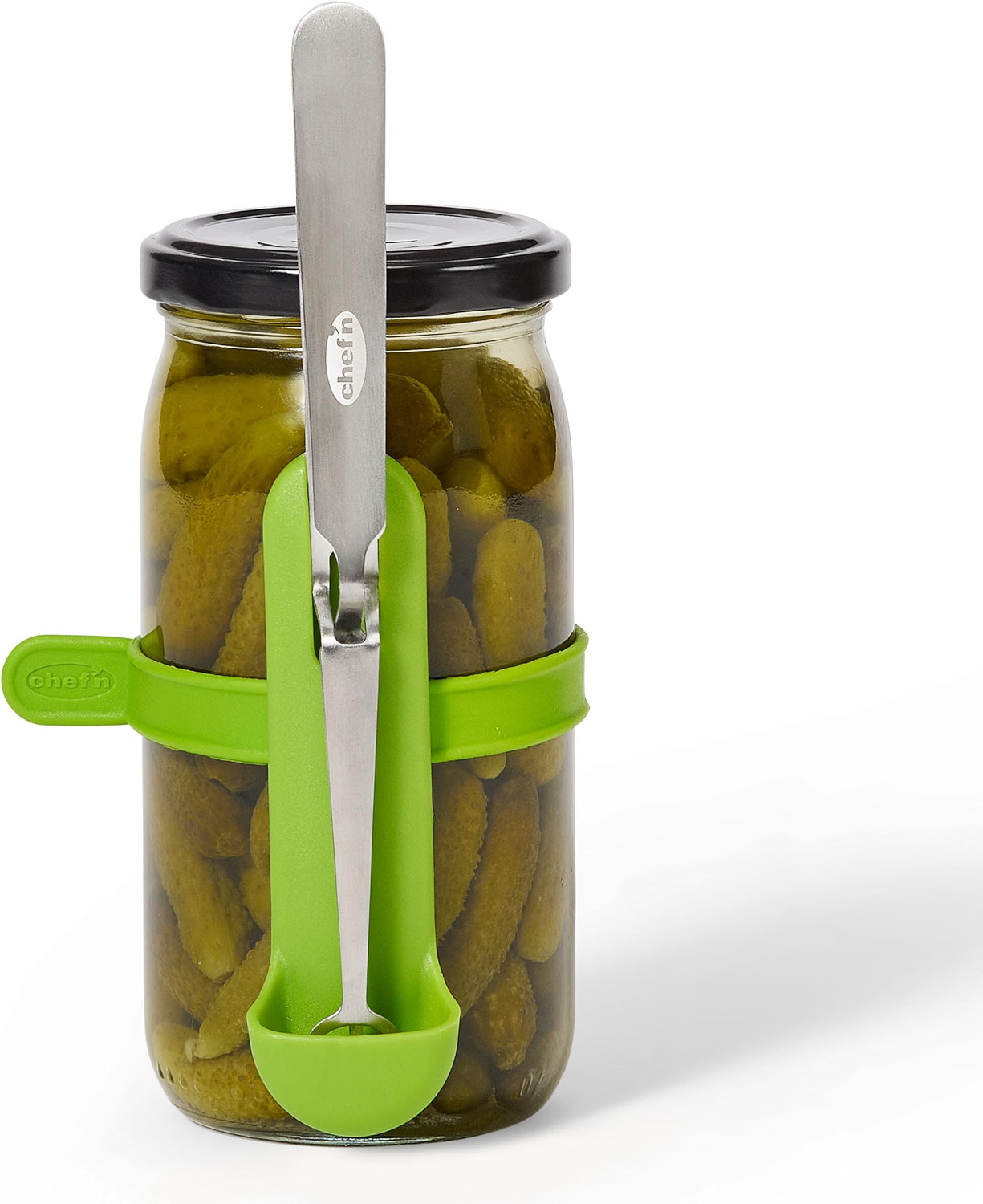
The Chef’n FridgeFork Pro Squeeze n’ Hold Condiment Fork is designed around this particular serving challenge. It combines the functions of a fork and gripping tongs in one utensil and incorporates an integrated storage caddy for keeping the tool organized when it is not being used.
The concept is especially relevant to foods stored in jars, containers, or refrigerator compartments. Instead of reaching into a jar with fingers or using a standard utensil that may leave liquid behind, a dedicated condiment fork provides a way to lift individual pieces while helping contain the serving process.
This type of tool can also fit naturally into entertaining situations. Pickles and olives are common additions to charcuterie boards, sandwiches, salads, snacks, burgers, and appetizer plates. Having a utensil specifically designed for retrieving these foods can make serving more organized.
However, a specialized kitchen utensil is not automatically necessary for every household. A standard fork, slotted spoon, or pair of kitchen tongs may already perform some of the same tasks. The appeal of a dedicated condiment tool comes from combining several functions in one compact design.
This article explores the Chef’n FridgeFork Pro Squeeze n’ Hold Condiment Fork, its key design features, practical applications, suitable users, cleaning and storage considerations, and how it compares with more traditional serving utensils.
Key Features of the Chef’n FridgeFork Pro Squeeze n’ Hold Condiment Fork
Two-in-One Fork and Tongs Design
The central idea behind the FridgeFork Pro is its combination of fork-like and tong-like functionality.
A conventional fork is useful for piercing or lifting individual pieces of food. Tongs, on the other hand, can provide a gripping action that is useful for foods that are difficult to pierce securely.
Combining these functions can make the tool more versatile for serving condiments and small foods.
The design is particularly relevant to foods that are:
- Small
- Firm enough to grip
- Stored in liquid
- Difficult to retrieve cleanly
- Commonly served individually
Examples include pickles, olives, cocktail onions, peppers, and similar jarred foods.
Squeeze-and-Hold Operation
The squeeze-and-hold concept gives the user a way to grip food rather than simply piercing it.
This can be useful when handling foods that could slip off a conventional fork.
For example, an olive may roll or slide when lifted with a standard utensil. A gripping mechanism can provide another way to secure it during serving.
The exact technique depends on the food and the shape of the utensil.
Integrated Storage Caddy
The product also includes an integrated storage caddy.
This is an important part of the concept because serving utensils can become inconvenient when they have nowhere to rest.
A storage caddy provides a dedicated place for the tool when it is not being used.
In a refrigerator or kitchen environment, keeping a utensil associated with a particular condiment can also make it easier to locate later.
For example, a dedicated utensil can remain with a frequently used jar rather than being returned to a general kitchen drawer after every use.
How the Chef’n FridgeFork Pro Can Be Used
Serving Pickles
Pickles are one of the most obvious applications.
When removing pickles from a jar, excess brine can drip from the food.
A dedicated serving utensil can make the process easier to control.
The fork or gripping portion can be used to retrieve an individual pickle, allowing excess liquid to drain back toward the container before the food is transferred to a plate.
This can be useful when serving:
- Dill pickles
- Gherkins
- Bread-and-butter pickles
- Pickled vegetables
- Pickled peppers
Serving Olives
Olives are another natural use.
Because olives are relatively small and often stored in liquid, they can be inconvenient to retrieve with fingers.
The FridgeFork Pro can provide a dedicated way to pick up individual olives or small portions.
This makes it particularly relevant to charcuterie boards and appetizer platters.
Serving Cocktail Onions
Cocktail onions are commonly stored in brine or another preserving liquid.
Their small size makes a dedicated utensil useful.
The tool can potentially be used to remove individual onions without requiring a separate spoon or fork.
Serving Pickled Vegetables
Many types of vegetables are stored in jars.
Examples include:
- Jalapeños
- Banana peppers
- Pickled carrots
- Pickled onions
- Pickled green beans
- Mixed pickled vegetables
A condiment fork can provide a simple way to retrieve individual pieces while limiting unnecessary contact with the remaining contents.
Using the FridgeFork Pro for Charcuterie
Cheese Boards
Charcuterie boards frequently include foods stored in jars or small containers.
Olives and pickles can complement cheese, cured meats, crackers, fruit, and spreads.
A dedicated condiment utensil can help guests serve these ingredients without reaching directly into jars or using their personal utensils.
Appetizer Boards
The tool can also be used with appetizer spreads.
Depending on the foods being served, it may be suitable for:
- Pickled vegetables
- Olives
- Marinated vegetables
- Cocktail garnishes
- Small preserved foods
The goal is to provide a practical serving method for foods that are difficult to handle neatly.
Using the Tool for Sandwiches and Burgers
Pickle Toppings
Pickles are a familiar addition to sandwiches and burgers.
When several people are preparing food, a dedicated condiment utensil can help distribute pickles without using fingers.
The tool can be kept near the pickle container so that it is available whenever the jar is opened.
Jalapeños and Peppers
Pickled jalapeños can also be difficult to retrieve without bringing excess liquid along.
A gripping or fork-style utensil can help transfer them to sandwiches, tacos, burgers, nachos, or other dishes.
Salad and Meal Preparation
Adding Olives to Salads
Olives can be added to:
- Green salads
- Pasta salads
- Grain bowls
- Mediterranean-style dishes
- Antipasto plates
A dedicated utensil can simplify the process when olives are stored in brine.
Pickled Vegetables as Toppings
Pickled onions, peppers, and other vegetables can add acidity and texture to meals.
They can be used with:
- Tacos
- Wraps
- Sandwiches
- Rice bowls
- Burgers
- Grilled foods
The FridgeFork Pro can serve as the retrieval utensil when these ingredients are stored in jars.
Why a Dedicated Condiment Utensil Can Be Useful
Reducing Mess
One of the main practical reasons for using a dedicated condiment utensil is controlling liquid.
Brine, oil, vinegar, marinades, and other liquids can drip when foods are removed from containers.
Allowing excess liquid to drain back into the container before transferring the food can help keep the countertop cleaner.
Reducing Direct Hand Contact
Using a utensil instead of fingers can also be more hygienic when serving shared foods.
This is particularly relevant when a jar is being used by several people.
A dedicated utensil provides a consistent serving method.
Keeping the Refrigerator Organized
The integrated storage caddy gives the utensil a designated location.
This can help avoid a common situation where a condiment jar is opened, a utensil is used, and then the utensil is placed somewhere random.
Keeping the tool with its intended food container can make the system easier to manage.
Who May Find the FridgeFork Pro Suitable?
Frequent Pickle and Olive Users
People who regularly eat pickles, olives, peppers, or other jarred condiments may find a specialized serving tool useful.
The more frequently a task is performed, the more valuable convenience features can become.
Charcuterie Enthusiasts
People who regularly prepare cheese boards and appetizer platters may appreciate having dedicated serving tools for small jarred ingredients.
Families
A dedicated utensil can be useful in households where condiment jars are shared among several people.
It provides a simple way to serve food without using personal utensils.
Entertainers
Hosts preparing snacks for guests may appreciate tools that make serving more organized.
Small details can matter when several people are serving themselves from a shared spread.
People With Limited Drawer Space
The integrated caddy can be useful for people who do not want another loose utensil occupying a kitchen drawer.
Instead, the tool can be kept with the relevant condiment or in another appropriate storage location.
Important Things to Consider
A Specialized Tool Has a Specific Purpose
The FridgeFork Pro is designed around condiments and small jarred foods.
It is not intended to replace every kitchen utensil.
For large foods, heavy ingredients, cooking tasks, or general food preparation, conventional tongs, forks, spoons, or other utensils may remain more appropriate.
Consider Container Compatibility
The usefulness of a condiment utensil can depend on the size and shape of the container.
A very narrow jar opening may limit how easily the utensil can be inserted and operated.
Before using the tool with a particular container, make sure it can be inserted and removed without forcing it against the sides.
Food Texture Matters
The gripping function may work differently depending on the food.
Firm pickles or olives may be easier to handle than very soft or delicate foods.
Foods that break apart easily may require a gentler approach.
Cleaning and Hygiene
Clean After Appropriate Use
Any utensil that comes into contact with food should be cleaned appropriately.
This is particularly important when the tool is repeatedly used with wet or salty foods stored in jars.
Food residue can accumulate around joints or gripping mechanisms if the utensil is not cleaned thoroughly.
Check Manufacturer Instructions
Cleaning instructions should always be followed according to the manufacturer’s recommendations.
Different kitchen tools can have different dishwasher compatibility, temperature limitations, and care requirements.
Do not assume that every part of a multifunctional utensil should be cleaned in exactly the same way.
Keep the Caddy Clean
Because the storage caddy is designed to hold the utensil, it should also be kept clean.
If brine, oil, or food residue accumulates around the storage area, the caddy can become less hygienic.
Regular inspection and cleaning can help maintain the storage system.
Choosing Between a Condiment Fork and Traditional Utensils
Standard Fork
A standard fork is the simplest alternative.
Advantages include:
- Already available in most kitchens
- Easy to clean
- Useful for many foods
- No additional specialized equipment
The limitation is that a conventional fork may not provide the same gripping action or dedicated storage solution.
Slotted Spoon
A slotted spoon can be useful for foods stored in liquid.
The slots allow some liquid to drain before food is transferred.
This can work particularly well for larger portions.
However, a slotted spoon may be less convenient for retrieving one or two small pieces from a narrow jar.
Kitchen Tongs
Small kitchen tongs can provide strong gripping capability.
They are useful for many foods beyond condiments.
Their disadvantage is that they can be too large for small jars or refrigerator containers.
Condiment Fork
A dedicated condiment fork is designed around the specific problem of retrieving small jarred foods.
Its advantage is specialization.
Its limitation is that it has fewer general-purpose applications than standard kitchen utensils.
Comparison of General Serving Categories
| Utensil Type | Small Jarred Foods | Large Foods | Draining Liquid | General Kitchen Use | Dedicated Storage |
|---|---|---|---|---|---|
| Standard Fork | Good | Limited | Limited | High | No |
| Slotted Spoon | Good | Good | High | High | No |
| Kitchen Tongs | Moderate | High | Moderate | High | No |
| Condiment Fork | High | Limited | Moderate | Moderate | May include |
| Spoon | Moderate | Moderate | Low | High | No |
The comparison illustrates an important point: specialized tools and general-purpose tools serve different roles.
A condiment fork does not need to replace a complete utensil collection.
Its purpose is to make a narrow but recurring task more convenient.
Using the FridgeFork Pro in the Refrigerator
Keep It Near Frequently Used Condiments
If the tool is being used primarily for pickles or olives, storing it close to the relevant container can make it easier to access.
The integrated caddy is designed to support this type of organization.
Avoid Cross-Contamination
If the same utensil is used with several different foods, it should be cleaned appropriately between uses.
A tool used with one jar should not automatically be transferred to another container without considering hygiene.
For households managing allergies or dietary restrictions, separate serving utensils may also be appropriate.
Entertaining With Jarred Foods
Build a Condiment Station
For a party, several jars can be placed together with appropriate serving utensils.
A condiment station might include:
- Pickles
- Olives
- Pickled onions
- Jalapeños
- Mustard
- Relish
- Other toppings
Dedicated serving utensils can help guests serve themselves while minimizing direct hand contact.
Charcuterie Presentation
When building a charcuterie board, small bowls can hold olives or pickles while the FridgeFork Pro retrieves them from their original containers.
This approach keeps the storage jar and serving board separate.
It also allows the host to replenish the serving bowl as needed.
Practical Uses Beyond Condiments
Although condiments are the primary application, similar small foods may sometimes be suitable.
Depending on their size, texture, and storage method, the tool may be useful for foods such as:
- Marinated vegetables
- Small pickled foods
- Cocktail garnishes
- Certain preserved vegetables
- Small snack ingredients
The suitability depends on the food and the utensil’s design.
It should not be treated as a universal replacement for cooking utensils.
Reducing Kitchen Clutter
Store Tools Where They Are Used
One of the simplest organizational principles is storing an item near the place where it is needed.
A condiment-serving tool that remains with the relevant jar is less likely to become lost among unrelated utensils.
This is a small example of point-of-use storage.
The same principle can be applied elsewhere in the kitchen:
- Measuring cups near baking supplies
- Coffee tools near coffee equipment
- Grill tools near outdoor cooking equipment
- Serving utensils near entertaining supplies
Choosing Kitchen Gadgets More Thoughtfully
Specialized gadgets can be useful when they solve a problem that occurs repeatedly.
Before adding a tool to your kitchen, consider:
How often will it be used?
A tool used several times each week has a different value proposition from one used once a year.
Does it solve a genuine problem?
If a standard utensil already performs the task effectively, a specialized tool may not be necessary.
Where will it be stored?
Storage requirements matter, especially in compact kitchens.
Is it easy to clean?
A tool that is difficult to clean may become less useful over time.
Does it perform more than one function?
Multifunctional tools can sometimes make better use of limited storage space.
Frequently Asked Questions
What is the Chef’n FridgeFork Pro?
The Chef’n FridgeFork Pro Squeeze n’ Hold Condiment Fork is a specialized kitchen utensil designed for retrieving and serving small jarred foods such as pickles and olives. It combines fork and gripping functionality and includes an integrated storage caddy.
What foods can it be used for?
It is primarily suited to small condiment-style foods, including pickles, olives, pickled peppers, cocktail onions, and similar jarred ingredients.
How is it different from a regular fork?
A regular fork primarily uses its tines to pierce and lift food. The FridgeFork Pro adds a gripping function intended to hold certain foods more securely.
Can it be used for olives?
Yes. Olives are one of the foods for which a dedicated condiment-serving utensil can be useful, particularly when they are stored in brine or another liquid.
Can it be used for pickles?
Yes. Pickles are another intended type of food for this category of utensil.
What is the storage caddy for?
The integrated storage caddy provides a designated place to keep the utensil when it is not being used.
Can the tool help reduce dripping?
Its dedicated design can make it easier to retrieve foods from liquid and allow some excess liquid to drain before transferring the food. However, the amount of liquid that remains depends on the food and how it is handled.
Is it useful for charcuterie boards?
It can be. Olives, pickles, peppers, and other jarred foods are common additions to charcuterie and appetizer boards, and a dedicated serving utensil can make them easier to retrieve.
Can it replace kitchen tongs?
No. It is designed for a narrower category of tasks. Standard kitchen tongs are generally more suitable for larger foods and cooking applications.
Can it replace a slotted spoon?
Not completely. A slotted spoon is generally better for transferring larger portions of food while allowing liquid to drain.
Is a condiment fork necessary in every kitchen?
No. A specialized utensil is optional. Its usefulness depends on how often the household serves foods such as pickles, olives, or other jarred condiments.
How should the FridgeFork Pro be cleaned?
Follow the manufacturer’s cleaning instructions for the specific product. Pay attention to any joints, gripping areas, and the storage caddy where food residue or liquid may accumulate.
Can the utensil be shared between different condiment jars?
It can be physically possible, but hygiene and allergen considerations should be taken into account. Clean the utensil appropriately between different foods when necessary.
Is it suitable for large pieces of food?
The tool is designed primarily around small condiment-style foods. Larger or heavier foods are generally better handled with appropriately sized serving utensils.
Can it be used with narrow jars?
Suitability depends on the opening and shape of the particular jar. The utensil should be inserted without forcing it against the container.
Where can I learn more about the Chef’n FridgeFork Pro?
The Chef’n FridgeFork Pro is designed as a specialized utensil for serving small jarred foods such as pickles, olives, and other condiments, with an integrated storage concept. You can check more details on Amazon here.
Conclusion
Kitchen tools do not always need to perform dozens of tasks to be useful. Sometimes a specialized utensil makes sense because it addresses one small inconvenience that happens repeatedly.
The Chef’n FridgeFork Pro Squeeze n’ Hold Condiment Fork is designed around the simple task of retrieving and serving small foods from jars and containers. Its combination of fork and gripping functionality gives users another way to handle foods such as pickles, olives, cocktail onions, and pickled vegetables.
The integrated storage caddy adds another practical element by providing a designated place for the utensil when it is not being used. This can be particularly convenient when the tool is associated with a frequently used condiment.
Its applications can extend beyond the refrigerator. Charcuterie boards, appetizer spreads, sandwiches, burgers, salads, tacos, and snack plates can all include jarred ingredients that benefit from a dedicated serving utensil.
At the same time, the FridgeFork Pro should be viewed as a specialized kitchen accessory rather than a replacement for traditional utensils. Standard forks, slotted spoons, and kitchen tongs each have broader or different applications.
The decision ultimately depends on cooking and serving habits.
For someone who rarely uses jarred condiments, a standard fork may be perfectly adequate. For someone who frequently serves pickles, olives, peppers, or similar foods, having a dedicated tool that combines gripping and fork functionality may offer a more organized way to handle these ingredients.
Proper cleaning and storage are also important. Food residue and liquid can accumulate around multifunctional components, so the utensil and its storage caddy should be maintained according to the manufacturer’s instructions.
A well-designed kitchen does not necessarily need a gadget for every possible task. The most useful specialized tools are generally the ones that solve a genuine recurring problem.
For households that regularly enjoy pickles, olives, charcuterie, sandwiches, appetizers, and other condiment-heavy foods, the Chef’n FridgeFork Pro Squeeze n’ Hold Condiment Fork offers a focused approach to serving these ingredients while keeping the utensil organized between uses.
Leave a Reply